
‘Journalist Protection Act’ likely soon: Mahfuj
Staff Reporter :
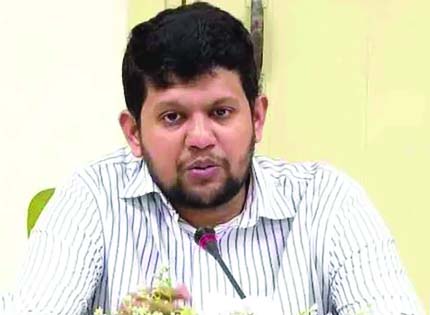
Information and Broadcasting Adviser Md Mahfuj Alam on Sunday expressed optimism that the Journalist Protection Act would be enacted shortly to safeguard the rights and security of journalists.
“I have gone through 18 draft versions of the proposed law and recommended that they be placed before the cabinet,” he said while addressing a dialogue session titled “Dialogue on Self-Regulation and Grievance in Media: Political and Policy Perspectives” at the CIRDAP Auditorium in Dhaka, according to a press release.
The event was organised by the Centre for Governance Studies (CGS) to discuss media reform initiatives.
Daily Star Consulting Editor and former head of the Media Reform Commission Kamal Ahmed also joined as guest of honour.
As part of reform proposals, Mahfuj Alam suggested merging BTV and Bangladesh Betar into a single autonomous body. However, he acknowledged that challenges have arisen over staff integration and influence from different stakeholders.
He further noted that although media owners have profited from rising advertisement rates, journalists themselves have seen little improvement. “What are journalists really gaining? The owners have no clear answer,” he remarked.
Mahfuj added that during his tenure no media outlets were shut down, though 72-75 journalists faced harassment. He said he is working with the ministry to address those incidents.
Among others, the dialogue was attended by: Prof. S. M. Shameem Reza of Dhaka University’s Department of Mass Communication and Journalism; Dr. Moudud Hossain Alamgir Pavel, Convener of BNP’s Media Cell; Dr. Shakhawat Hossain Sayantha, General Secretary of G-9; Advocate Ahsanul Mahboob Zubair of Jamaat-e-Islami; Abdullah Kafi Ratan of the CPB; Nazmul Haque Prodhan of JaSad; Advocate Subrata Chowdhury of Gonoforum; Nasreen Sultana Mily of AB Party; Jubairul Hasan Arif of NCP; Md. Rashed Khan of Gono Odhikar Parishad; senior journalists Sohrab Hassan, M Abdullah, Kazi Jesin, and Zyma Islam.
The session was moderated by CGS President Zillur Rahman, who stressed that while political parties had promised reforms during the 2007-08 “One-Eleven” period, little was ever implemented.
“Reform talk often remains limited to pledges, without real steps to move forward,” he observed.
Kamal Ahmed suggested publishing drafts of the Journalist Protection Act 2025 and the Media Commission Act online to collect public feedback.
He also regretted the delay in implementing the Journalist Protection Ordinance, which had been submitted six months ago.
Prof. Shameem Reza pointed out that public trust in the media is eroding, while research on the issue remains scarce.
He argued that Dhaka-centric operations of most media houses leave regional oversight and monitoring neglected.
He called for evaluating standards of good journalism and developing traditions of self-regulation and policy within democracy.
Nazmul Haque Prodhan highlighted the need to end online harassment triggered by opinions expressed on social media.
Advocate Subrata Chowdhury spoke about widespread moral decline across professions, including among educators.
Abdullah Al Kafi Ratan observed that most media outlets are now owned by large corporate groups, which compromises journalistic independence due to commercial pressures.
Dr. Moudud Hossain Alamgir Pavel underlined that journalism, like any profession, comes with its own ethics, responsibilities, and risks.