Jamaat leader alleges Indian intelligence role in 1971

Staff Reporter :
At a discussion marking Martyred Intellectuals Day in Dhaka on Sunday, a senior leader of Bangladesh Jamaat-e-Islami put forward a sweeping and controversial claim: that the mass killing of intellectuals in December 1971 was part of a “well-planned conspiracy” by the Indian military and intelligence agencies.
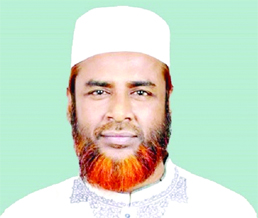
Mia Golam Parwar, the party’s secretary general and a former lawmaker, made the allegation while addressing an audience at the Krishibid Institute auditorium in the capital’s Farmgate area. Speaking as chief guest at the event, he said the targeted killing of writers, journalists, academics and artists on December 14, 1971—two days before Bangladesh’s victory in the Liberation War—was designed to cripple the intellectual foundation of the soon-to-be independent nation.
“The intellectual killings were part of a planned conspiracy by the Indian army and Indian intelligence,” Mr. Parwar said, according to his speech. He argued that the timing of the attacks, on the eve of victory, was deliberate and strategic.
For decades, responsibility for the killings has been one of the most sensitive and contested issues in Bangladesh’s history. The dominant narrative has held pro-Pakistani forces and their local collaborators responsible. Mr. Parwar rejected that account, accusing what he described as “Delhi-aligned” political and intellectual circles of shifting blame onto Jamaat-e-Islami to shape a convenient political narrative.
Fifty-four years after the war, he said, the full truth of who carried out the killings has yet to be officially uncovered. “Who killed the intellectuals remains an unresolved mystery,” he said, insisting that new information and historical accounts point instead to Indian involvement.
Citing interviews attributed to Rao Farman Ali, a senior Pakistani military officer who later surrendered, Mr. Parwar claimed that the Pakistani army had intended to surrender on December 14, but that Indian military commanders delayed the formal surrender until December 16.
During that window, he alleged, leading intellectuals were systematically identified and killed.
“These were people who, had they lived, would have played a crucial role in rebuilding a newly independent Bangladesh with their intellect, creativity and moral leadership,” he said.
Mr. Parwar went further, arguing that India’s strategic objective during the war was not altruistic support for Bangladesh’s independence but the long-term subordination of the new state.
According to his account, India sought a Bangladesh that would appear sovereign in name and symbols, but remain politically, economically and diplomatically dependent on New Delhi.
He also raised the unresolved disappearance of the writer and filmmaker Zahir Raihan in January 1972, linking it to investigations into the intellectual killings. Zahir Raihan’s brother, Shahidullah Kaiser, was among those killed on December 14. Mr. Parwar claimed that both Zahir Raihan and a close associate disappeared while pursuing evidence related to the killings, suggesting that crucial documentation was lost as a result.
“If they had survived, the nation might have seen documentary proof of how the intellectuals were selected and killed,” he said.
Mr. Parwar alleged that no comprehensive official report on the killings has ever been published, either during Sheikh Mujibur Rahman’s lifetime or under subsequent Awami League governments, because such findings would undermine India’s role in the war. He warned that what he called “Delhi-aligned politics” continues to influence Bangladesh’s political narratives even today.
The event was organised by Jamaat-e-Islami Dhaka North and chaired by Mohammad Selim Uddin, the party’s Dhaka North amir. Several senior Jamaat leaders were present.
The allegations, which sharply contradict widely held historical interpretations, are likely to reignite debate over one of the darkest chapters of the Liberation War, underscoring how deeply contested the memory of 1971 remains in Bangladesh’s contemporary politics.