
Jamaat calls for reforms, justice before nat’l polls
Staff Reporter :
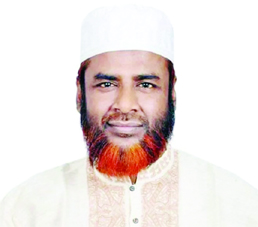
Bangladesh Jamaat-e-Islami Secretary General Mia Golam Parwar has urged the interim government to ensure comprehensive political reforms and initiate trials for crimes against humanity committed by former ousted prime minister Sheikh Hasina and her collaborators before holding the next national election.
Speaking at a party conference in Laksam, Cumilla, on Friday, Parwar said an impartial election must follow a reckoning with what he described as a “dark era” under the previous Awami League regime.
Parwar voiced his party’s conditional support for the upcoming election under the newly-formed interim government, headed by Nobel Laureate Professor Muhammad Yunus, who has pledged to oversee the transition to an elected government within a set timeframe.
“The interim government has announced a roadmap toward elections. They must stick to that deadline, but also ensure that the process is reformed and justice is served for crimes committed during the previous regime,” Parwar said. “We are ready to join the election, but it must be free, fair, and impartial.”
He referenced the government’s tentative election timelines – either December 2025 or June 2026 – and warned against repeating what he called “violent, stage-managed elections” like those of 2014, 2018, and 2024. “People will not accept a repeat of those elections. The country demands change, not another show,” he declared.
Parwar also sought to dispel what he described as a public “misunderstanding” about Jamaat’s position on electoral politics. “Our ameer has already made it clear – we are not boycotting the polls. But meaningful participation requires meaningful reforms,” he said.
Turning his criticism toward the Awami League and its long-serving leader Sheikh Hasina, Parwar accused the previous administration of muzzling dissent and stripping citizens of their constitutional rights.
“For 15 years, we lived in an era of darkness. Everyone here has faced politically motivated charges or imprisonment. The Constitution guarantees freedom of speech and association, but those rights were trampled under authoritarian rule,” he alleged.
He also took aim at Hasina’s rhetoric, claiming she labeled political opponents and student activists as “Razakars” – a term historically associated with collaborators of the Pakistani army during the 1971 Liberation War.
“She called even the students who demanded justice ‘Razakars’. But those students stood up against tyranny and bled for their cause. Many now call their resistance the second liberation war,” he said.
Parwar further alleged that executions of Jamaat leaders in war crimes trials were carried out “under foreign influence,” particularly from India. “She executed our leaders on India’s instructions, because they viewed Muslim leaders as a threat to her grip on power,” he claimed, without offering evidence.
The Jamaat-e-Islami, which was derecognized as a political party by the Election Commission in 2013, remains a controversial political force in Bangladesh. Its senior leaders were tried and executed for war crimes committed during the 1971 war – trials that were hailed by many as a long-overdue reckoning, but dismissed by Jamaat as politically motivated.
The Yunus-led interim administration has not yet commented on Parwar’s demands, but pressure is mounting from multiple political quarters to ensure a level playing field ahead of what is expected to be a critical election for the future of Bangladeshi democracy.”