
Italian dream:Youth trapped in pursuit of European mirage!
Wares Ali Khan :
A cruel silence has descended upon fourteen families in Bangladesh. For five long months, they have been suspended in a state of agonising uncertainty, caught between the thinnest sliver of hope and the deepest chasm of despair.
Their sons, vibrant young men brimming with dreams, embarked on a journey to Italy via Dubai last February. Today, they are ghosts-their phones silent, their whereabouts unknown, their very existence a question mark that haunts their loved ones’ every waking moment!
This is not a tale of adventure gone wrong. It is the latest chapter in a devastating saga of human trafficking, where the money is false hope and the final payment is often life itself.The story of these fourteen missing youths is a microcosm of a much larger, systemic crisis bleeding the lifeblood from regions like Madaripur, Shariatpur, and Faridpur-districts that have become fertile hunting grounds for predatory human traffickers.
The dream they sell is potent and intoxicating-a life of prosperity in Europe. For young men facing limited local opportunities and immense pressure to provide for their families, the “Italian dream” is a powerful siren’s call. It promises an escape from hardship and a ticket to a life of dignity and success. But this dream is a mirage, and the path towards it is a well-trodden route to ruin.
The journey begins not with a visa, but with a deal brokered in the shadows. As the families of the missing fourteen testify, the initial price for this perilous passage was a staggering 1.6 million Taka per person. This is the first layer of a nefarious, multi-layered trap. To raise this sum, families sell ancestral lands, heirlooms, and whatever meagre assets they possess. They finally indebt themselves to local moneylenders at exorbitant interest rates.
Once the money is paid, the youths are smuggled out of Bangladesh, their first stop often being Dubai. From there, they are flown to Libya, a country fractured by conflict and lawlessness. Libya is not a transit point; it is a human warehouse, a torture chamber where the traffickers’ true intentions are revealed. The young men are held captive, their hopes of crossing the Mediterranean held hostage.
The traffickers, knowing the desperation of the families back home, send harrowing videos of their sons being beaten and starved. The ransom demand follows another 2 to 2.5 million Taka for their release and safe passage to Italy.
The families scramble once more, selling the last of their possessions, begging, borrowing, and sinking deeper into a financial abyss from which they may never recover. They pay the ransom, believing it is the final hurdle.But for the fourteen youths, and countless others before them, the payment brought no release. It brought only silence.
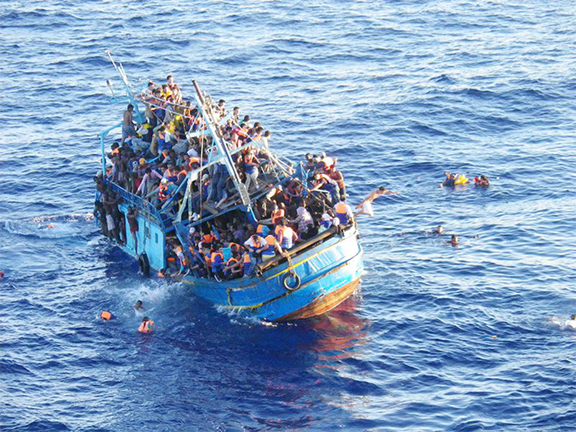
The final, fatal leg of this journey is the crossing of the Mediterranean Sea. This vast expanse of water, which separates a continent of chaos from a continent of hope, has become a liquid graveyard for Bangladesh’s youth.
Packed onto rickety, overcrowded boats/dinghies, their vibrant lives begin to fade, their futures shading into the murky uncertainty of the sea. They are no longer individuals with names and dreams, but anonymous figures huddled together against the waves, their fate decided by the whims of the weather and the seaworthiness of a vessel that should never have left shore.
According to the reported official data from Madaripur district, between 2019 and March 2023, at least 45 young men lost their lives on this very route. While 350 were fortunate enough to be rescued from Libyan detention and returned home, scarred but alive, over 300 more remain missing-vanished like the recent fourteen, their stories unresolved, their families left to grieve without closure.
It is a story of economic desperation fueling a criminal enterprise. The traffickers are the immediate villains, but they thrive in an ecosystem where unemployment and a lack of viable opportunities create a steady supply of willing victims. As long as a young man sees more hope in a leaky boat on the Mediterranean than in his own village, this deadly exodus will continue.
The consequences are catastrophic on multiple fronts. We are losing a generation of our most ambitious and able-bodied young men. Their potential is not being harnessed for national development; it is being extinguished in the deserts of Libya and the depths of the Mediterranean. The immense financial and emotional toll on their families creates cycles of poverty and grief that ripple through entire communities.
A multi-pronged and aggressive strategy is the only way to staunch this bleeding.
The impunity enjoyed by these human trafficking syndicates must end. This requires dedicated task forces, intelligence-led operations to dismantle their networks both in Bangladesh and through international cooperation, and severe, exemplary punishment for those convicted.
Second, the government must address the root cause with targeted economic interventions. The high-risk districts like Madaripur, Shariatpur, and Faridpur need special attention. We must create tangible local employment opportunities, foster entrepreneurship, and provide vocational and skills training that offers a credible alternative to the false promises of traffickers.
Finally, we need a powerful, sustained, and brutally honest public awareness campaign. We must shatter the European mirage. We need to broadcast the testimonies of survivors, show the grim reality of Libyan detention camps, and tell the stories of families financially and emotionally destroyed.
We may never know if the missing youths met their end in a Libyan prison or, in the cold embrace of the sea. But their disappearance must not be in vain. Their story is a deafening alarm bell, a call to action for the entire nation. For their sake, and for the thousands they represent, we must confront this crisis with the urgency and gravity it deserves. We must work together-government, civil society, and communities-to ensure that the dreams of our youth can flourish at home, not vanish abroad.
(The writer is an academic&edupreneur).