
It was people’s will, not mine
Staff Reporter :
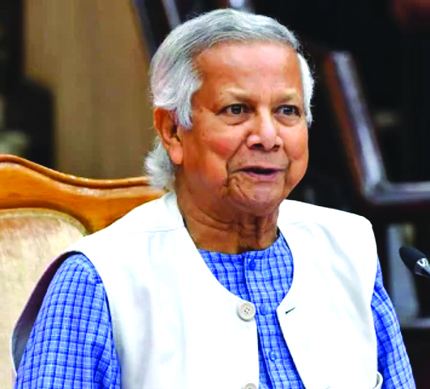
Nobel Peace Prize laureate Prof Dr Muhammad Yunus has said his decision to take on the role of Bangladesh’s Chief Adviser was driven not by personal ambition, but by a responsibility to uphold the will of the people during a delicate political transition.
“It’s not me. It’s the people who want this change. I am just helping them go the way they want,” the 85-year-old told Bernama in an exclusive interview at the conclusion of his three-day official visit to Malaysia from 11-13 August, at the invitation of Prime Minister Datuk Seri Anwar Ibrahim.
“I don’t impose anything of my own. I wait to see what the will of the people is, and then I facilitate it,” Yunus explained to Bernama’s Editor-in-Chief Arul Rajoo Durar Raj, International News Service Editor Voon Miaw Ping, and Assistant Editor of Bernama Economic Service Kisho Kumari Sucedaram.
Yunus, who gained international recognition in 2006 for pioneering microfinance, acknowledged that political office had never been part of his plan. “This was never my intention. Circumstances left me with little choice,” he said.
The economist and social entrepreneur was appointed on 8 August 2024 by President Mohammed Shahabuddin to lead a transitional government following a youth-led uprising that toppled former Prime Minister Sheikh Hasina, ending her years of authoritarian rule.
Describing his role, Yunus said he sees himself less as a political leader and more as a custodian of the democratic process, long denied to the people of Bangladesh.
“There are many difficulties. Some want to disrupt this, as political elements that were ousted are attempting to destabilise the system,” he noted.
He highlighted the significance of the upcoming general election, scheduled for February 2026, for citizens who have been denied a fair vote for over a decade.
“Some people have been waiting 10 or even 15 years to vote. Imagine being 18, eager to cast your ballot, but never having the chance. Now they will vote for the first time in 15 years,” he said.
Yunus’s commitment to public service has long roots. Moved by the Bangladesh famine of 1974, he made a personal loan of just US$27 to 42 families to help them produce goods without high-interest loans.
That small act evolved into Grameen Bank, launched as a pilot project in Chattogram in 1976 and becoming a full-fledged bank by 1983.
Grameen Bank’s mission – to alleviate poverty and empower marginalised communities through microcredit – has reached millions. As of June 2025, the bank has disbursed US$40.37 billion in loans to 10.72 million borrowers, with women representing 97 percent of its membership.
As Bangladesh navigates a fragile transition, Yunus framed his mission simply: “It’s the people’s will I serve. I am only here to help them achieve the democracy they have been denied for far too long.”