
International Women’s Day, market economy and looking for own mind
Chinmay Prasun Biswas :
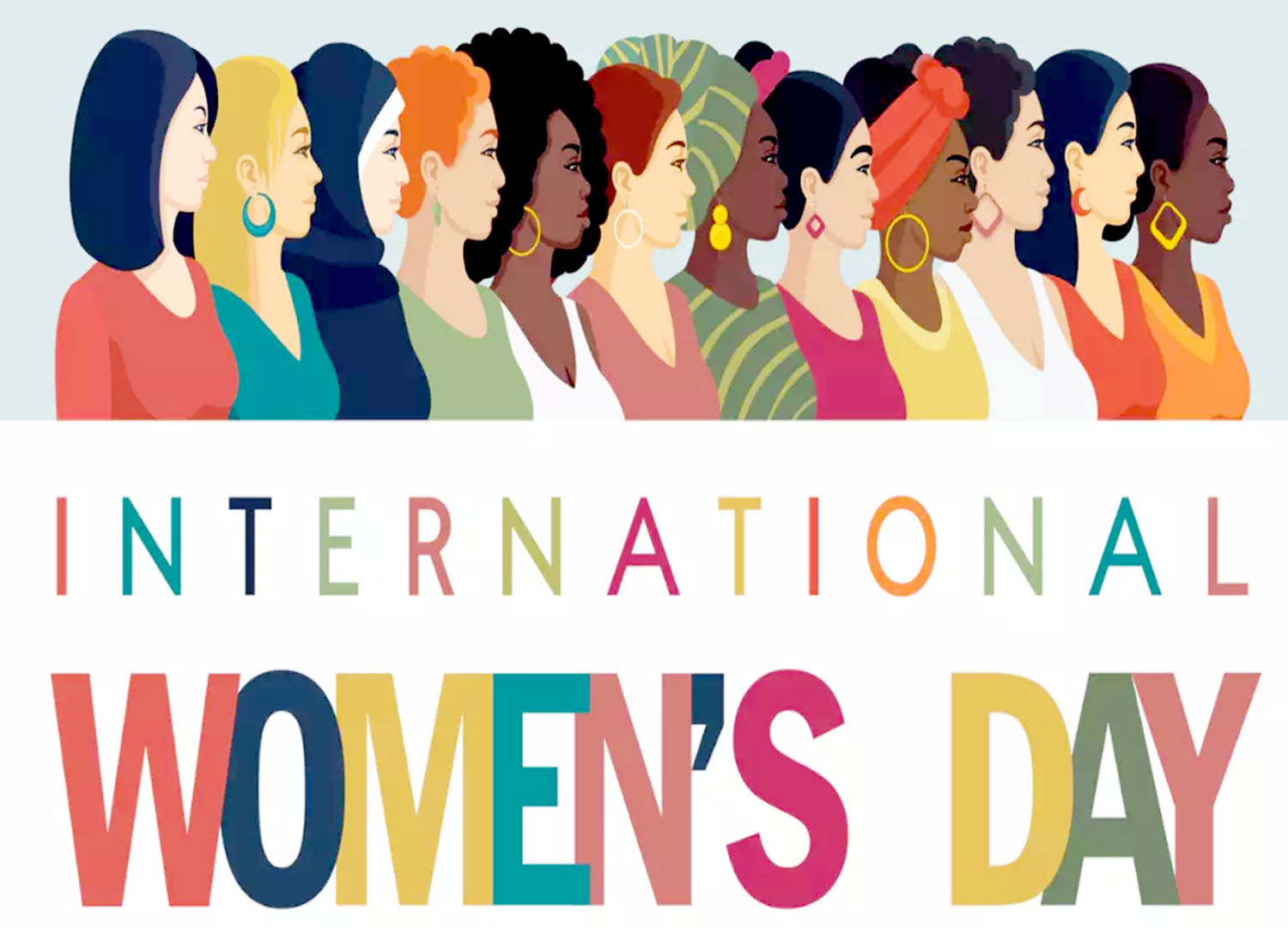
At the advent of Women’s Day discussion continues rapidly. Social media overflows with success stories of women whereas the tales of struggle and sacrifice behind that success remain mainly unmentioned. Keeping their humiliation, torture, deprivation secret only the success is exposed. Pages and screens of social media glitters with visible success of women. As usual, from nails to hair of female body are the target of market economy. The world of advertisement becomes enriched by selling the charm and beauty of women’s appearance.
Remembering a novel Asamay (the Odd Time, winner of Literature Academy Award in 1975) by Bimal Kar may be relevant here. Abin, the central character of that novel, once discovered that a short poem by his deceased mother was published in an old newspaper. The first line was, I live in my mind. Abin felt that his mother had a world of her own in this family where she was lonely with her own sorrows. International Women’s Day was unknown then but she tried to keep her mind alive amid mundane chaos of family. Hopefully, at present the scope to discuss Women’s Day, women’s right, life, work, self-expression and feminism is certainly wide. But it is necessary to think about whether the mind is lost and the voice gradually ends in a blocked road.
The United Nations has recognised 8th March as International Women’s Day since 1977. A similar day i.e. National Women’s Day was held on 28th February, 1909 in America when the Socialist Party of America designated the day to honour a strike of garment workers in New York. Demanding right to vote Russian women first observed International Women’s Day on 2nd March, 1913 staging a demonstration in St Petersburg. On 8th March, 1917 women workers of Russia came down to streets demanding bread and peace and finally they won voting right for themselves. Later, on 9th August 1956, around 20 000 women marched towards the Union Buildings in Pretoria, South Africa to protest against decision of parliament to tighten the racist provincial government’s control over the movement of black women in urban areas.
Russian women demonstrators could not even dream that 8th March would be the pioneer of women’s movement around the world. Their movement and continuous later achievements of women’s movement have connected 8th March to the mainstream of global celebrations. Its importance in the fight for women’s rights is wide. At the same time it is also necessary to be aware that whenever a rival voice gradually merges against mainstream, with its own power the mainstream also tries to supress that voice. Exception has not happened to International Women’s Day particularly when the corporate houses rush to grab market using the theme of this day. Then purpose makes the spirit of this day confused.
However, it is a matter of relief that movement of women is not sitting idle. Though rare, some women are aware of the danger of being trapped by market economy. It is not really difficult to see how market economy wants to absorb Women’s Day. Fleet of advertisements easily attracts the eyes of millions of people. But the relentless struggle of those successful women hidden behind this glamorous visibility is rarely talked. That’s the concern because narration of this success holds the power to consume a major part of women’s movement.
Irrespective of nature and extent target of any movement or struggle is achieving success. Step by step its range increases. One success leads to another. At a time the success is grabbed by the institution (please read – power structure) against which the struggle was aimed at. Market-value automatically absorbs success. Balance between collective and individual success begins to blur. Even women think that successful feminists also turn into celebrities. Women’s struggles become fodder for media. Achievement-stories of women go viral in mass media.
This is neither entirely bad nor undesirable. Its necessity to create and spread public awareness cannot be denied but danger lies within it. Market incentive to make success the only expectation of life remains always active. Deliberately or unknowingly many women step into it. Success of women determine their value. Inversely, tremendous pressure to be successful, a strong urge to prove oneself in the market overwhelms women folk. If she can’t build a model of marketable success, she thinks herself unwanted even in the institutional arena of feminism and social acceptance. So, competition continues to gain success in many ways – by posting personal pictures on Facebook, cooking or singing or telling family gossips on YouTube and so on. After some days private moments will probably be exposed. Without marketing oneself constantly there is no peace today.
In this connection the name Rassundari Devi (1809 – 1890) may be remembered. She is known as the first Indian, as well as Bengalee female autobiographer. Her autobiography Amar Jibon (My Life) was published in 1876. When she started writing it from the urge of mind she had no idea that she was giving birth to a historical event. Desire to become a pioneer did not chase her but those personal feelings and expression of women’s own self have become a printed record of time in history. Women had to cross a long way to know and expose themselves as individuals. Many decades later women’s movement taught to tell loudly that what is personal is also political. Now many women think that time has come to preserve individuality. One day women had to take the task of crushing the outer and inner boundary framed by men but preserving their own self is also necessary.
Since 1977 this day is observed every year with different themes. For 2025 the theme is – Accelerate Action that encourages collective efforts to drive meaningful change and build a more equitable world. According to UN Office for Partnerships, this year’s theme calls for action that can unlock equal rights, power and opportunities for all and a feminist future where no one is left behind.
Colour of the day is purple, white and green. Purple signifies justice, dignity and being loyal to the cause. White normally stands for purity. Green represents hope i.e. winning in feminist movement. Breaking the chains of house and walls of mind women have certainly won in that movement in many ways. Now feminists also think that not only flying the flag of femininity but taking care of private life is also an exigency. When the celebration of feminine power has crossed a century, it is time to take a short break from that race of being exposed through market economy and stay within own mind. This I of mine is also valuable. It is to be guarded like a secret treasure to which no one has access as Rabindranath has written – let me remain within my own mind.
(The writer is a former Commissioner of Taxes)