
International Day of Older Persons: Ensure their Protection
Dr. Md. Anwar Hossain :
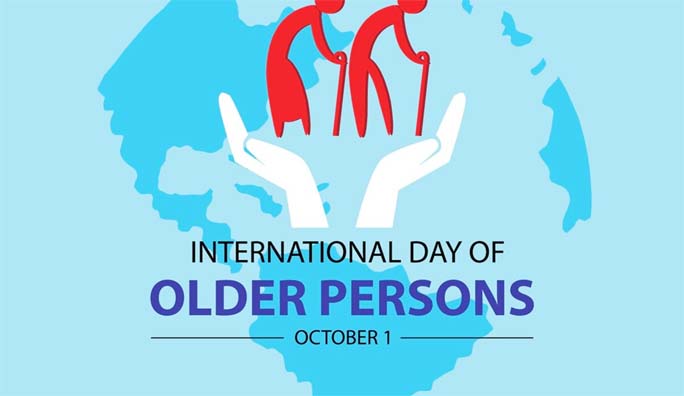
The International Day of Older Persons is observed every year on 1 October, which is a decision taken by the United Nations General Assembly on 14 December 1990.
The main objective of observing this day is to protect older citizens, ensure their rights and create global public awareness about the problems related to aging.
This day emphasizes the rights and protection of older persons, so that they can live a dignified life in society.
The theme of International Day of Older Persons 2025 is – “Older Person Driving Local and Global Action: Our Aspiration, Our Well Being, and Our Rights”.
For the 2025 Senior Citizens Day, various programs were taken up by the Ministry of Social Welfare and the Department of Social Services of the Government of Bangladesh, including rallies, discussion meetings, awareness programs on the health and rights of senior citizens yesterday.
To provide social security to senior citizens, a constitutional commitment has been inserted for helpless senior citizens as per Article 15(d) of the Constitution of the People’s Republic of Bangladesh.
Steps such as effective implementation of the “Parental Maintenance Act, 2013” and provision of agricultural loans or easy loans for income-generating activities for poverty-stricken senior citizens on soft terms are also included.
Also the government has taken important steps for the welfare of senior citizens by introducing the Senior Citizens Allowance Program in FY1997-98.
Senior citizens in Bangladesh are mainly subjected to four types of oppression: mental abuse, physical abuse, financial abuse and neglect.
According to a report, 88% of the elderly in Bangladesh are victims of emotional abuse, 83% of neglect, 54% of financial abuse, and 40% of physical abuse. Emotional abuse: This includes belittling, humiliating, belittling, and showing disdain towards the elderly. Physical abuse: Causing physical pain or injury to the elderly.
Financial abuse: Depriving the elderly of money or assets or keeping them away from financial benefits. Neglect: Being indifferent to the basic needs of the elderly, such as food, clothing, and medical care, or not taking care of them.
Unfortunately, it is true that in many families, children neglect their parents, which causes emotional and financial deprivation.
This neglect includes considering the parents as a burden, showing extreme cruelty towards them, and avoiding the responsibility of looking after them.
This moral decline is a growing problem in society, as a result of which many elderly parents become victims of deprivation in their old age.
The way to prevent this problem can be – awareness of the responsibilities of children towards their parents should be increased in society and the family.
Emphasis should be placed on moral education in the family and society, so that children respect their parents from an early age. It is necessary to create a strong and positive relationship between parents and children, so that there is attraction towards each other and care for each other.
All religions of the world have prescribed due respect for the elderly as a duty. Below is a brief overview of the views of Muslims, Hindus, Buddhists and Christians on this matter.
In Islam, the highest importance is given to respecting, loving and serving the elderly, especially elderly parents. The Holy Quran has ordered not to worship anyone except Allah, but to treat parents well. Allah Almighty says in the Holy Quran, “And your Lord has commanded that you worship none but Him, and be good to your parents.
If one or both of them reach old age with you, do not say to them ‘Uff’ or rebuke them, but speak to them with words of kindness.” (Surah Bani Israel, verse 23). The Quran enjoins kindness not only to parents, but also to relatives, orphans, the needy, neighbors, companions, bystanders, and those whom your right hands possess, which includes the elderly.
Hinduism emphasizes serving the elderly, as it is part of religious duty and morality. According to Hinduism, it is the responsibility of every individual to respect, look after and perform duties towards the elders of the family. It is also a part of the cycle of life and an important aspect of paying homage to the ancestors, who are honored through the ‘Shraddha’ ceremony. Serving the elderly is seen as a natural and sacred duty in Hindu families.
According to Buddhism, serving the elderly is an important moral duty and a path to happiness. Gautama Buddha emphasized being kind to all living beings, protecting the weak, and serving the sick.
This service not only achieves personal virtue, but also helps in building a better society. Buddhism teaches that serving the poor and vulnerable, especially the elderly, is everyone’s moral responsibility. Serving the sick and weak is a path to freedom from suffering.
According to Christian religious beliefs, respecting and serving the elderly is an important religious duty. They should be valued for their knowledge and experience and their needs should be met. Jesus Christ taught his followers to show kindness, compassion, and love to one another.
Serving the elderly is an important part of this love because of their vulnerability and need for care. Christianity teaches that every human being is a creation of God and caring for each other is a way of serving God.
Poets and writers have mentioned different stages of life and experiences, which express their thoughts about the elderly. For example, Kazi Nazrul Islam in his poem says, “Young and old” asks the young and the old to take the initiative to abandon despair. This emphasizes the need for the young and the old to work together and strive for positive change.
It is the responsibility of all in the society to ensure their financial, social and health security and prevent discrimination and neglect against them. The elderly should be protected from discrimination, neglect and abuse by the family, society and the state. The elderly are the assets of a society, and it is essential to ensure a dignified life for them by recognizing their contribution.
(The author is an Essayist, Writer and President of the International Anti-Drug Organization – Freedom International Anti-Alcohol). Email Address:[email protected])