Khulna warehouses: Insect nuisance still continues

Khulna Correspondent :
Every year, the government spends Tk 12 lakh to protect rice stored in Khulna’s public warehouses from insect attacks. Yet, exposing deep flaws in the country’s public grain storage system, and raising questions about whether public funds are being used to manage symptoms rather than solve the problem.
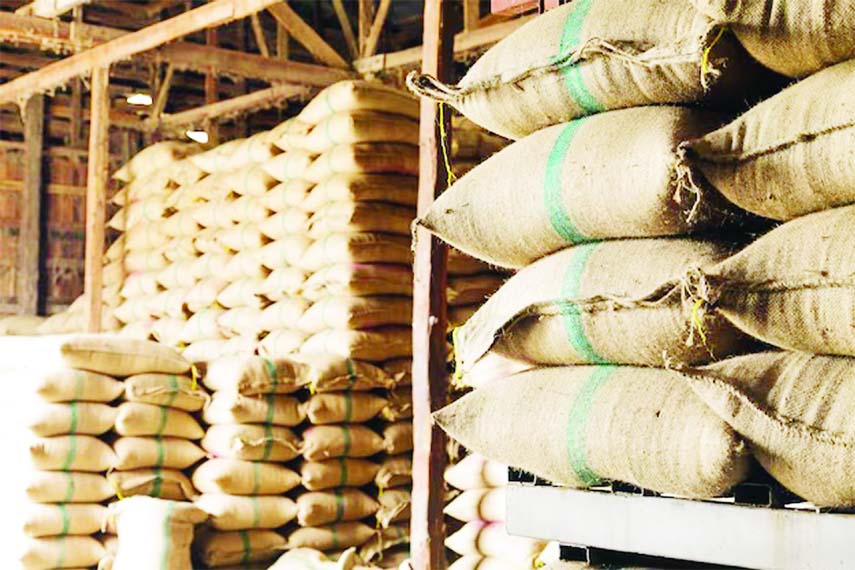
Rice stored in two central warehouses and eight upazila-level godowns in Khulna is repeatedly attacked by insects, largely because it is packed in jute sacks, which are easily penetrated by pests. Officials confirm the spread of powdery mildew and lotus moth has become a routine annual occurrence.
To control the infestation, the authorities appoint contractors each year to spray Fenitrothion-50, a chemical pesticide. The cost amounts to around Tk 1 lakh per month, totalling Tk 12 lakh annually an expense that has continued for years with no permanent solution in sight.
According to the District Food Office, Khulna’s warehouses have a total storage capacity of 1.31 lakh metric tonnes, while the current stock stands at 66,000 metric tonnes. Of this, nearly 45,000 metric tonnes of Boro (parboiled) rice, stored mostly in jute sacks, remain highly vulnerable to infestation. An additional 2,800 metric tonnes of imported rice from India is also stored in the same facilities.
Food officials admit that insect attacks occur every year, particularly during the summer season. In winter, fog and adverse weather often make pesticide spraying impossible-leaving rice stocks exposed for weeks.
“We have no alternative. Stored rice and wheat will be attacked by insects,” said District Food Officer Md Tanvir Hossain. “Even so, jute sacks must be used as per government policy.”
While Bangladesh continues to spend millions each year on pest control, modern grain preservation methods such as hermetic storage bags, steel silos, temperature-controlled facilities, and non-chemical fumigation remain largely absent at district-level warehouses.
Food management experts warn that continued reliance on chemical pesticides raises health, environmental, and food safety concerns, while also masking inefficiencies in storage infrastructure.
“The issue is not insects it’s the system,” said a food policy analyst, requesting anonymity. “You can spray pesticides every year, but unless you modernize storage, you are simply paying to repeat the same failure.”
Although officials did not disclose figures on actual rice losses, insiders say quality degradation and wastage are inevitable when infestation recurs annually costs that are ultimately borne by the public.
The annual appointment of pesticide contractors also raises concerns over procurement transparency and accountability, especially when the same solution is repeatedly applied despite limited effectiveness.
Documents from the District Food Office confirm that pesticide use spikes during the summer months, when infestation is most severe. Yet no long-term investment plan exists to reduce dependence on chemicals or replace jute sacks with more durable alternatives.
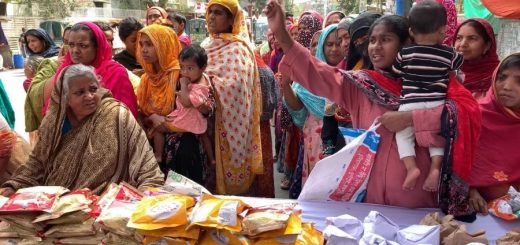
Authorities maintain that rice prices remain stable due to sufficient government stocks. Rice-laden vessels have recently anchored at Mongla Port, and unloading is underway to stabilise the market. Government rice is also being sold to low-income people at Tk 30 per kg.
Under the Food-Friendly Programme, 83,120 families in Khulna will be covered during February and March, with each family receiving 30 kg of rice at Tk 15 per kg. The programme is scheduled to continue until August-November.
However, analysts caution that distribution success cannot offset storage failure.
Khulna’s experience reflects a broader national issue: a food storage system struggling to keep pace with rising procurement volumes, climate challenges, and modern safety standards.
Without urgent investment in upgraded storage infrastructure and a review of long-standing packaging policies, experts warn that public funds will continue to be spent year after year to manage preventable losses-while the core problem remains unresolved.
As Bangladesh aims to strengthen food security amid global uncertainty, Khulna’s warehouses stand as a stark reminder that stockpiling grain is not enough-preserving it safely is equally critical.