
Inflation surges as rice remains costly
Reza Mahmud :
Rice prices in Bangladesh continue to climb during the full Boro paddy season, despite duty exemptions for importers and falling international prices, raising concerns over food and overall inflation. Experts have described the trend as abnormal and urged the government to identify the underlying causes and take strict action.
A report released on Sunday by the General Economics Division (GED) of the Bangladesh Planning Commission highlighted that rice remains a key driver of both food and overall inflation.
Overall inflation stood at 8.55 per cent in July, slightly up from 8.48 per cent in June, while food inflation rose to 7.56 per cent. Rice alone accounted for more than half of food inflation in July, with medium and coarse varieties contributing 24 per cent and 18.39 per cent, respectively.
“All three categories of rice are experiencing double-digit inflation,” the report noted. Experts have alleged that syndicates, particularly at the miller level and sometimes wholesale traders, are behind the sustained price increases.
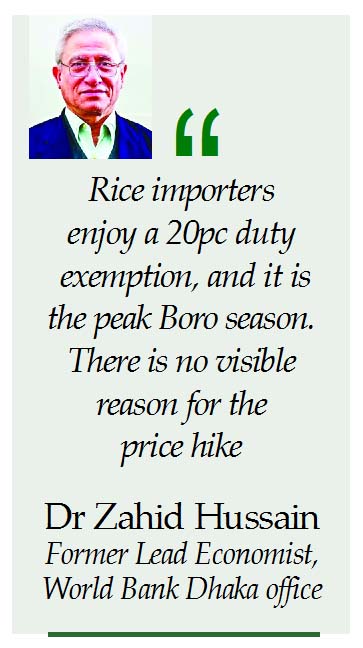
Dr Zahid Hussain, former Lead Economist at the World Bank’s Dhaka office, told The New Nation: “Rice importers enjoy a 20 per cent duty exemption, and it is the peak Boro season. There is no visible reason for the price hike. The government must identify the culprits and address the issue at its root to protect consumers from inflation.”
Sources indicate that fine rice has faced price pressure over the past year, with medium and coarse rice joining the trend since December 2024. In July, prices of all types hovered around 15 per cent inflation year on year. In Dhaka, coarse rice sold for Tk 55-60 per kilogram, up 7.48 per cent compared with July 2024, according to Trading Corporation of Bangladesh data.
Although the expected bumper Boro harvest was intended to stabilise prices from June, Bangladesh Bureau of Statistics estimates showed that Aus production fell 0.85 per cent and Aman production dropped 6.04 per cent in FY2024-25, due to adverse weather and floods.
The government procured 16.44 lakh tonnes of Boro rice as of 13 August, exceeding the planned 14 lakh tonnes. However, rice distribution in July fell 36 per cent year on year to just 62,889 tonnes. To bolster supply, 242 private importers were allowed to bring in five lakh tonnes, with instructions to release stock by 30 September. The GED noted that these measures may take time to influence retail prices and warned that uncertain weather could further strain supply.
Meanwhile, the inflationary impact of vegetables and root crops eased in July. At the macroeconomic level, policy tightening by Bangladesh Bank and the finance ministry, including higher interest rates and import restrictions, helped stabilise inflation and the exchange rate by mid-2025. Fiscal challenges remain, prompting the dissolution of the National Board of Revenue and the creation of two new bodies to improve tax collection and governance in the coming years.