
India expresses concern over AL ban
Staff Reporter :
Bangladesh’s Election Commission has suspended the registration of the Awami League, effectively barring the country’s longest-standing political party from participating in the next general elections.
The decision, announced late Monday, follows a government ban on the party’s activities amid a high-profile tribunal investigating alleged crimes committed under the leadership of Sheikh Hasina.
India, Bangladesh’s influential neighbor and former ally of the Awami League, described the development as “concerning.”
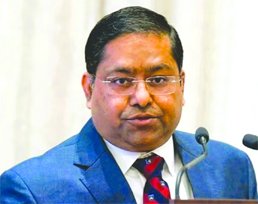
“The ban on the Awami League is a concerning development,” said Indian foreign ministry spokesman Randhir Jaiswal during a briefing in New Delhi on Tuesday. “We strongly support the holding of free, fair and inclusive elections in Bangladesh.”
The announcement came two days after the interim government led by Nobel Peace laureate Muhammad Yunus prohibited all organisational activities of the Awami League and its affiliated groups. The sweeping ban, pending the outcome of legal proceedings, marks a dramatic turning point in the country’s political history.
“This suspension follows a recommendation from the home ministry,” said Akhtar Ahmed, senior secretary of the Bangladesh Election Commission. “The home ministry has imposed a ban on all sorts of organisational activities of the Bangladesh Awami League and the organisations aligned with it. In continuation of that decision, the Election Commission has decided to suspend the AL’s registration with the commission.”
The ban and suspension come amid a series of political reckonings triggered by last year’s violent crackdown on opposition-led mass protests, which ultimately led to the fall of the Hasina government. According to the United Nations, as many as 1,400 people were killed in July and August 2024 during what it described as a brutal campaign to suppress dissent.
Hasina, now 77, has remained in self-imposed exile in India since her ouster and has refused to return to face charges of crimes against humanity. A warrant for her arrest has been issued by Bangladeshi authorities.
The current interim administration, appointed after the collapse of Hasina’s administration in August 2024, has vowed to oversee a transition to democratic rule. Muhammad Yunus, 84, who took the helm in a rare consensus move by civil and political actors, has promised parliamentary elections by December this year or no later than June 2026.
Under Bangladesh’s electoral laws, political parties must be registered with the Election Commission to participate in elections or carry out any political activity. Monday’s directive also prohibits the Awami League from holding public rallies, conferences, or organizational meetings while the International Crimes Tribunal – originally established by Hasina’s own government in 2009 – investigates its role in alleged abuses.
This is the third time the Awami League has been banned since Bangladesh’s independence in 1971. Once the party that led the country’s liberation struggle, the Awami League now finds itself sidelined by a transitional authority confronting the legacy of its own rise and fall.