
IN MEMORY OF BARRISTER MAINUL HOSEIN
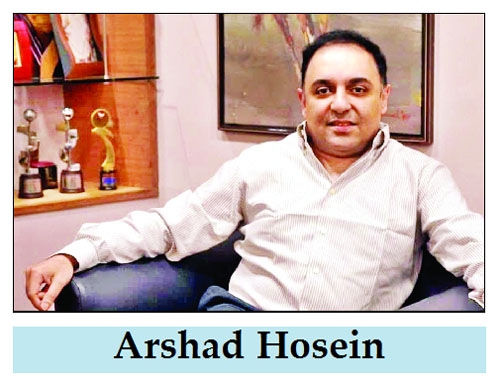
A Formal Tribute from His Son
Honouring the Political and Legal Legacy of Barrister Mainul Hosein

As his son, I respectfully honour the memory of my father, Barrister Mainul Hosein, whose lifelong dedication to the political and legal advancement of Bangladesh stands as a testament to his integrity, courage, and deep commitment to public service. His career was defined by a steadfast belief in the rule of law and the conviction that democratic governance must always serve the interests of the people.
Legal Contributions
My father’s contributions to the legal field were distinguished and far-reaching. As a barrister trained in the United Kingdom, he brought a rigorous understanding of constitutional law to Bangladesh at a time when the nation was still shaping its identity.
Throughout his legal career, he defended fundamental rights, advocated for judicial independence, and consistently argued for the fair application of law.
He was known for the clarity of his reasoning, his principled advocacy, and his refusal to compromise on matters affecting justice.
His work helped strengthen the relationship between the judiciary and the democratic process, reinforcing the idea that the courts must remain a guardian of the people’s rights.
Colleagues and observers alike respected him for his courage in raising legal questions that others avoided, always placing constitutional integrity above political convenience.
Political Contributions
In public life, my father’s political contributions were equally significant. He served the nation with conviction, offering guidance and critique at pivotal moments in Bangladesh’s political journey.
As a member of the cabinet and later as a commentator on national affairs, he worked to advance transparency, accountability, and responsible governance.
He engaged in politics not for personal gain, but to defend democratic values.
His participation in political discourse—often through his writings, speeches, and interviews—challenged complacency and encouraged reform.
He believed that a strong democracy depends on active scrutiny and honest debate, and he contributed to this through his leadership at The New Nation, where he championed press freedom and gave voice to issues affecting ordinary citizens.
He carried forward the legacy of his father, Toffazzal Hossain Manik Miah, by continuing the family tradition of standing firmly for democracy, civil liberties, and open political dialogue.
In moments of national crisis, he remained committed to constitutional order and the protection of institutions vital to Bangladesh’s future.
His Commitment to the Independence of the Judiciary
A defining element of Barrister Mainul Hosein’s philosophy was his unwavering dedication to the independence of the judiciary, which he regarded as the cornerstone of a democratic state.
Throughout his legal career and during his time in public office, he consistently argued that the courts must remain free from political pressure, administrative interference, and partisan interests.
He championed the principle that justice can only flourish when the judiciary is empowered to act impartially, guided solely by law and conscience.
In his writings, speeches, and legal advocacy, he warned against any erosion of judicial autonomy and called for reforms that would strengthen judicial oversight, transparency, and separation of powers.
As an Advisor to the Caretaker Government, he reaffirmed his belief that credible governance depends on a judiciary trusted by the people and insulated from influence.
His voice became one of the most principled and consistent defenders of judicial independence in modern Bangladesh, leaving a legacy that continues to shape legal and constitutional
thinking today.
His Role as an Advisor to the Caretaker Government
During his tenure as an Advisor to the Caretaker Government of Bangladesh, Barrister Mainul Hosein played a pivotal role at a moment of exceptional national sensitivity.
Entrusted with responsibilities crucial to maintaining state stability, he worked to restore public confidence in governance during a period marked by political tension and uncertainty.
As an advisor, he oversaw portfolios that required strong constitutional understanding, impartial judgment, and a firm commitment to public welfare.
He advocated for institutional transparency, administrative accountability, and the rule of law, believing that a neutral caretaker administration must protect the rights of citizens while guiding the country toward a credible electoral process.
His decisions and guidance during this time reflected his lifelong principles: that governance must be fair, restrained, and rooted in constitutional duty, and that no authority is above public accountability.
His service contributed to stabilising the state machinery and upholding the democratic framework at a decisive turning point in national history.
A Legacy of Service
As his son, I remain deeply proud of the example he set. His legal and political contributions were shaped by his unwavering belief that Bangladesh deserves a just, transparent, and accountable system of governance.
His work strengthened public institutions, enriched national discourse, and inspired many who looked to him for guidance.
On his second death anniversary, I honour him not only as a father, but as a national figure whose influence continues to shape our political and legal landscape.
His legacy lives on in the democratic ideals he championed and in the enduring commitment to justice that defined his life’s work.
With deepest respect,
Arshad Hosein
Son of Barrister Mainul Hosein