
Dhallywood: I don’t want to be confined within a country or a language : Jaya
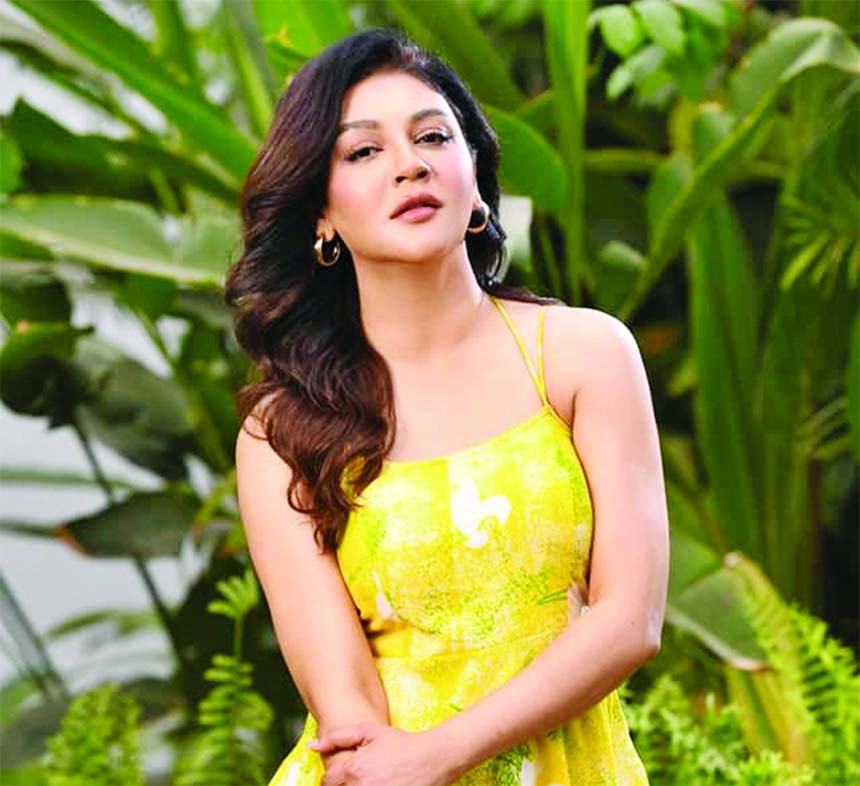
Entertainment Report :
This year seems to entirely belong to Jaya Ahsan. She has captivated audiences in both Bangladesh and India with one film after another – Tandob, Utsab, Dear Maa, and Putul Nacher Itikotha.
In each project, she has appeared in diverse roles, proving once again that her greatest strength lies in breaking herself down and rebuilding anew every time. Most recently, her Bangladesh-Iran joint production film Fereshte has been released.
The film, directed by Iranian filmmaker Morteza Atash Zamzam, tells the stories of marginalized lives. For Jaya, Fereshte is not just another role; it is also a journey of self-discovery.
“When the lives of marginalized people are captured on camera, it no longer remains just a film – it becomes a responsibility,” said Jaya. “I tried to carry that responsibility with sincerity.”
About her character in Fereshte, Jaya chose not to reveal much. She wants to keep the audience’s curiosity alive. But giving a small hint, she said, “I played the role of one of those marginalized, struggling, and courageous people who live quietly around us, whose lives merge with ours silently, yet we rarely notice. That’s why I want the audience to discover it themselves on screen.”
Fereshte is not just a film but also a reflection of Jaya’s artistic vision. Interestingly, she is also a co-producer of this project.
At every stage of her career, Jaya has displayed remarkable versatility. On one hand, she is acting in critically acclaimed films in Kolkata, and on the other, she is doing films in Dhaka that raise profound questions about society and relationships. But in Jaya’s words, “I don’t want to be confined within a country or a language. For me, the character itself is the essence – where it is told or in which language it is told, that doesn’t matter as much.”