
Hilsa fishing to resume as two-month ban ends tonight
NN Online:
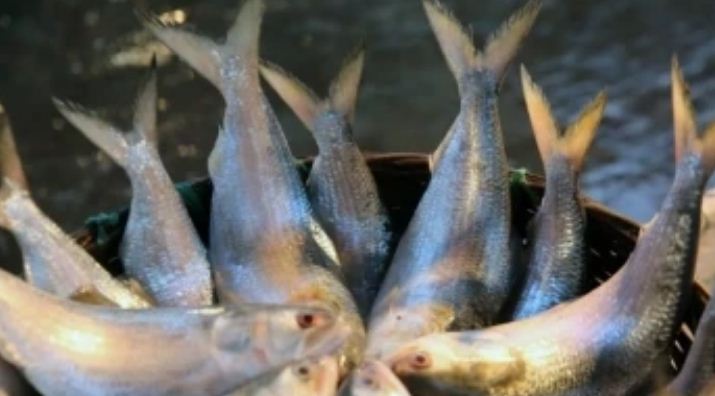
Fishermen are gearing up to resume hilsa fishing as the two-month government ban on catching, selling, and transporting jatka (hilsa fry) comes to an end at midnight on Wednesday.
Around 50,000 fishermen—including 44,035 officially registered—have been preparing by repairing nets and boats, ready to return to the Padma and Meghna rivers in search of hilsa.
During a visit to key fishing hubs including Ananda Bazar, Lalpur, Bishnadi, Safarmali, Kanudi, Bishnupur, Tilabari, Boro Station Molhead, Puran Bazar Ronagoal, Harishobha, Dokanghar, Baharia, Laxmipur, Hanarchar, Harina, and Akhoner Haat, a UNB correspondent observed intense activity as fishermen made final preparations.
The fishing ban, enforced from March 1 to April 30, covered a 70-kilometre sanctuary stretching from Shatnol in Matlab North to Char Bhairabi in Haimchar upazila, aimed at protecting juvenile hilsa.
Golam Mehedi, District Fisheries Officer, stated that during the ban period, each registered fishing family received 40 kilograms of rice in four phases as government assistance.
Strict enforcement efforts by the district task force, Coast Guard, and River Police played a crucial role in deterring violations, he said. “Due to frequent operations, fishermen who tried to defy the ban could not gain much advantage in the river.”
As part of enforcement, 300 fishermen were sentenced to jail terms through 40 mobile court drives. Authorities also seized nearly 10.9 lakh meters of current nets and 6.5 metric tonnes of jatka, imposing fines amounting to Tk 3 lakh.
However, Dr Anisur Rahman, a researcher at Chandpur Fisheries Research Institute, noted a decline in hilsa movement in the Meghna-Padma region of Chandpur. He attributed this to the emergence of river shoals and other ecological challenges, and stressed the importance of halting water pollution and indiscriminate sand extraction to restore the habitat.
To boost hilsa production—the national fish of Bangladesh—the government imposed the seasonal ban in Chandpur’s Padma-Meghna rivers, covering the vital 70 km breeding sanctuary.