
Hilsa fishing resumes as 22-day ban ends
Business Report :
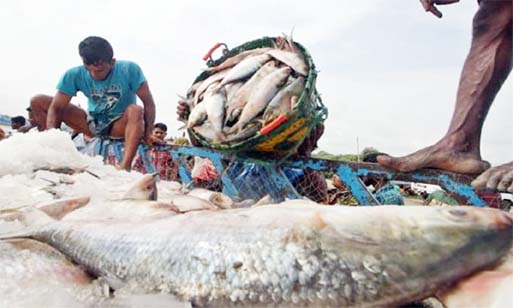
Fishermen across Bangladesh returned to rivers and the sea early Sunday as the government’s 22-day nationwide ban on catching, transporting, and selling Hilsa officially ended at midnight.
The annual ban, imposed from October 4 to October 25, is part of a long-running government initiative to protect mother Hilsa during its peak breeding season.
The Ministry of Fisheries and Livestock, in coordination with the Coast Guard, River Police, and local administration, conducted over 65,000 enforcement drives across key breeding zones including Chandpur, Bhola, Barishal, Patuakhali, Barguna, and Laxmipur to ensure compliance.
According to the Department of Fisheries, the embargo helped safeguard millions of spawning fish, which are expected to contribute to a strong rebound in Hilsa production this year.
“We maintained strict monitoring throughout the ban period and are hopeful for a record catch in the coming months,” said a senior fisheries officer.
In Chandpur and Bhola, hundreds of trawlers set out before dawn as fishermen celebrated the end of the restriction.
“It feels good to be back on the river,” said Abdul Karim, a fisherman from Haimchar. “We followed the ban hoping for a better catch now we just want fair prices.”
Although fishing has resumed, early reports suggest catches remain lower than expected, with many fishermen blaming rough weather and lower water salinity for slower returns.
In coastal markets, the price of Hilsa initially dropped slightly selling for Tk 1,400-1,600 per kg, down from over Tk 2,000 before the ban but is expected to stabilize as supply improves.
During the ban, the government distributed food aid to registered fishermen families to help offset the income loss. Around 500,000 families benefited from the program nationwide, officials said.
Hilsa, Bangladesh’s national fish, contributes nearly 12 percent of the country’s total fish output, and supports the livelihoods of about 4.5 million people along the coast.
In 2024, Bangladesh produced over 570,000 tonnes of Hilsa, with exports earning nearly $60 million, mainly from shipments to India and the Middle East.
Officials believe this year’s ban will lead to a further rise in production. “The conservation effort has proven effective over the years,” told The New Nation Md. Shafiqul Alam, Director of the Hilsa Research Program. “Each season of restraint ensures the sustainability of this vital resource for our economy and our people.”