
Healthcare gains spotlight after Jamaat chief’s surgery
Staff Reporter :
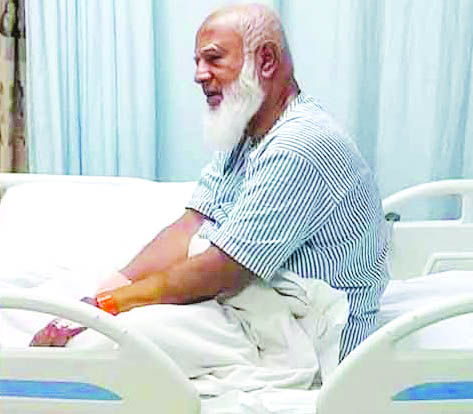
In a notable shift from established norms among the country’s political elite, Bangladesh Jamaat-e-Islami chief Dr Shafiqur Rahman has successfully undergone open-heart surgery at a leading Dhaka hospital, reinforcing growing trust in the nation’s healthcare capabilities.
The 67-year-old politician and physician underwent a four-vessel coronary artery bypass graft procedure on Saturday at United Hospital, one of Dhaka’s premier private medical institutions.
The surgery was performed by acclaimed cardiothoracic surgeon Dr Jahangir Kabir and his team after multiple arterial blockages were detected, necessitating urgent intervention.
Dr Rahman fell ill during a mass rally at Suhrawardy Udyan on 19 July. Subsequent angiography revealed five to six significant arterial blockages, with three exceeding 80 percent.
While stenting was initially considered, doctors ultimately recommended open-heart surgery as the safer option. The operation proceeded without complications, and the Jamaat leader is expected to be discharged within the week.
Dr Kabir described the successful surgery as a milestone for Bangladesh’s healthcare sector. “Dr Rahman’s decision to rely on local medical expertise instead of seeking treatment abroad should instil confidence in Bangladesh’s advancing medical services,” he said. “We have the
skills, technology, and dedication to manage complex procedures domestically.”
This case has attracted widespread attention given the longstanding tendency among political figures and government officials to seek medical treatment overseas – often in Singapore, India, or the UK – for conditions that can now be addressed within Bangladesh. Critics have long criticised this practice as an elitist dismissal of the national health system, undermining public trust in local care.
Jamaat-e-Islami officials framed Dr Rahman’s choice as both personal and political. In a public statement, the party expressed gratitude to the surgical team and hailed the outcome as a victory of faith – both spiritual and institutional.
“Dr Shafiqur Rahman’s example demonstrates that high-quality healthcare is available in Bangladesh,” the statement read. “We hope this will encourage others to reconsider the belief that critical treatment must be sought abroad.”
Healthcare experts echoed this view, describing the surgery as a symbolic turning point. “This is not simply one individual’s experience,” said a Dhaka-based public health analyst. “It challenges the entrenched perception that serious medical care cannot be provided here.”
This sentiment aligns with growing momentum for healthcare reform. On 1 August, members of the Health Sector Reform Commission issued an open letter to Chief Adviser Professor Muhammad Yunus urging the commencement of essential healthcare reforms and their inclusion in the forthcoming July Charter 2025.
Signed by leading medical academics and public health specialists, the letter acknowledged Bangladesh’s progress but warned that systemic weaknesses and governance challenges continue to hamper public confidence. “Major health reforms are no longer optional – they are imperative,” the signatories stated.
They recommended three immediate measures are to establish a Permanent Health Commission – an independent statutory body to oversee long-term reforms, implement a universally free primary healthcare system featuring mandatory referral pathways and quality infrastructure across urban and rural regions and create a time-bound Steering Committee, led by Advisory Council members under the Chief Adviser’s Office, to monitor reform implementation.
The commission suggested that initiating these steps by mid-August could enable necessary legal frameworks to be in place by December 2025, facilitating tangible improvements by early 2026. Although the interim government’s mandate is limited, many key reforms fall within its remit.
“Starting now would not only be pragmatic – it would send a powerful moral message,” said Dr Syed Abdul Hamid, convenor of the Alliance for Health Reforms Bangladesh and a letter signatory. “It would honour those who have fought for progress and demonstrate that meaningful change is achievable.”
The commission had previously submitted comprehensive recommendations on 5 May, calling for a sweeping overhaul including free primary care, establishment of a dedicated health service cadre, increased hospital staffing, expansion of essential medicines lists, and greater public investment to reduce outbound medical tourism.
As Dr Rahman recovers in Dhaka, his successful surgery has sparked discussion beyond political circles, becoming a focal point in the national debate on healthcare sovereignty and reform. For now, the operation stands as a powerful testament to the value of trusting – and investing in – Bangladesh’s own medical system.