
Abu Sayed murder’s testifies: Hasnat seeks maximum punishment for culprits
Staff Reporter :
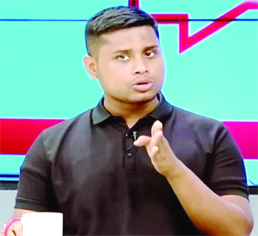
National Citizen Party (NCP) leader Md Abul Hasnat yesterday testified before the International Crimes Tribunal-2 in the case concerning the killing of Begum Rokeya University, Rangpur (BRUR) student Abu Sayed during the July 2024 Mass Uprising.
Appearing as a prosecution witness, Hasnat delivered detailed testimony tracing the movement’s trajectory from the 2018 quota reform protests to the nationwide uprising that culminated in Sayed’s death.
Hasnat, the NCP’s chief organiser for the southern region, told the tribunal that on July 14 last year student leaders had submitted a memorandum to the President amid growing tensions on campuses. Later that night, former prime minister Sheikh Hasina returned from China and made what he described as “provocative remarks” during a press briefing, sparking widespread anger among students at Dhaka University. He said Chhatra League activists attempted to block student marches and harassed female participants. The following day, on July 15, students declared a protest at the Raju Memorial Sculpture, while Dhaka University Chhatra League and its Dhaka north and south units announced counter-programmes at the same location. Hasnat said comments by then Awami League general secretary Obaidul Quader about “suppressing the movement” emboldened ruling-party student activists.
He alleged that Chhatra League activists led by Saddam, Enan, Soikot and Shayon attacked the peaceful marchers on campus, again targeting female students. The violence, he said, triggered nationwide outrage. Hasnat testified that he himself was beaten near the Registrar Building and required hospital care, and that injured students were later attacked again at hospitals.
Hasnat recounted that nationwide protests erupted on July 16. At BRUR that day, police entered the campus, where student Abu Sayed was shot before succumbing to his injuries. He referred to additional deaths, including that of Chhatra Dal activist Wasim in Chattogram’s Sholoshahar area, bringing the day’s nationwide fatalities to six. He also stated that on July 17 he and fellow coordinator Sarjis Alam were detained by intelligence personnel and subjected to physical and psychological abuse until July 19.
Following his testimony, Hasnat was cross-examined by defence lawyers Aminul Gani Titu, Azizur Rahman Dulu and others. Chief Prosecutor Muhammad Tajul Islam, in his opening remarks, described Sayed as a symbol of courage during the uprising and alleged that he was shot at point-blank range by two policemen. The tribunal was shown two video clips submitted by the prosecution.
Six of the 30 accused were produced before the tribunal: former BRUR proctor Shariful Islam, former assistant registrar Rafiul Hasan Russel, former staffer Md Anwar Pervej, former assistant sub-inspector Amir Hossain, former constable Sujan Chandra Roy and former BRUR Chhatra League general secretary Imran Chowdhury Akash. The tribunal framed charges against all 30 on August 6, after prosecutors sought charge framing on July 30. Defence lawyers had earlier submitted discharge petitions for the detained accused.
The tribunal appointed six state defence counsels on July 22 to represent fugitives in absentia. Arrest warrants were issued on June 30 against 26 fugitives, including former BRUR vice-chancellor Professor Md Hasibur Rashid. The investigation agency submitted its final report on June 24, accusing 30 individuals, including the former commissioner of Rangpur Metropolitan Police. Four arrestees were interrogated on June 18 and 19 after being formally shown arrested on April 9.
According to the prosecution, shortly before Sayed was fatally shot on July 16, the then proctor allegedly forced students off the campus with the help of Chhatra League activists. Prosecutors say two policemen subsequently fired on Sayed at close range. His family filed a complaint on January 13 this year naming 25 individuals.
The tribunal will continue hearing the case in the coming days as prosecutors present further witnesses and evidence.