
Hasina era looting pushes economy to edge: Experts
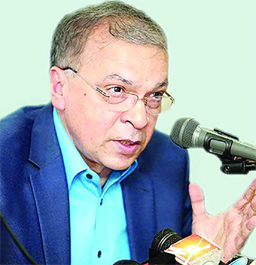
Reza Mahmud :
Widespread plundering in every sector during the ousted prime minister Sheikh Hasina regime pushed the national economy to a serious vulnerable situation which is now reflecting gradually, experts said.
Economists said a culprit circle of Hasina has eaten every sector of the economy including banks, stock markets, allocations of different development projects, insurance, housing, export, import and other businesses, education and allocations of the social safety programme.
They said, Hasina’s close allies Salman F Rahman, S Alam, Nazrul Islam Majumder and a number of her party leaders embazzled huge money in different ways including taking unlimited loans from public and privately managed banks.
They also plundered state money from a number of mega projects including the Padma Bridge, several elevated expressways, metro rail, different flyovers and such other large projects.
Mammoth amount of money siphoned abroad after plundering make the country’s investment nearly zero. The countries where the money were laundered are become beneficiaries while Bangladesh gets hardship due to lack of investments.
World Bank on Tuesday released a report where it showed that one-third, as well 6.2 crore of Bangladeshi population posed risks to return poverty.
Experts said a massive earning discrimination was created in the country which makes a few people millionaires while the large portion of the population remaining in poverty.
When contacted, Dr. Iftekharuzzaman, eminent economist and Executive Director of Tranparency International Bangladesh (TIB) on Wednesday told The New Nation, “During Hasina era, massive amount of money plundered from every sector, made the country’s economy vulnerable.”
He said the rich people who were remained close to state power become richer day by day while the poor become poorer as well.
Dr. Zahid Hussain, former Lead Economist of the WB, Dhaka Office, also echoed the same while talking with The New Nation, saying widespread political corruption in Hasina era played the pivotal role behind the non-sustainability of the country’s economy.
He said the corruption has made the economic non-sustainability in various sides of the country including development projects to investment in education, health and electricity.
Contacted, eminent economist Professor Dr. Muinul Islam said, after Hasina’s fall about 6pc of the population went lower of poverty level in the past one year.
Sources said, following Hasina’s deletion on August 5, 2024, widespread corruption and embezzlement in the banking sector during her nearly 16-year tenure has come to light.
The hasty increase in millionaires under the Awami League era has reversed sharply.
Bangladesh Bank data showed approximately 1,657 millionaire accounts, each with a minimum balance of Tk1 crore, have disappeared within three months following Hasina’s ousting.
Meanwhile, a documentary released on September 10 by the UK’s Financial Times, titled ‘Bangladesh’s Missing Billions, Stolen in Plain Sight’, spotlights an estimated $234 billion allegedly laundered abroad during Hasina’s 16-year tenure.
Apart from these, the interim government’s White Paper committee’s report said, about US$16 billion was laundered abroad annually during Hasina’s corrupt autocracy’, leaving the country in a state of plunder and economy in a muddle when she fled to India. Dr Debapriya Bhattacharya, a top economist and distinguished fellow of Centre for Policy Dialogue, headed the expert panel.
On the other hand, Bangladesh Bank’s data showed, the country is on the brink of a full-scale banking crisis, exacerbated by economic stagnation and political upheaval following the collapse of the Hasina regime. At the heart of this crisis lies a banking sector plagued by skyrocketing non-performing loans (NPLs) and pervasive financial mismanagement.
The central bank’s data disclosed a sharp increase in classified loans, surging from Tk 2.45 trillion in September to Tk 3.45 trillion in December 2024. Consequently, the NPL ratio jumped from 16.9 per cent to an alarming 20.2 per cent within just three months. In global finance, an NPL ratio exceeding 10 per cent signals severe distress, often is necessitating immediate regulatory intervention.