
Grass Sales Feed Thousands in Tangail’s Chars
Mustafa Kamal Nannu, Tangail
As the water of the Jamuna River recedes, vast sandbars—known as chars—emerge across the river basin in Tangail. These fertile charlands now produce abundant grass, which has become a vital source of income for thousands of impoverished families in the region.
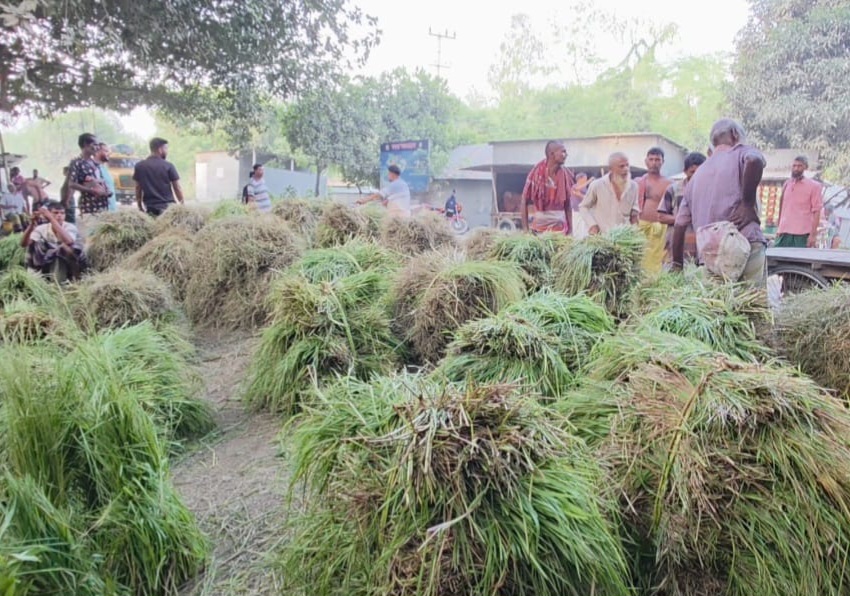
In the river-adjacent areas of Bhuapur, Kalihati, and Gopalpur upazilas, daily grass markets are thriving. Various types of grass—such as Napier, Durba, Gorba, and jackfruit leaves—are sold at rates ranging from Tk 50 to Tk 150 per bundle.
Local vendors report that only in Naingra Bazar, grass sales amount to Tk 30,000–50,000 daily. Overall, monthly sales across the region are estimated at Tk 4 to 5 million. Families rely on this income for sustenance, and even school-going children are participating in harvesting and selling grass.
Dr. Md. Helal Uddin Khan, District Livestock Officer, said, “After floods, grass grows naturally in Jamuna’s charlands. The local poor use it as fodder and sell the surplus in local markets, which helps them become self-reliant.”
This grassroots economy requires no capital, yet empowers marginal communities. Locals believe that with proper training and support from government and livestock departments, the practice can be expanded further.
Once known for fresh fish trading, many of these riverside markets are now dubbed “grass markets.” This shift reflects a quiet but powerful transformation in the livelihoods of Tangail’s char dwellers.