
Governance and Development: Bangladesh Perspective
Prof. Dr. Zahurul Alam :
Although Bangladesh has achieved remarkable gains over the past two decades, its percentile rank for Voice and Accountability and Control of Corruption remains in the bottom 15-20 percentile.
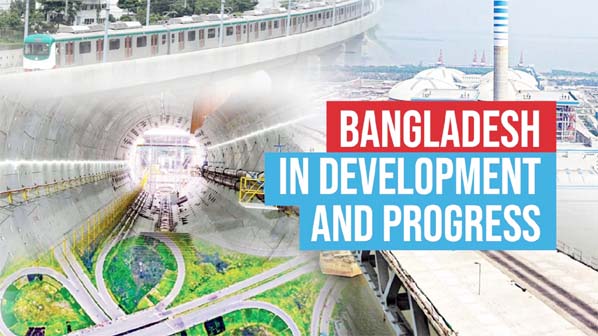
However, the country has transitioned from a low-income to a lower-middle income economy, registered strong GDP growth, improved primary school enrolment, and reduced extreme poverty. Recent digitization efforts have also borne fruit.
According to the 2024 UN Government Development Index, Bangladesh scored 0.6570 and climbed 11 places to rank 100th among 193 countries, above the global average of 0.6382.
These advances illustrate the capacity of Bangladesh to marshal resources, deliver infrastructure and foster human development.
Female education and labor participation rates in Bangladesh are now among the best in South Asia; many social indicators: maternal mortality, primary enrolment, have improved markedly. Yet behind this development façade lie persistent governance challenges.
According to the WGI, Bangladesh’s percentile rank for Voice and Accountability and Control of Corruption remains in the bottom 15-20 percentile.
The Bertelsmann Shiftung Transformation Index (BTI) 2024 categorizes Bangladesh as a “moderate autocracy” with governance scored at 3.66 out of 10, ranked 106th among 137 countries.
In the Varieties of Democracy (VDem) Accountability index, Bangladesh scores -0.203 (negative) for 2023, whereas the world average is +0.555. Meanwhile, the Freedom Index ranks Bangladesh 141st out of 164 countries, and notes a 22 year decline in civil liberties.
These governance figures point to serious institutional deficits: weak accountability mechanisms, constrained participation, and limited voice for opposition and dissent. Service delivery may be improving, but legitimacy, inclusivity and rule of law lag.
The Governance-Development Paradox
What emerges is a paradox: strong development performance despite weak governance foundations. This suggests that Bangladesh has achieved progress through development – driven growth and social investment, perhaps compensating for governance gaps.
But this model is precarious. Without deepening governance reforms, the country risks fragile development that may deliver results today but lacks resilience and legitimacy for tomorrow.
The risk is clear: growth remains dependent on technocratic delivery and political stability, but not anchored in sustained democratic legitimacy and institutional accountability.
This may lead to elite capture of development returns, exclusion of vulnerable groups, and potential reversals in shocks.
Governance in Practice: Key Gaps and Implications
1. Transparency deficits: Despite advances in egovernance, Bangladesh ranks low in data governance. A 2022 survey placed the country 61st among 68 countries in data governance, citing lack of personal data laws and weak publicsector data ethics frameworks.
2. Limited participation and voice: While elections occur regularly, Bangladesh scores poorly on civil liberties, freedom of expression and independent media. Restricted public participation reduces policy responsiveness and constrains citizen oversight.
3. Accountability shortfalls: Indexes show weak control of corruption and limited judicial independence. In practice, accountability often centers on selective anti -corruption drives rather than systemic reform.
4. Responsiveness and service delivery: Bangladesh has made notable efforts -social safety nets, digital service delivery, infrastructure, but service quality and inclusivity remain uneven across rural versus urban divides, informal sectors versus formal.
5. Efficiency and capacity constraints: Massive investments have been made in infrastructure and social services. Yet delays, cost overruns, bureaucratic bottlenecks and lack of performance culture persist. A 2023 World Economics report flagged governance and corruption issues as key constraints despite strong growth.
Strengthen independent oversight bodies, ombudsman, auditing agencies, anticorruption commissions, with protection from political interference.
Foster a culture of public audit: citizens, NGOs and media must be able to track spending and outcomes.
The consequence is that while development outputs are impressive, the governance inputs: social trust, institutional legitimacy, citizen voice are under strain. Without correction, the upswing in development may plateau or become non-inclusive.
It is well understood that the relationship between governance and development is neither optional nor linear: it is foundational.
Good governance provides the enabling environment for development, and development reinforces governance, when legitimacy, participation and rights are embedded.
Bangladesh illustrates both the promise and peril: substantial social and economic gains, but fragile governance foundations that risk undermining longterm sustainability.
Countries cannot treat development as an act of delivery alone; they must invest equally in the how of governance: the institutions, norms and civic infrastructure that make progress legitimate and resilient.
For Bangladesh and similar contexts with rising development but weak governance, three strategic priorities emerge:
1. Institutional reform to embed accountability and transparency
Expand opendata portals, eprocurement, monitoring dashboards and performance metrics.
2. The need for deepening participation and rule-of-law for:
Enhancing local government autonomy and meaningful citizen involvement in planning and budgeting.
Protecting media freedom and civil society space to provide independent scrutiny and citizen voice.
Reforming the judiciary to ensure access, independence and fairness; bolstering legal aid and administrative justice across rural and informal sectors.
3. Aligning development strategy with democratic legitimacy and human rights Embed human rights and inclusion into national development frameworks: ensure that women, minorities and marginalized groups benefit equitably.
Link performance indicators not only to output (e.g., kilometers of road built) but also to outcomes (e.g., equitable access, reduction in inequalities).
Introduce feedback loops from citizens into monitoring and evaluation of development projects.
Support capacity building of public institutions and public servants to shift from compliance to service culture.
For Bangladesh, the task ahead is clear: maintain the momentum of development while bolstering the governance architecture beneath it. Growth alone will not suffice.
Unless institutions respect participation, transparency, accountability, responsiveness and efficiency, development will remain vulnerable and selective.
In a world where global comparative data binds legitimacy and performance ever more tightly, countries must treat governance not as a policy adjunct but as the structural backbone of sustainable progress.
(The author is Dean, School of Business Canadian University of Bangladesh)