Global supply chains and energy volatility: Implications for BD’s trade and industry

Dr. Nasim Ahmed :
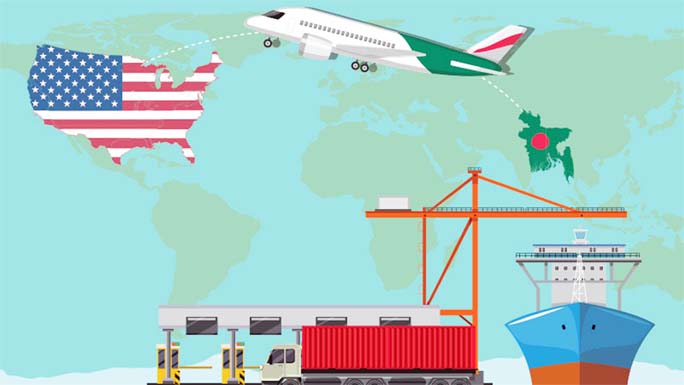
Bangladesh’s economy is tightly connected to the global system through trade, energy imports, and industrial activities.
As one of the world’s top exporters of ready-made garments (RMG), the country depends on efficient supply chains and steady shipping costs to stay competitive.
Simultaneously, its increasing reliance on imported crude oil and liquefied natural gas (LNG) makes it very vulnerable to fluctuations in global fuel prices.
In 2024-2025, global supply chain disruptions worsened due to conflicts in the Red Sea and nearby geopolitical tensions, as well as unstable oil and LNG markets, creating new challenges for Bangladesh’s external balance, industrial output, and overall economic stability.
Drewry’s World Container Index, a key indicator of global shipping costs, more than doubled in early 2024 before decreasing somewhat, while carriers continued to charge war-risk and congestion surcharges into 2025.
Bangladesh’s exports, especially RMG, depend on timely shipments to Europe and North America. Longer transit times and higher costs have decreased competitiveness.
Garment manufacturers say that buyers are becoming more sensitive to delays and sometimes shift orders to competitors like Vietnam or Cambodia, where logistics are more dependable.
This demonstrates how global disruptions directly impact export performance and threaten Bangladesh’s hard-earned market share.
Domestically, Chattogram port remains the primary gateway for trade, handling over 90% of imports and exports. Although ship turnaround times have improved, customs and clearance delays have caused bottlenecks that diminish efficiency gains.
International carriers, such as Hapag-Lloyd, have also reported occasional congestion at Chattogram, adding to the impact of global disruptions. These inefficiencies increase exporters’ logistics costs and decrease the reliability of delivery schedules.
Bangladesh is a net importer of crude oil, refined products, and LNG. The growing dependence on LNG has increased the economy’s vulnerability to fluctuations in the global energy market.
According to the U.S. Energy Information Administration 2025, Brent crude oil prices are projected to average around USD 68 per barrel in 2025, then decline slightly in 2026 as global supply expands.
LNG prices, measured by the Japan Korea Marker, stayed between USD 11 and USD 13 per MMBtu in mid-2025, affected by geopolitical tensions and weather-related demand (JOGMEC, 2025).
Higher oil and LNG prices directly raise the import bill, worsening the current account deficit.
The government implemented an automatic fuel pricing mechanism in 2024, designed to align domestic fuel prices with international benchmarks and reduce subsidies. However, political concerns often cause delays in adjustments, so global price increases add to fiscal burdens, while decreases are not always fully passed on to consumers.
The power sector shows dual vulnerability. Gas shortages have caused occasional load shedding and industrial slowdowns, with factories often turning to expensive diesel or furnace oil for power.
In May 2025, the government announced plans to shift gas from the power sector to industries and to secure more LNG cargoes, but success depends on spot market affordability. This creates uncertainty for sectorssuch as textiles, steel, and cement that rely on stable energy supplies.
The combined effect of logistics disruptions and fluctuations in energy prices has driven inflationary pressures. Bangladesh Bank reported that inflation averaged about 10% in mid-2025, mainly due to transportation and energy costs. Persistent inflation reduces real incomes and consumers’ purchasing power, which weakens domestic demand.
Economic growth has slowed compared to pre-pandemic averages. The International Monetary Fund highlights that, while reforms in exchange-rate policy and fuel pricing are stabilizing the macroeconomic framework, import reduction and energy shortages are negatively affecting industrial output.
A shrinking current account deficit has been achieved partly by restricting imports rather than increasing exports, which raises concerns about long-term investment and capacity development.
If global oil prices fall in 2026 as forecasted, Bangladesh could see lower import costs and reduced inflationary pressures. However, persistent supply chain issues and dependence on volatile LNG markets remain structural weaknesses.
Industries such as cement, steel, and fertilizer face dual challenges: higher freight costs for importing raw materials and rising energy prices for production.
LNG price spikes have a direct impact on these sectors. Gas shortages have forced industries to rely more heavily on diesel-powered captive plants, which are both more expensive and environmentally harmful.
While Bangladesh has tried to diversify its LNG suppliers to improve supply security, the success of this strategy depends on access to foreign exchange and global market conditions.
Recommended Policy Responses:
1. Improving logistics efficiency: Reducing customs delays at Chattogram through digital pre-clearance, risk-based inspection, and 24/7 operations would enhance reliability and help counteract external disruptions.
2. Energy Market Reforms: Improving the automatic fuel pricing system with transparent adjustments could ensure that global price declines benefit consumers and the industry. Simultaneously, fiscal buffers are established during periods of low prices.
3. Diversifying energy sources: Increasing investments in renewable energy, improving efficiency, and securing long-term LNG contracts under favorable terms would reduce vulnerability to spot price fluctuations.
4. Supporting export competitiveness: Providing targeted assistance to RMG companies, like green financing, digital supply chain systems, and value-added product development, can help maintain market share in a competitive global environment.
Bangladesh’s economic path depends on the stability and fluctuations of the global supply chain, along with changes in international oil and LNG prices. Ongoing reforms in energy pricing, port efficiency, and industrial competitiveness are vital for navigating an uncertain global environment. If managed well, declining oil prices in 2026 could offer some relief; however, without structural reforms, external shocks will continue to pose risks to trade, industry, and economic stability.
(The author is PhD in Public Policy, Ulster, UK Associate Professor of Public Policy Bangladesh Institute of Governance and Management (BIGM) affiliated with the University of Dhaka.)