
GCI project in Bangladesh ends with green cooling technologies workshop
Staff Reporter
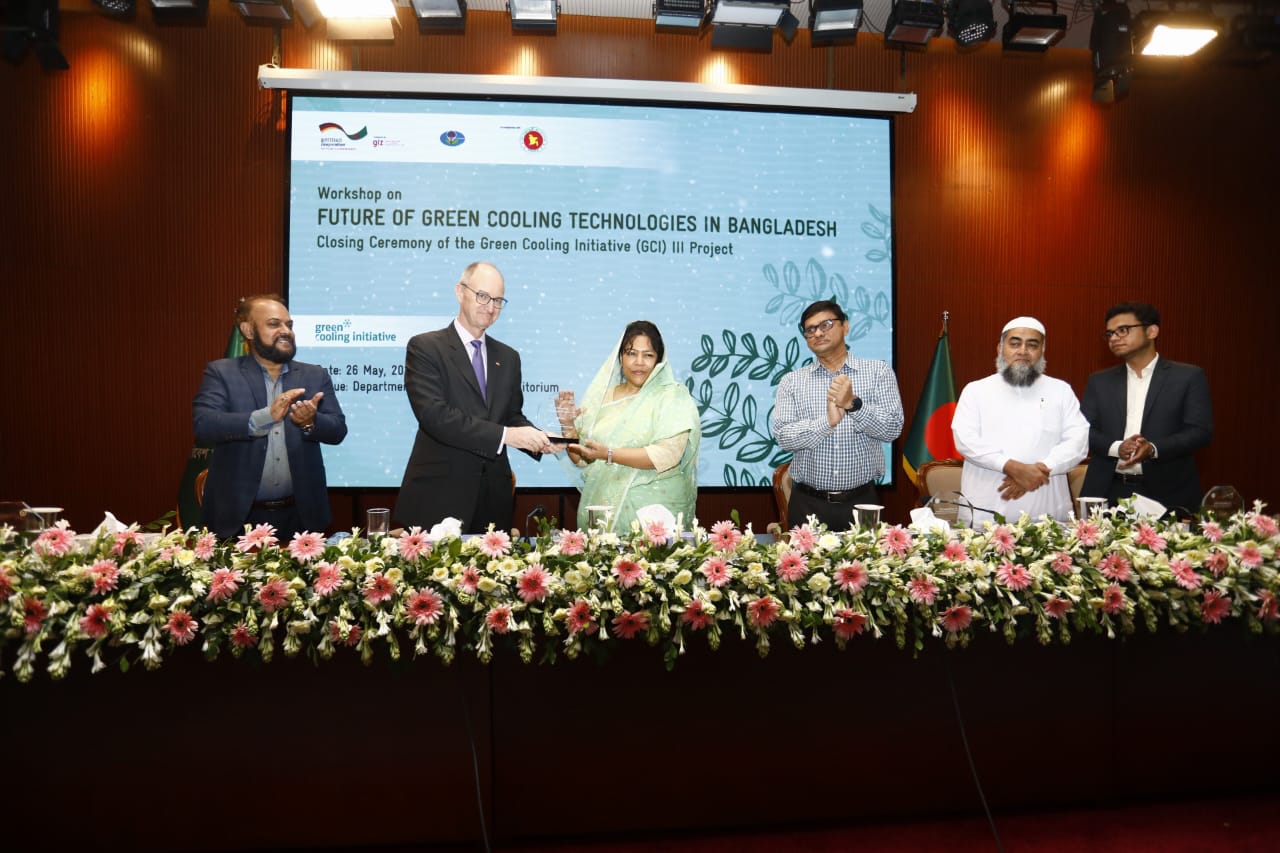
Key stakeholders from the refrigeration and air conditioning sector gathered at the Department of Environment in Dhaka’s Agargaon on Monday to celebrate the completion of the Green Cooling Initiative III Project in Bangladesh.
The event, titled ‘Workshop on the future of green cooling technologies in Bangladesh,’ showcased the project’s achievements while fostering discussions on the future of sustainable cooling in the country, said a press release.
Jointly organised by the Green Cooling Initiative (GCI) III, GIZ Bangladesh, and the Ozone Cell of the DoE, the workshop underscored Bangladesh’s commitment to phasing out ozone-depleting substances.
As a signatory to the Kigali Amendment and the Paris Agreement, Bangladesh has made notable progress in promoting natural refrigerants and improving energy efficiency in the RAC sector. The GCI III project has played a vital role in strengthening capacity, shaping policy, and raising awareness about climate-friendly cooling solutions.
Director and Head of the Ozone Cell at DoE Ziaul Haque inaugurated the event by commending the collaborative efforts that contributed to the project’s success. In a video message, Project Manager of GIZ Proklima Ellen Michel emphasized the global significance of green cooling and highlighted GCI’s contributions to Bangladesh’s sustainable development.
Implementation Manager of the GCI III Project Shanin Muntaha provided an overview of the project’s key interventions, including technician training on the safe use of hydrocarbon refrigerants, the development of training materials, and public awareness campaigns targeting students, professionals, and consumers.
A panel discussion titled “Advancing Sustainable Cooling in Bangladesh: Opportunities, Challenges, and the Way Forward” brought together experts from academia, industry, and government, including representatives from BUET, Elite Hitech Industries, Walton Hi-Tech Industries, and the Ozone Cell.
The discussion addressed barriers to adoption and strategies for accelerating green cooling technologies in Bangladesh.
The event featured a symbolic handover of training tools and demonstration air conditioners to institutional partners, along with the launch of a technician handbook developed under the project—resources aimed at strengthening future capacity-building initiatives within the RAC service sector.
Chief Engineer of the Public Works Department Mohammad Shamim Akhtar and secretary of the Ministry of Environment, Forest, and Climate Change
Dr. Farhina Ahmed spoke at the closing session.
German Ambassador to Bangladesh Achim Tröster reaffirmed the importance of international collaboration in tackling climate challenges.
The event concluded with a vote of thanks from Director General of the Department of Environment Dr. Md. Kamruzzaman while , secretary of the Ministry of Environment, Forest, and Climate Change Farhina Ahmed appretiated “the active engagement of the private sector in GCI III project.