
Gas shortfall puts RMG windfall at risk
Reza Mahmud :
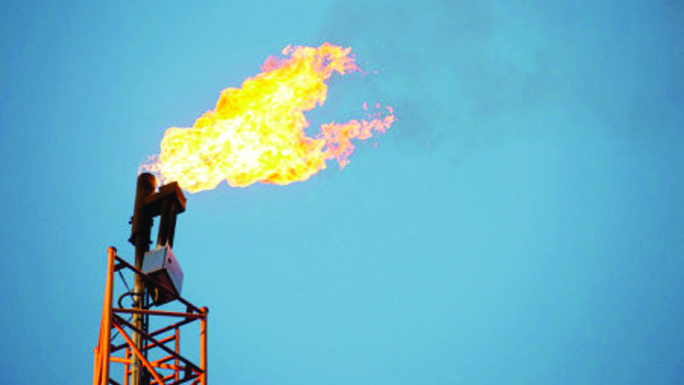
A severe gas shortage has gripped Bangladesh’s industrial sector, threatening to derail the country’s opportunity to capture a significant portion of the US apparel market left open by new trade barriers on India.

Industry sources say the United States’ decision to impose an additional 50 per cent reciprocal tariff on Indian goods has prompted leading American retail giants – including Amazon, Walmart, Target, and GAP – to scale back or halt readymade garment orders from India, according to a report by NDTV. This has created a rare opening for Bangladeshi exporters.
However, the ongoing energy crisis is hampering the sector’s ability to meet potential new orders.
From Dhaka to key industrial hubs such as Gazipur, Narayanganj, Savar, Ashulia, Valuka, Narsingdi, and Munshiganj, factories have been struggling with dwindling gas supplies for several months.
Production in textiles, garments, ceramics, steel, and other industries has fallen sharply, raising concerns over investment, employment, and export earnings.
Mohammad Hatem, President of the Bangladesh Knitwear Manufacturers and Exporters Association (BKMEA), told The New Nation that most factories have had to cut production by 30 to 35 per cent due to the gas shortage.
“This crisis is severely damaging our export markets. It is imperative for the sake of the national economy that the government resolves it quickly,” he said.
Former Federation of Bangladesh Chambers of Commerce and Industry (FBCCI) president Mir Nasir Hossain said the situation has been worsening for months despite repeated government assurances of improvement. “Production has declined alarmingly. The promised measures to increase supply have yet to materialise,” he noted.
Power, Energy and Mineral Resources Adviser Muhammad Fouzul Kabir Khan said the government is taking urgent steps to address the crisis, including importing more liquefied natural gas (LNG) to boost supply to industries. “If a particular industry or zone requests emergency gas supply, the government will respond promptly,” he said.
Petrobangla General Manager Md Imam Uddin Sheikh said the country’s daily demand stands at around 3,800 million cubic feet, but supply is limited to 2,900 million cubic feet – a shortfall of roughly 900 million cubic feet. He added that scattered, unplanned industrial locations make efficient distribution difficult, urging manufacturers to cluster in designated industrial zones for more reliable service.
Industry owners report that roughly one-third of factories receive no usable gas pressure during the day. Pressure improves only between 11pm and 6am, forcing many factories to run night shifts while keeping machinery idle during the day. This has doubled operational costs and led to temporary worker layoffs.
Some firms are attempting to use CNG, LPG, or diesel to maintain production, but these alternatives are expensive. As a result, many exporters have failed to meet shipment deadlines, risking contract cancellations and loss of market confidence.
Energy experts estimate the nationwide gas shortfall at between 1,000 and 1,200 million cubic feet per day. The widening gap between production and distribution is disrupting power generation, industrial output, and daily life.
With the US market window narrowing and competitors ready to step in, industry leaders warn that without an immediate resolution to the energy crisis, Bangladesh could lose a historic opportunity to expand its share of the world’s largest apparel market.