
From Dust to Danger: Air Pollution’s Impact on the Young
By Motaher Hossain :
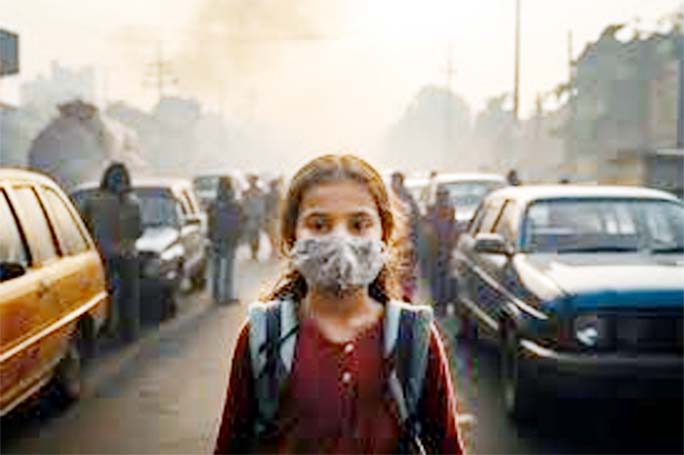
Unbelievable but true — most people, including children, are inhaling poison with every breath they take. This silent danger shortens lives, particularly those of children, across Bangladesh and other developing nations.
Air pollution is claiming thousands of young lives prematurely, creating a grim picture of global inequality. In 2021 alone, nearly 19,000 Bangladeshi children under five died from air pollution–related causes—an average of two deaths every hour.
Experts describe air pollution as a “silent pandemic” where children are slowly being trapped in an invisible cage of toxic air. From city traffic to village kitchens, every breath contains contaminants. The threat is not just immediate—it spans generations, diminishing health and human potential.
A recent report by Zero Carbon Analytics calls this crisis a global humanitarian disaster. Around 90% of the world’s population breathes air more polluted than WHO standards.
Yet, the burden falls disproportionately on developing countries, where children face up to 94 times higher mortality risks than those in rich nations.
Air pollution is no longer an environmental concern alone—it is now a global public health and economic development obstacle. The World Health Organization (WHO) estimates that 7 million people die annually due to air pollution, nearly half from Asia and Africa, with children forming a significant share.
Air pollution is now the second leading cause of death for children under five. Their developing lungs and weaker immune systems make them more vulnerable. From school commutes through traffic smog to exposure to indoor cooking smoke, no space is safe.
Seven of the world’s ten most polluted countries — Pakistan, India, Bangladesh, Nepal, Myanmar, Indonesia, and China — are in South and Southeast Asia. Dhaka has repeatedly ranked as the world’s most polluted capital.
Countries like Norway, Canada, Japan, and New Zealand have drastically reduced pollution through strict laws, renewable energy, and cleaner transport. In contrast, developing regions remain reliant on coal, diesel, and unrefined fuels—locked in a cycle of toxic dependency.
In Bangladesh, three primary sources dominate: Smoke from brick kilns and factories, Vehicle emissions, and Household cooking smoke and dust.
Dhaka’s PM2.5 levels are over 15 times higher than WHO limits, making it one of the deadliest urban airspaces on Earth.
Children breathe twice as fast as adults, absorbing more toxic particles. A recent study found that 42% of Dhaka’s children suffer from respiratory issues. Nationally, over 170,000 premature deaths occur each year from air pollution—19,000 of them children under five. Pollution begins harming children even before birth.
High exposure during pregnancy leads to low birth weight, breathing problems, and higher infant mortality. Chronic exposure causes asthma, pneumonia, bronchitis, and even developmental delays and brain damage.
For poor urban families, health expenses from air pollution consume up to 20% of monthlyincome. Lost school days, chronic illness, and reduced cognitive ability trap families in cycles of poverty and vulnerability.
Bangladesh’s energy and industrial sectors still depend heavily on coal, diesel, and gas. Renewable energy contributes less than 5% of the total. Unregulated brick kilns, haphazard urbanization, and weak law enforcement worsen the crisis. Powerful factory owners often escape accountability.
Zero Carbon Analytics reports that while developed countries have reduced domestic emissions, they’ve outsourced pollution by moving industries to developing nations with weaker environmental standards. The hidden cost of cheap production is paid by the health of southern children.
The fight against air pollution must be local, regional, and global.
Key steps include: Phasing out coal and diesel plants, Replacing brick kilns with eco-friendly block technology, Enforcing industrial emission laws, Promoting electric public transport.
Expanding urban greenery, Integrating environmental education in schools and Raising public awareness on indoor pollution prevention
Clean air is not a luxury—it is a fundamental right. Governments, industries, and citizens must unite to secure this right for all. Without decisive action, future generations will grow up physically weaker, mentally exhausted, and economically powerless.
As one doctor warns: “Air pollution is now one of the greatest threats to child health worldwide. Clean air is as essential as clean water.And as an environmentalist adds: “When poor children breathe smoke and the rich live behind air purifiers, this is not just a health crisis—it is a justice crisis.”Clean air ensures life. To protect our children’s future is to protect the planet’s future.
(The writer is Editor – Climate Journal24.com and General Secretary – Bangladesh Climate Change Journalists Forum (BCCJF).)