
Focus beyond GDP to tackle inequality
Staff Reporter :
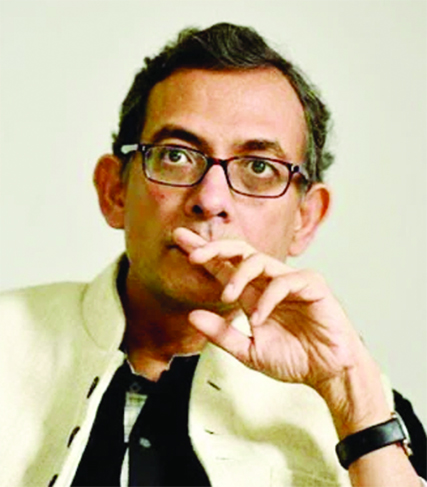
Nobel Laureate in Economics Dr Abhijit Banerjee has said that in countries such as Bangladesh and India, a growing share of GDP has increasingly concentrated in the hands of the wealthy over the past three to four decades, resulting in limited progress in poverty reduction despite steady economic growth.
Speaking virtually at a conference titled “Transforming Development: Building a Culture of Accountability through Evaluation, Auditing and Ethics”, organised by the Ministry of Finance and the New Development Bank on Monday in Dhaka, Dr Banerjee underscored the need to look beyond headline GDP figures.
“Too much attention is placed on GDP. While it may be high in large countries, we should instead focus on GDP per capita,” said the Nobel laureate, who is an Indian-born US citizen.
He emphasised that if discussions are to encompass broader issues-such as climate change-GDP alone is not a sufficient metric.
“We must distinguish between income levels, and unfortunately, income inequality has systematically worsened in many countries over the past 30 years,” he noted.
Dr Banerjee pointed out that the real impact of GDP on poverty depends on how equitably the benefits of growth are distributed. “We must examine who is truly benefiting from the fruits of GDP,” he said.
Reflecting on economic stability, he remarked that a decade ago, indicators such as inflation, exchange rates, and public debt were relatively stable across many nations-circumstances that have since changed. “Sustainable economic development is now facing more complex challenges. Political instability and environmental concerns are creating existential risks for major firms,” he observed.
He further noted that issues such as climate change and migration are increasingly becoming focal points for countries like Bangladesh.
The day-long conference was attended by officials from the Ministry of Finance’s Economic Relations Division and representatives of the New Development Bank.