
Experts at National Dialogue Emphasize: Gender Justice is Essential for Achieving Climate Justice
NN ONLINE:
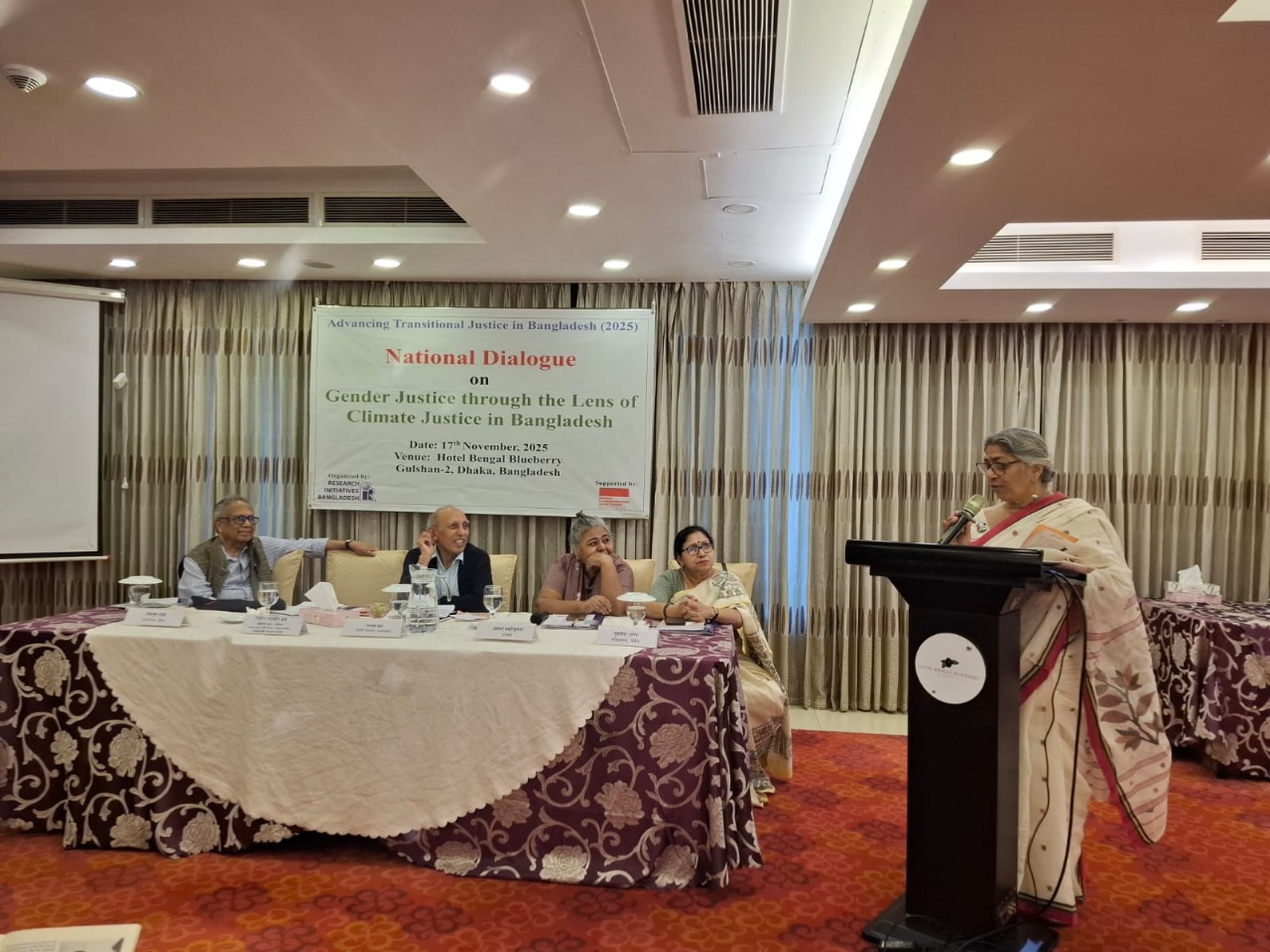
A national dialogue titled “Gender Justice Through the Lens of Climate Justice: The Context of Bangladesh” was held at the Hotel Bengal Blueberry in Gulshan, Dhaka, organized by Research Initiatives Bangladesh (RIB). The day-long event saw active participation from policymakers, researchers, field practitioners, and youth representatives, focusing on the intersection of climate justice and gender justice in Bangladesh.
The program began with a welcome address by RIB Chairman Shamsul Bari, who noted, “Climate change is not only an environmental crisis; it exacerbates social and gender-based inequalities. Therefore, gender justice must be considered equally in discussions on climate justice.”
Following the introduction, RIB Director Suraiya Begum, in her opening presentation, stated, “Climate justice and gender justice are both outcomes of the same structural inequalities. Sustainable solutions cannot be achieved without addressing these disparities.”
Special guest Shamsul Huda, Executive Director of the Association for Land Reform and Development, added, “Poor people bear the brunt of landlessness, debt, floods, and climate pressures. To establish climate justice, it is crucial to eliminate neocolonial mindsets, patriarchal attitudes, and institutional inequities.”
RIB Program Officer Syed Navid Anjum Hasan highlighted the structural limitations of various field-level institutions. In addition, field practitioners Chaitanya Das from Satkhira, Apu Ram Das from Rajshahi, and Javed Noor Shanto from Cox’s Bazar presented examples of their work and experiences. They discussed in detail the local-level climate risks, potential damages, and the constraints of policy and institutional support.
The dialogue also included contributions from Professor Khairul Chowdhury, Department of Sociology, University of Dhaka; Professor Tania Haque, Women and Gender Studies; Sharmin Islam, UNDP Gender Team Lead; Professor Kazi Mahmudur Rahman, Independent University Bangladesh (IUB); Professor Md. Abdul Awal Khan, Department of Law, IUB; Mahapara Alam, Team Lead at BLAST; and Afsana Binte Amin, Program Manager at NetZ Bangladesh. The speakers emphasized that the adverse impacts of climate change disproportionately affect marginalized populations, particularly women. Therefore, women’s experiences, knowledge, and leadership must be prioritized in adaptation and mitigation planning.
The Chief Guest, Shirin Parveen Haque, Founder Member of Naripokkho and former Head of the National Women’s Affairs Reform Commission of the Government of Bangladesh, stated, “Addressing structural challenges is an urgent task. Equality at social and institutional levels, not just policy changes, is essential to enhance women’s participation and access to resources.” She further stressed, “Without ensuring gender justice, climate justice cannot be fully realized. Eliminating structural inequities is imperative in all sectors.”
The event was moderated by researcher and former Dhaka University Professor Meghna Guhathakurta. In her closing remarks, she noted, “Addressing structural inequalities is critical for both climate justice and gender justice. Coordinated policy implementation and support at the local level will increase women’s participation and access. Additionally, involving youth representatives ensures long-term knowledge and experience exchange.”
The organizers highlighted that the recommendations from this national-level dialogue will play a vital role in future policymaking and help make discussions on climate justice more inclusive.