
From the bench to cell: Ex-CJ Khairul Haque architect behind BD’s electoral collapse
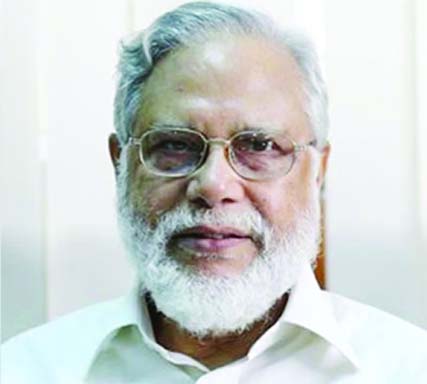
Abu Jakir :
In an extraordinary and unprecedented turn of events, ABM Khairul Haque, a former chief justice of the country, was arrested on Thursday morning from his residence in Dhaka.
The arrest carried out by the Detective Branch (DB) of police – marks the first time in Bangladesh’s history that a former head of the judiciary has been handcuffed on allegations of judicial forgery, corruption, and even murder.
The moment, symbolic and dramatic, has sent ripples across the political and legal establishments of the country, with many describing it as both historic and a dramatic fall from grace for a man who once presided over the highest court in the land.
Khairul Haque had been out of the public eye since August 5, with conflicting reports circulating about whether he had fled the country or gone into hiding. On Thursday, the speculation ended.
Justice Khairul Haque’s name is inextricably linked to one of the most consequential rulings in the country’s constitutional history.
On May 10, 2011, he led a Supreme Court bench that annulled the country’s caretaker government system – a neutral interim administration that oversaw elections and had been enshrined in the constitution following a hard-won political consensus in 1996.
While the court’s brief verdict recommended holding two more elections under the caretaker format, the final full judgment – released 16 months later – mysteriously omitted that portion.
The omission, widely criticised by legal experts and opposition leaders, allowed the ruling Awami League government to conduct subsequent elections without a neutral body, a move that has since destabilized the nation’s electoral credibility and democracy.
The opposition, including the Bangladesh Nationalist Party (BNP) and Jamaat-e-Islami, boycotted the 2014 elections.
The result was a walkover for the Awami League and an ensuing cycle of political unrest, deadly violence, and civic breakdown. Khairul Haque’s ruling, many analysts say, laid the legal groundwork for that chaos.
From the Bench to the Power Corridors
Following his retirement on May 17, 2011, Justice Haque’s trajectory defied norms of judicial independence.
He was swiftly appointed Chairman of the Law Commission in 2013, a post he held for nearly a decade through successive extensions allegedly facilitated by direct communication with then Prime Minister Sheikh Hasina – reportedly bypassing even the sitting law minister.
Critics accused him of trading legal influence for political rewards. Prominent jurists and commentators allege that Khairul Haque’s post-retirement conduct violated constitutional norms and contributed to the politicization of the country’s judiciary.
In his memoir, “Nirbachonnama ebong Nirbachon Commission-a Amar Dinguli” (Chronicles of Elections and My Days in the Commission), former Election Commissioner Mahbub Talukder described Justice Haque as an “architect of political instability” who “moved the chess pieces of power from behind the curtain.”
Now, the very laws he once interpreted are turning against him.
Three cases have been filed against the former Chief Justice so far. The first, filed on August 28, 2024, by Supreme Court lawyer Mujahidul Islam Shaheen at Shahbagh Police Station, accuses him of verdict manipulation and judicial fraud.
A second case, filed on August 25 in Narayanganj’s Fatullah Police Station by local BNP leader Abdul Bari Bhuiyan, revisits the controversial 2011 ruling that scrapped the caretaker government. The third and most explosive case, recently lodged, implicates him in a murder conspiracy.
Meanwhile, Bangladesh’s Anti-Corruption Commission (ACC) has launched a formal investigation into Khairul Haque’s financial dealings. Investigators allege that he illegally acquired a government plot using bureaucratic manipulation.
Official documents from the Ministry of Housing and Public Works (Memo No. RAJ-5/2005/485, dated September 21, 2010) have been requisitioned, along with files from RAJUK and the land registry office.
A seven-member ACC team led by Deputy Director Monirul Islam is currently probing these allegations, which also include misuse of Prime Minister’s Relief Fund allocations for personal gain.
Public Outrage and Political Reverberations The arrest has sparked intense reactions from opposition political figures. BNP Secretary General Mirza Fakhrul Islam Alamgir branded Khairul Haque “an enemy of the nation” and accused him of “betraying the people and the state under the veil of judicial authority.”
“He manipulated the fate of the country while sitting on the highest judicial seat,” Fakhrul said at a press briefing. “We demand exemplary punishment so no one dares misuse such a sacred position again.”
Dr. Shafiqur Rahman, the head of Jamaat-e-Islami, called Justice Haque “a symbol of judicial betrayal,” saying, “He handed over license to political mafias for murder, enforced disappearances, and state-sanctioned looting.”
A Tarnished Legacy ABM Khairul Haque was once hailed as a calm, intelligent, and articulate jurist – a figure of composure amid the chaos of Bangladeshi politics.
Today, he stands accused of undermining the very foundations he once vowed to protect. His arrest, now etched in national memory, is a somber reminder of how power, when unmoored from accountability, can corrupt even the highest offices of justice.
In a 2011 media interview, he said, “I live in the present. I rely on Allah. I don’t know what the future holds.” That future has now arrived – not in robes, but in handcuffs.