
EU squeezes Russia financially to reach ‘peace thru strength’ in Ukraine
Al Jazeera :
The European Commission floated a plan last week to phase out all Russian gas imports by the end of 2027.
The plan, unveiled on Tuesday at the end of the Group of Seven summit in Canada’s Kananaskis resort, would immediately ban new contracts to buy Russian gas. It would allow existing short-term contracts to run their course by next June, and cut short any long-term contracts at the end of 2027.
“To achieve peace through strength, we must put more pressure on Russia to secure a real ceasefire, to bring Russia to the negotiating table, and to end this war,” said Commission President Ursula von der Leyen. “Sanctions are critical to that end.”
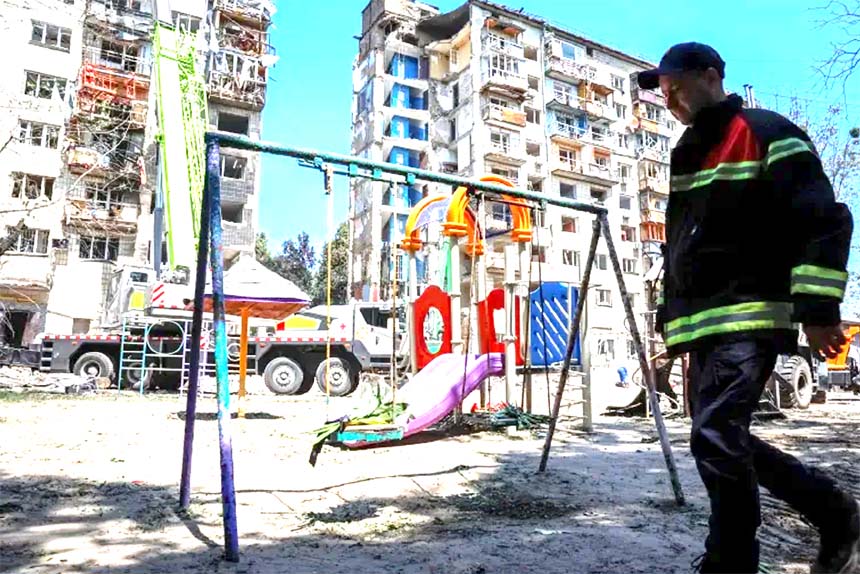
Russia unleashed 32 missiles and 440 drones on Kyiv as the plan was unveiled, killing 26 people and injuring 134. The attack damaged railway infrastructure and lit fires. Odesa was also hard hit.
“[Russian president Vladimir] Putin is doing this deliberately – right during the G7 summit. It’s a clear signal of total disrespect toward the United States and other partners calling for an end to the violence,” said Ukrainian Foreign Minister Andrii Sybiha.
Putin had done the same right after a phone call with Trump on Sunday, sending 183 strike drones and 11 missiles of different types into Ukraine.
The European Union has dramatically reduced its imports of Russian energy during the war – by almost 80 percent, according to the commission. But it still spent about 22 billion euros ($25bn) buying 19 percent of its gas and about 3 percent of its oil from Russia last year.
The Centre for Research on Energy and Clean Air recently estimated that eliminating that revenue would deprive the Kremlin of 22 percent of its gross revenues.
Hungary and Slovakia have been the main holdouts, arguing against an outright import ban. They argue that being landlocked, they have few alternatives to Russian oil and gas.
Slovak premier Robert Fico called Ukrainian President Volodymyr Zelenskyy “an enemy of Slovakia” in January because Ukraine shut down the Yamal pipeline that carries Russian gas across Ukraine to Slovakia. The only remaining functional Russian pipeline to Europe is TurkStream.
The day before the commission’s announcement, Hungary vetoed a statement of support for the ban.
The EU banned Russian coal and oil imports in 2022, and has since planned to ban gas.