
Enhancing export basket imperative: Experts
Staff Reporter :
In the modern day’s global economy, export diversification has become crucial. Overreliance on one product or market creates severe risks, while shifting consumer demand and technological changes constantly generate new opportunities. Countries that rely on a single export often fail to adapt, but diversification encourages investment in emerging sectors and ensures economic resilience.
Traditional markets are often saturated and highly competitive. Diversifying exports allows countries to enter new regions with lower competition, creating new growth opportunities.
It generates employment, spreads technology, and strengthens overall economic structure. For developing economies like Bangladesh, diversification is especially relevant. Currently, 80pc of Bangladesh’s export earnings come from the garment sector, but IT, pharmaceuticals, leather, and agriculture are the rising industries that need support.
Experts stress that diversification is a long-term process requiring policy consistency, infrastructure development, R&D, and skilled manpower. Frequent policy changes discourage investors. Successful diversification demands strategic planning, investment, and international cooperation.
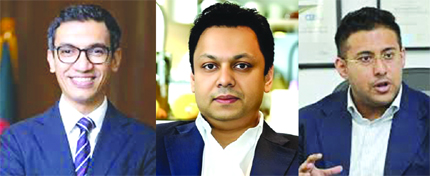
Recently, three prominent business leaders and experts- Chowdhury Ashiq Mahmud bin Harun, Executive Chairman of BIDA; Shawkat Aziz Russell, BTMA President and FBCCI presidential candidate; and Sakif Shamim, Labaid Cancer Hospital MD and FBCCI VP candidate shared their views with journalists. They all agreed that diversification reduces risks, strengthens growth, and broadens access to global markets.
BIDA Chairman Chowdhury Ashiq Mahmud noted that investment proposals worth Tk 3,100 crore have already come in. Thirty-one policy decisions have been taken to improve the investment climate, including considering bond facilities for partial exporters. This will help non-garment sectors expand exports and attract investment.
He also pointed to opportunities in halal products, where Muslim countries lag behind non-Muslim producers. With proper policy support, Bangladesh could build a strong position in this growing sector.
Shawkat Aziz Russell emphasized that diversification has been discussed for decades, but real progress requires stronger policy support. Bangladesh has set an ambitious $65 billion export target this year amid challenges like US tariffs and LDC graduation. To meet these, infrastructure must improve-especially in power supply, interest rates, and port facilities.
Sakif Shamim stressed the urgency of moving beyond garments by investing in IT, software, pharmaceuticals, light engineering, leather, jute, agriculture, and fisheries. He highlighted the potential of AI outsourcing, freelancing, and BPO, which already earned Bangladesh over $1 billion in exports this year-though far behind India ($200 billion) and the Philippines ($75 billion).
Expanding R&D in pharmaceuticals is also vital to reduce import dependence, achieve drug self-sufficiency, and remain competitive after LDC graduation in 2033, when patent waivers will end.
He further argued that the same bonded warehouse facilities enjoyed by garments should be extended to all export-oriented industries. Looking ahead, joint ventures with foreign investors are essential, as they bring advanced technology and global competitiveness.
In conclusion, all three leaders underscored that while garments remain Bangladesh’s strength, sustainable economic growth requires bold policies to diversify exports, expand markets, and integrate new industries into the global economy.