
Eliminating gender-based violence at workplace
Z A M Khairuzzaman:
Women’s participation at the workplace has made immense contributions to Bangladesh’s national economy. Our garment industry–which keeps the national economy afloat — is almost entirely dependent on the female workforce. However, despite commendable performance of female workers in readymade garment (RMG) sector, the incidents of violence and sexual harassment have increased significantly in this vital sector. Workplace sexual harassment is particularly evident in RMG factories where the owners allegedly fail to provide secure and safe working conditions for female workers due to their unwillingness to invest money in improving workplace safety-related issues.
Bangladesh Institute of Labour Studies—BILS– conducted a survey by collecting newspaper reports of the year 2024 and that of March of the current year. The data is as follows:
On 23 March 2025, a female RMG worker was beaten by the Supervisor for a silly matter. In 2024, 35 female workers fell victim to violence in the RMG sector. The break-up is two murders, two mysterious deaths, one unnatural death, while 20 female garment workers were stabbed and 10 others were shot to death. In this sector, the total number of casualties at the workplace was 35 in the past year. Of them, six were deaths, while 29 others sustained injuries and the rest one committed suicide.
Another study conducted by Action Aid reveals that 80% of female RMG workers have either personally experienced or observed sexual abuse and harassment at workplace, and 90% of them believe their jobs are having a detrimental effect on their health.
Regrettably, the reports of female workers’ experience of sexual harassment at workplace come out rarely for fear of losing their jobs. Factory owners tend to suppress sexual harassment issues that arise at workplace so that their reputation is not tarnished. Urgent improvement in overall workplace conditions and anti-sexual harassment programmes are need of the hour to safeguard female garment workers.
Gender-based violence (GBV) remains a deeply rooted and pervasive issue in society, affecting individuals–particularly women across all spheres of life, with a pronounced impact in workplace settings. Despite increased global awareness and advocacy, GBV continues to hinder equality, dignity, and safety at work. In this context, the recent submission of recommendations by the Labour Reform Commission offers a timely and important opportunity to revisit the issue from the perspectives of labour rights, gender justice, and institutional protection frameworks.
The Labour Reform Commission’s recommendations on GBV are as follows:
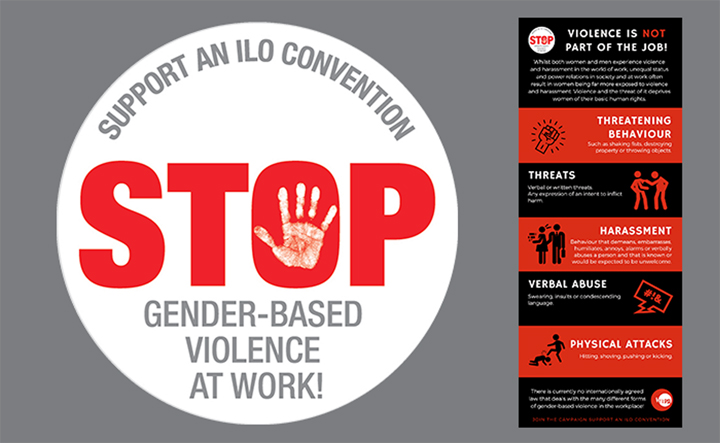
Prevention of all kinds of harassment, including sexual harassment and violence State will take special measures to ensure the right to protect from all kinds of harassment, including sexual harassment and violence. Anti-violence and sexual harassment policy will have to be adopted in all mills, factories and establishments in line with a High Court directive of 2009. At the same time, it is urgent to set up a complaint cell and form a disposal committee. Ratification of ILO Convention 190 is imperative.
Removal of discriminatory behaviour towards women:
It is essential to formulate a gender policy and implement it in every government and non-government workplace, organise gender sensitivity training for inspectors of the Department of Inspection for Factories and Establishments, give priority to women officials and recognise women’s unpaid service as ‘work’ as well as remove gender-based division. Awareness campaigns should be launched to change discriminatory behaviour that hinders women’s participation in the labour market, respectful language and behaviour should be ensured at the workplace. Steps should be taken to incorporate the tales of women’s role in labour movements in history books and textbooks. There should be a policy for proper presentation of women in the media. Appropriate policy should be adopted to follow ILO conventions 100, 111 and 190 for amendment of gender-based discriminatory clauses in labour law and relevant rules and regulations.
Elimination of gender-based violence or harassment at workplace
According to a High Court order of 2009, it is imperative to incorporate separate definition of sexual harassment and gender-based violence, form complaint committee, and reform criminal law; include experts in committees relating to behaviour towards women and ratify ILO Convention 190, take preventive measures in the sectors where there is possibility of violence; prevent sexual harassment in public transport and raise awareness; form anti-harassment committee, including female leadership in trade unions; evaluate the necessity of taking effective measures to ensure security in public place and industrial area and their implementation, introduce women-friendly judicial system and ensure accountability, change gender-based stereotypism involving males and boys; and ensure the security and dignity of expatriate female workers as well as adopt necessary policy and take proper initiatives.
Meanwhile, to protect media workers, the Labour Reform Commission recommends for drafting specific laws and ensuring all establishments adopt internal anti-sexual harassment policies, including a comprehensive definition and grievance mechanism.
The commission asks for stronger measures to prevent gender-based violence at the workplace, aligning with international standards. The recommendations of the commission and ILO Convention 190 can jointly advance gender justice and safe work environments. This is why the interim government should ratify the ILO Convention without further delay.
Earlier, efforts were made to address GBV through legal reforms, most notably through drafting a dedicated legislation titled “The Prevention of Sexual Harassment at Workplace Act.” Regrettably, it was not enacted. Greater political will and public engagement are essential to materialise the policy proposals. Trade unions must play a vital role by organising workers, raising awareness and negotiating with employers and policymakers for real changes.
Finally, all stakeholders, including the government, employers, trade unions, civil society, and the public, should take active roles in eliminating GBV.
(The writer is a senior vice-president of Bangladesh Labour Rights Journalists Forum (BLRJF). E-mail:[email protected])