
Edible oil, vegetable prices climb in kitchen markets
Abu Jakir /Muhammad Ayub Ali :
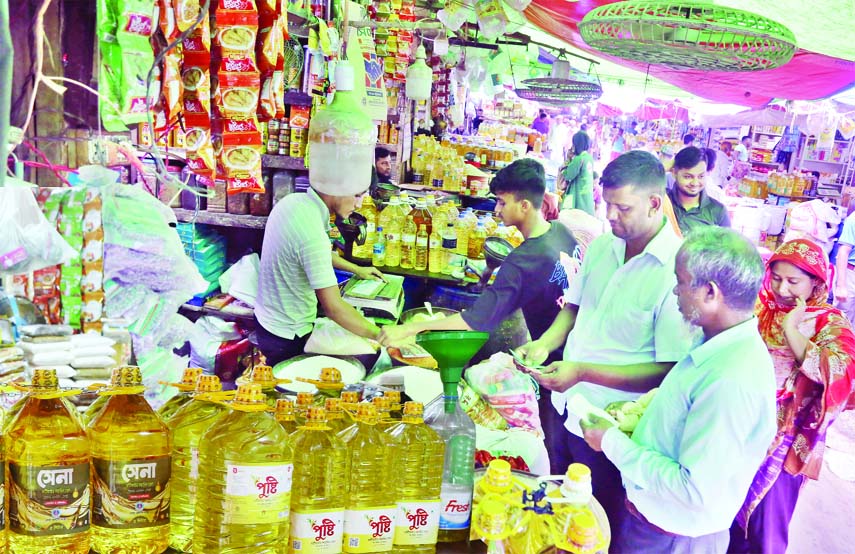
Prices of edible oil have gone up again in the capital’s retail markets, while vegetables remain at unusually high levels, with traders and analysts blaming road extortion, unchecked middlemen, and weak market monitoring for the persistent squeeze on both consumers and farmers.
A survey at Rampura, Malibagh, and other city markets on Friday found that loose soybean and super palm oil prices have risen by about Tk 5 per litre over the past three to four days. Loose soybean oil is now selling at Tk 170–172 per litre, up from Tk 169 earlier this week, while super palm oil is priced at Tk 155–160, compared to Tk 150 just days ago.
Retailers say the rise comes despite the government’s rejection of a proposal to raise soybean oil prices by Tk 10 per litre. Suppliers, they argue, reduced dealer commissions instead, which shifted the burden to retail customers.
Meanwhile, vegetable prices remain steep. Farmers in Bogura, Khulna, Jessore, Pabna, Rajshahi, and Kushtia are selling their produce at modest rates, but by the time the goods reach Dhaka, prices have tripled or quadrupled. Traders admit that vegetables pass through four to five layers of intermediaries — wholesalers, commission agents, and
retailers — each adding their cut before reaching consumers.
Market insiders say the problem is not one of shortage but of extortion and profiteering. Transporters report paying multiple tolls to musclemen along highways, while wholesale hubs continue to run “commission business” unchecked. “The system of illegal tolls has only changed hands after the July uprising, but the practice remains the same,” said one trader in Karwan Bazar.
As a result, farmers receive only a fraction of the retail price, while urban consumers pay heavily inflated rates. Analysts warn that the lack of coordination in supply chains, weak regulatory monitoring, and excessive profiteering have created a dysfunctional marketplace.
The price surge has been felt across basic items. Indian tomatoes are selling at Tk 120 per kg, domestic carrots at Tk 80, Chinese carrots at Tk 120, long brinjal at Tk 100, and round brinjal between Tk 120 and 160. Beans jumped steeply to Tk 240 per kg, while coriander leaves reached Tk 300 and green chilliesTk 200.
In contrast, potatoes, onions, garlic, and ginger remain comparatively stable. Potatoes are selling at Tk 25–40 per kg depending on type, onions at Tk 70–80, garlic at Tk 100–160, and Chinese ginger dropped slightly to Tk 180.
Protein sources remain under pressure. Eggs are priced at Tk 125–130 per dozen for red chicken, Tk 120 for white, and up to Tk 200 for duck eggs. Broiler chicken eased slightly to Tk 163–180 per kg, but local chickens sell for as high as Tk 550. Hilsa remains the most expensive fish, priced between Tk 1,000 and Tk 2,400 per kg, while other varieties like rui, shrimp, and rupchanda also remain costly.
Grocery staples such as rice, lentils, sugar, and spices are relatively unchanged but still expensive. Polao rice sells at Tk 90–155 per kg, lentils at Tk 105–170, sugar at Tk 100–110, and mustard oil at Tk 220.
Frustrated shoppers say household budgeting has become nearly impossible. “Everyday essentials like vegetables, eggs, and fish are now unaffordable,” said Arif Hossain, a customer in Malibagh. “Farmers are not getting fair prices, and consumers like us are being crushed.”
Experts caution that unless extortion is curbed, supply chains are streamlined, and market monitoring is strengthened, families will continue to face hardship from the relentless surge in living costs.