
Economic incurs complex without transparency
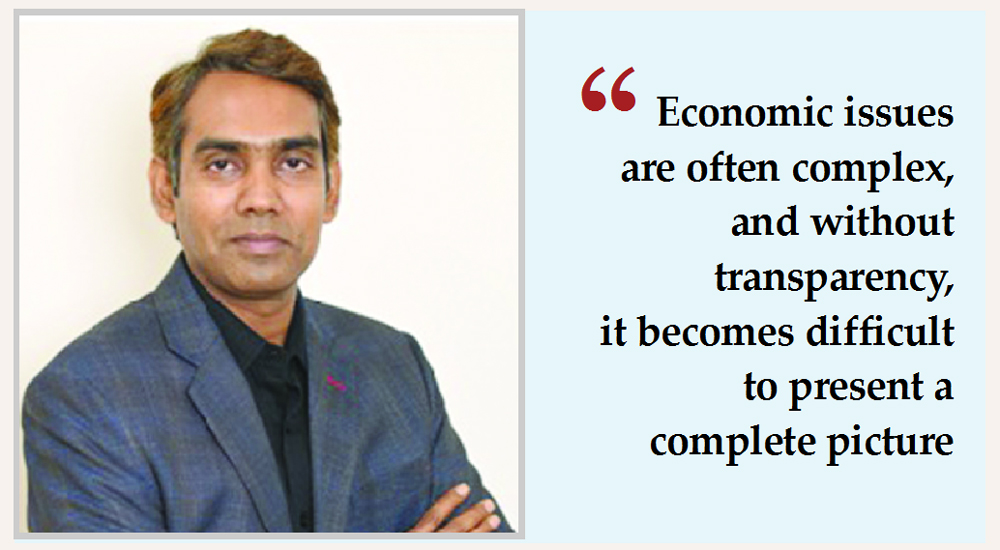
Md Kamruzzaman, widely known as Babu Kamruzzaman, is a distinguished figure in Bangladesh’s economic journalism landscape.
Over a decade-long career, he has consistently delivered in-depth analyses and investigative reports on critical topics such as macroeconomic trends, fiscal policies, and international trade.
As the special correspondent and business desk in-charge at News24 Television, Kamruzzaman has been recognized both locally and internationally for his contributions to journalism.
In this exclusive interview with New Nation’s Tasnuba Akhter Rifa, Md Kamruzzaman shares his insights on the evolving role of economic journalism and his broader contributions to the field.
Md Kamruzzaman shared his viewpoint on economic journalism’s significant changes over the years. He stated, “Economic journalism in Bangladesh has come a long way from simply reporting numbers and policies.
Today, it involves in-depth analysis and investigative work that uncovers the real implications of economic decisions on businesses and everyday people.”
Kamruzzaman emphasized the transformative impact of digital media, which has expanded the audience while increasing journalists’ responsibility to ensure accuracy.
He also noted that the growing demand for transparency and accountability has driven journalists to adopt a more research-intensive approach.
Kamruzzaman highlighted several challenges in economic journalism, chief among them being the difficulty of accessing reliable data.
“Economic issues are often complex, and without transparency, it becomes difficult to present a complete picture,” he explained. Balancing objectivity with the pressures of sensationalism is another persistent challenge, especially in the digital age.
Additionally, the need to combat misinformation while maintaining public trust is an ever-present concern. Despite these hurdles, he described the field as rewarding for those dedicated to impactful and responsible journalism.
His work has garnered numerous accolades, including the ERF Best Reporting Award, the AmCham Frontline Journalism Award, and recognition from the Bangladesh China Chamber of Commerce and Industry (BCCCI).
“Awards like these are humbling and serve as a testament to the effort and dedication I put into my work,” he remarked.
However, he views the real reward as the meaningful impact of his reporting on public discourse and decision-making. “Journalism is not just about recognition; it’s about creating a meaningful impact.”
Beyond his reporting, Kamruzzaman has actively engaged in initiatives that extend his influence beyond the newsroom.
He co-prepared a report for a RAPID workshop focusing on Bangladesh’s macroeconomic challenges and preparation for LDC graduation. “Collaborating on such initiatives allows me to combine my journalistic expertise with policy analysis,” he shared.
He has also served as an adjudicator for Debate for Democracy, fostering critical thinking among young minds, and participated in discussions on public policy, such as cigarette taxation, at events like those organized by UnnayanShamannay.
Discussing Bangladesh’s economic trajectory, Kamruzzaman expressed optimism tempered with caution.
“Bangladesh has made remarkable progress in areas like garment exports, infrastructure, and technology,” he observed.
However, he stressed the importance of addressing structural issues, including inflation, non-performing loans, and investment bottlenecks, to sustain growth.
“We also need to diversify our economy by focusing on innovation and upskilling our workforce,” he added, underscoring the country’s immense potential with the right policies and accountability.
Mentorship plays a significant role in Kamruzzaman’s career, reflecting his commitment to nurturing the next generation of journalists. “Mentorship is my way of giving back to the profession,” he explained.
He emphasized the importance of equipping young journalists with the skills and ethical foundation needed to excel.
Through workshops and training sessions, he aims to inspire them to pursue journalism as a tool for societal progress. “Seeing them grow and contribute meaningfully to the industry is incredibly rewarding,” he said.
For aspiring economic journalists, Kamruzzaman’s advice is clear and practical. “Focus on building a strong foundation in economics and data analysis. Always prioritize accuracy and integrity in your reporting,” he recommended.