
EC eyes Feb polls, seeks stakeholder support
Noman Mosharef :
The Election Commission’s (EC) preparations for holding the 13th parliamentary polls by February 2025 depend on required supports and cooperation from all stakeholders.
EC sources said that institutionally they are advancing with full-fledged preparations-encompassing legal, administrative and logistical initiatives-to hold the Jatiya Sangsad Election within the timeframe set by the government, ensuring the polls are conducted in a timely, transparent and credible manner.
But without other crucial institutional supports particularly wholehearted cooperation from political parties it would be hard to organize the much awaited polls in a peaceful environment, the sources said.
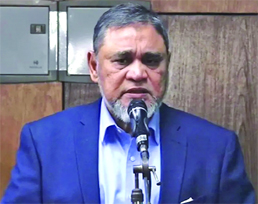
As part of the EC’s advancement of preparations for holding election, the Chief Election Commissioner (CEC) AMM Nasir Uddin met with Chief Adviser (CA) Prof Muhammad Yunus at the state guest house Jamuna on Thursday.
According to a source with the Chief Adviser’s Office, the two held a one-on-one meeting.
However, details of their discussion were not disclosed. It is presumed that the upcoming national election was among the key topics discussed.
Earlier, the CEC AMM Nasir Uddin told reporters: “No matter what the election time may be, the EC has to be ready. We are now focusing on our preparations.”
EC’s Additional Secretary KM Ali Newaz while speaking to The New Nation confirmed that the EC was working on several amendments to existing electoral laws to ensure the institutional framework is ready for the national election.
“We are currently finalizing legal revisions to align with the timeline set by the government. Our preparations are progressing accordingly so that, as soon as the government announces its decision, the Commission can immediately declare the election schedule,” he said.
While acknowledging that conducting a nationwide parliamentary election is a formidable task, KM Ali Newaz expressed confidence in the Commission’s capabilities. “It is a difficult undertaking, but certainly not beyond our reach. We are approaching it with caution and strategic planning to ensure the election is conducted smoothly,” he added.
On the other hand, EC has sent the draft Voter Registration (amendment) Act to the Law Ministry, seeking authority to determine a logical cut-off date for the inclusion of new voters in the electoral roll ahead of the national election.
“We have proposed changes in the existing law to determine the date until which voters can be included in the voter list (before the election),” said EC Senior Secretary Akhtar Ahmed while talking to reporters at Nirbachan Bhaban on Thursday.
The EC’s move came in a bid to ensure the voting rights of a larger number of youths in the 13th parliamentary election.
Although Chief Adviser to the Interim Government, Dr Muhammad Yunus, indicated in his June 6 national address that the election could be held in the first half of April, he later stated in a meeting with BNP Acting Chairman TariqueRahman in London on June 13 that the polls may take place during the week before Ramadan in 2026-provided there is adequate progress on reform and judicial accountability. In response to this potential shift, the Commission has begun internal discussions and scenario planning to prepare for elections in or before April 2026.
Following these developments, the EC has instructed its officers to expedite critical preparatory tasks. These include technical reforms, updating the voter list, redefining constituency boundaries, and procuring election materials. Chief Election Commissioner (CEC) AMM Nasir Uddin emphasized on June 15 that the Commission must remain fully prepared regardless of the eventual election date.
The Commission has already launched several core activities. These include updating the national voter roll, reviewing and finalizing constituency demarcations, refurbishing polling centres, acquiring essential election equipment, registering new political parties and local observer organizations, amending electoral laws and rules, and organizing training programmes for officials involved in election administration.
As part of its broader action plan, the EC is also preparing to engage stakeholders in dialogue, finalize amendments to the Representation of the People Order (RPO), and revise operational manuals and election guidelines. Officials noted that the Commission is awaiting recommendations from both the Election System Reform Commission and the National Consensus Commission to align its reforms with broader democratic goals.
In a statement on Saturday, CEC AMM Nasir Uddin reiterated that the election schedule would be announced in due course and in accordance with constitutional guidelines. “While we are not in constant contact with the government, there is periodic coordination as necessary. The schedule will be published at the appropriate time,” he stated.
He also elaborated on the Commission’s operational roadmap, saying, “Our work plan-what some refer to as the ‘election roadmap’-has been in motion since our assumption of office. It outlines timelines for every activity, from inception to completion.”
On the regulatory front, the EC has made notable progress. Last Thursday, it finalized the draft of the 2025 Code of Conduct for political parties and candidates. The updated code includes a ban on the use of posters during campaigns, introduces a maximum fine of Tk 1.5 lakh for violations, and encourages the use of environmentally friendly campaign materials.
Election Commissioner Brig Gen (Retd) Abul Fazl Md Sanaullah confirmed that the constituency delimitation process is in its final stages. “We received 638 applications concerning boundary adjustments for 76 parliamentary seats. The demarcation process should be completed by the end of this week,” he said.
Officials also confirmed that the voter list is nearing completion, with June 30 set as the final deadline. They expressed confidence that the task would be finished within the stipulated timeframe.
On the logistical side, the EC Secretariat has initiated procurement procedures for key election materials. These include transparent ballot boxes with lids, photo-based voter lists, ballot papers, indelible ink, official stamps, envelopes, and other polling essentials. Ballot paper is typically sourced from the state-owned Karnaphuli Paper Mills, while printing is handled by the Government Printing Press following candidate finalization. Additional materials are procured through open tender.