
Easy Rides, Hard Consequences: The Unseen Cost of Dhaka’s Unauthorized Auto Rickshaws
Nishat Anjum Maria :
Every day, Dhaka residents start their journey with the expectation of an easy and hassle free trip but most often it turns into a lengthy and frustrating experience. Traffic jams have now become a full-blown crisis in Dhaka City, caused not just by urban growth but also by lawlessness.
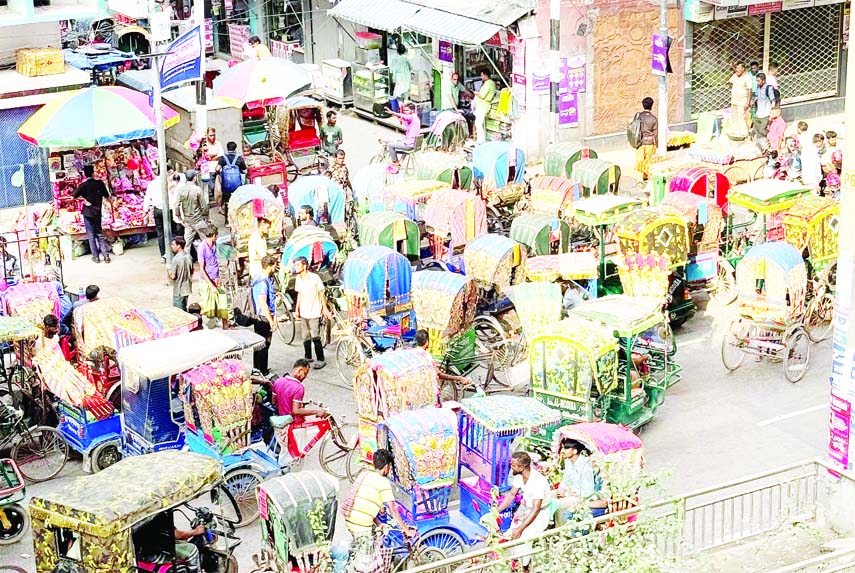
One of the most overlooked reasons behind the increasing traffic jams in Dhaka City is the uncontrolled rise of unauthorized vehicles, especially battery-run rickshaws, locally known as “auto rickshaws.”
Auto rickshaws have been dominating Dhaka’s major and minor streets since the last few years without registration, route permits, or licensed drivers.
This uncontrolled increase of auto- rickshaws have added a chaotic dimension to Dhaka’s already congested traffic system. Auto rickshaws once were an easy medium of transport for low income people on narrower lanes now have become a full-blown threat for Dhaka City.
In Dhanmondi, for example, the streets are packed with unregistered vehicles that cause substantial traffic jams. Since Dhanmondi is directly connected to major points such as Mohammadpur, New Market, and Rayerbazar, Hatripool, and several other areas, the congestion quickly spreads and causes severe traffic problems across the city.
A minor delay in one area can cause city-wide gridlock. The once manageable road networks are now packed with unauthorized vehicles that clog major roads of Dhaka City.
Auto rickshaws offer cheap and convenient transport to low-income people but their presence on already overburdened streets has made traffic jams even worse. Moreover, the drivers are not well trained and not even license holders, which ultimately results in increased accident risks, and undermined traffic discipline.
The number of unauthorized battery run rickshaws surpassed legal vehicles not only in the city but also in the whole country. Although there is no definite count but Bangladesh Road Transport Authority (BRTA) estimated that there are over 6 million battery-run rickshaws in the country with one to 1.2 million operating in Dhaka alone. Though there is no official figure, it is clear that these unregistered vehicles now outnumber registered ones.
The uncontrolled increment of these unregistered vehicles are fueled by a combination of weak management and law enforcement, occasional actions taken by the police, and an economic climate where drivers see auto rickshaws as a means to earn quick and reliable income.
The issue is not just one of lawlessness; it also stems from the fact that these unauthorized vehicles have become a lifeline for people who live in areas where public transportation options are either too unreliable or simply unavailable.
In a city where formal public transport options such as buses and the metro system are either underdeveloped or overcrowded, auto rickshaws have become a preferred mode of transport, offering cheap, fast, and direct routes to commuters.
The police and local authorities have occasionally attempted to crack down on these illegal vehicles, but these operations often lack consistency and tend to be ineffective.
The culture of corruption often undermines these efforts, as drivers who are caught operating illegally may bribe the traffic police to get out of the unwanted situation. Additionally, the lack of alternative employment opportunities for many drivers – who may have few options besides the informal transport sector – perpetuates the problem. Moreover, the demand for unauthorized auto rickshaws is also driven by passengers themselves.
The convenience of a faster, more direct ride, often at the expense of road safety and regulation, has led to an increase in the use of these vehicles. Passengers, in turn, incentivize reckless driving by choosing auto rickshaws over more manually operated paddle run rickshaws.
Therefore, this cycle – where supply and demand feed off one another – creates a challenge for policymakers and urban planners alike.
Dhaka City’s traffic jams cannot be controlled overnight without proper planning. The authority must offer viable alternatives that offer similar convenience at the same cost, there is little incentive for either passengers or drivers to choose legal means of transport.
The consequences of allowing this situation to persist are multifaceted and far-reaching. Firstly, the frequent stopping and starting of these unregistered vehicles in the middle of major roads leads to significant disruptions in traffic flow.
Auto rickshaws often stop suddenly to pick up passengers, blocking intersections and creating bottlenecks. This random stopping leads to unpredictable traffic conditions, where commuters are forced to maneuver through narrow lanes or navigate around stalled vehicles, contributing to accidents.
The roads are rife with reckless driving, with drivers often engaging in risky moves to overtake other vehicles. This increases the traffic jam and causes gridlock, putting the lives of both passengers and passerby at risk.
Yet, banning these vehicles outright is not a viable solution. These rickshaws provide a livelihood for thousands of drivers and serve as an essential form of transport for communities where formal transport infrastructure is lacking. An outright ban would lead to severe economic repercussions for those involved in the informal transport sector and exacerbate the transportation challenges faced by residents in underserved areas.
What Dhaka needs is a balanced, comprehensive approach. The government must regulate and formalize the presence of auto rickshaws by offering a clear registration process, requiring drivers to obtain licenses, and setting limits on the number of vehicles allowed in certain areas.
Authorities must also provide safe, alternative transport options to reduce the dependency on unregistered vehicles. This can be achieved by expanding the metro network, improving bus services, and investing in last-mile connectivity solutions.
Additionally, traffic law enforcement must be strengthened. Regular checks, fines for illegal drivers, and stricter consequences for traffic violations would go a long way in curbing reckless driving.
Dhaka’s traffic problem will not be solved overnight, but it can be managed with a proactive, balanced strategy.
The city deserves better planning, stronger regulation, and a commitment to restoring order to its roads. If we want to move forward – both literally and figuratively – we must stop tolerating the chaos and find a sustainable path forward.
(The writer is a stadent of BRAC University and an internee of this newspaper)