
DUCSU truly reflects the democratic spirit of youth
Dr. Forqan Uddin Ahmed :
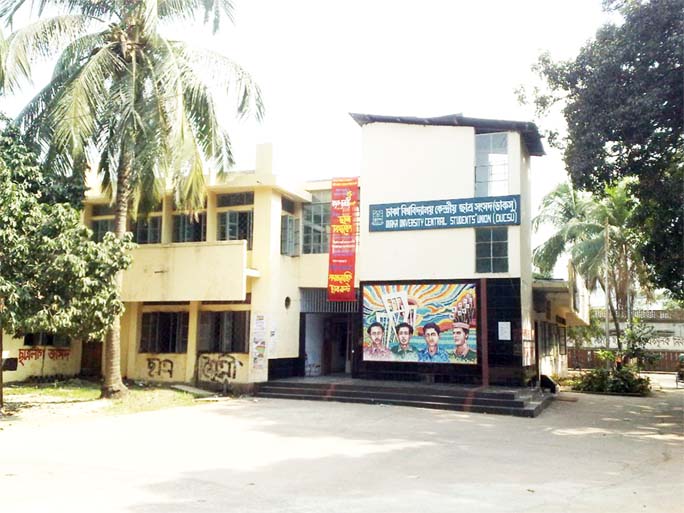
Since the establishment of Dhaka University, The Dhaka University Central Students’ Union (DUCSU) has shaped generations of student leadership and has played a direct role in the country’s key historical movements. DUCSU has always been recognized as a powerful and symbolic platform in Bangladesh’s political and cultural life.
It was through DUCSU that the first voices of resistance emerged during the 1952 Language Movement, the 1969 mass uprising, and the political backdrop of the 1971 Liberation War. Even during the pro-democracy movements of the 1980s and 1990s, DUCSU mobilized youth power and acted as a key driving force in toppling autocracy and establishing democratic governance.
This historical legacy means that each DUCSU election is not just about campus politics but also reflects the democratic spirit of youth, the strength of grassroots movements, and often mirrors the broader political situation in Bangladesh. Analysts note that the election is taking place at a time of change in national politics. DUCSU is often seen as a stepping stone into national politics rather than as a genuine student representative body. Breaking this perception will be a major test for the 2025 leadership.
A closer look at the candidates shows that at least nine major panels are contesting for 28 central DUCSU positions. These include mainstream political student organizations, independent coalitions, leftist groups, and reformist parties. Chhatra Dal has submitted a full panel, with Mohammad Abidul Islam Khan contesting for Vice-President (VP), Sheikh Tanvir Bari Hamim for General Secretary (GS), and Tanvir Al Hadi Mayed for Assistant General Secretary (AGS). Their panel emphasizes student rights, academic freedom, and resisting monopolistic control on campus.
Symbolically, they have left the Research and Publications Secretary position vacant in memory of student leader Sanzida Ahmed Tanni, a wounded protester in the July movement last year. Another strong contender is the United Students Alliance, supported by Islami Chhatra Shibir. Their VP candidate is Mohammad Abu Sadik Kayem, GS is SM Farhad, and AGS is Mohiuddin Khan.
Despite criticisms due to the organization’s controversial reputation, it maintains a strong position in Dhaka University politics. Meanwhile, the Anti-Discrimination Student Council has come into the spotlight with issues of inclusivity, social justice, and student welfare. Their leadership includes VP Abdul Qader, GS Abu Bakr Majumder, and AGS Ashrefa Khatun, pledging to advance gender representation, minority rights, and eliminate systemic discrimination within the university.
The rise of independent and reformist coalitions is also significant. Umama Fatema, the VP candidate of Independent Student Unity, presents herself as a neutral alternative outside party politics. Their campaign emphasizes transparency, academic reform, and establishing a student voice free from national political influence. Similarly, the leftist Resistance Council is gaining popularity among progressive students, led by VP Sheikh Tasnim Afroze Imi, GS Meghmallar Bosu, and AGS Jabir Ahmed Jubel.
Their campaign focuses on student empowerment, opposition to authoritarian practices, and solidarity with marginalized communities. Small parties with their call like “DUCSU for Change” and “DU First” also contest, reflecting the diversity of campus politics. Moreover, the mass uprising of July 2024 casts a long shadow over this election. Several panels present their participation in the movement as a mark of legitimacy and taking pride themselves as heirs of the struggle.
For instance, Chhatra Dal left one seat vacant in memory of Sanzida Ahmed Tanni, a leading student activist of the July movement. This year, panels like the Anti-Discrimination Student Council and Independent Student Unity have emphasized gender equality and minority rights. Their plans ensure equal participation, safety, and access to DUCSU positions for students at all levels. The presence of strong female candidates-such as Umama Fatema (Independent Student Unity VP) and Sheikh Tasnim Afroze Imi (Resistance Council VP)-signals a shift in perspective.
Students are deeply concerned about the university’s academic standards. While Dhaka University retains prestige, curriculum out datedness, administrative complexity, and misalignment with international competition have drawn criticism. Many graduates struggle to find meaningful employment. The Independent Student Unity emphasizes curriculum modernization, robust career counseling, and research support.
The Anti-Discrimination Student Council links this issue to economic justice. Hence, academic reform is a significant political and practical demand in the 2025 DUCSU election. Residential life is a key part of student experience, yet conditions are harsh-overcrowding, poor sanitation, low-quality food, and security concerns are common complaints. Candidates promise reforms in food management, transparent resource distribution, and better health and recreation facilities.
Stopping harassment and cyberbullying on campus is a pressing and urgent issue, and candidates pledge that DUCSU will be a safe space where victory is decided through debate and ideas, not coercion. These issues are more immediately relevant to ordinary students than national politics. Electoral transparency is the most critical issue.
The 2019 election faced widespread allegations of irregularities. Voting process transparency, fairness of hall-based polling centers, and administrative neutrality are central points of the 2025 campaigns. Candidates are under pressure not only to win but also to uphold respect for the process. Independent observation by faculty and media is demanded by many student organizations.
Thus, the 2025 DUCSU election is shaped by complex issues beyond determining who wins which post. At its core are student rights, representation, and the demand for effective democracy, surrounded by practical concerns – hall conditions, academic reform, employment – which affect students’ daily lives. Over this, political context-the legacy of last year’s mass uprising, national party influence, and youth expectations of justice and democracy-is applied.
Together, these issues determine the significance of the DUCSU 2025 election, which is crucial not only for Dhaka University but for the entire country. Whatever the outcome, the debates and demands that emerge on campus will guide the future of student politics.
(The writer is former Deputy Director General, Bangladesh
Ansar and VDP).