
Drug-resistant bacteria, newborns at alarming risk
City Desk :
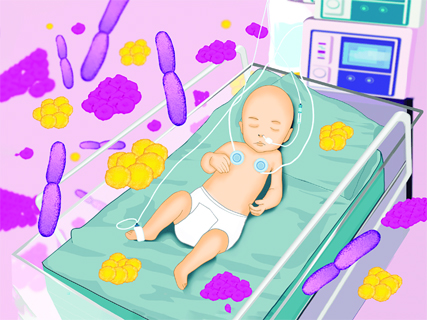
A study conducted by icddr,b has revealed widespread colonisation with drug-resistant pathogens in Bangladesh, with particularly alarming levels among newborns admitted to neonatal intensive care units (NICUs).
The findings were disseminated on Thursday at a seminar titled “Addressing Antimicrobial Resistance in Bangladesh: Insights from the ARCH Study” held at the Sasakawa Auditorium of icddr,b’s Mohakhali campus, according to an icddr,b press release .
Dr Fahmida Chowdhury, Associate Scientist and Lead of the Antimicrobial Resistance (AMR) Research Unit at icddr,b, presented the results of the multi-country Antibiotic Resistance in Communities and Hospitals (ARCH) study, supported by the US Centres for Disease Control and Prevention (CDC) and the Task Force for Global Health (TFGH).
The ARCH study, the first of its kind in Bangladesh, systematically investigated colonisation of antimicrobial resistant pathogens in both community and hospital settings. Colonisation refers to the presence of bacteria in or on the body without immediate disease symptoms, but with the potential to spread and cause hard-to-treat infections.
ARCH 1.0, conducted in 2019, found high levels of resistant bacteria among both healthy individuals and hospitalised patients. Extended-spectrum cephalosporin-resistant Enterobacterales (ESCrE) were highly prevalent in communities (78 percent) and hospitals (82 percent).
Carbapenem-resistant Enterobacterales (CRE) were significantly more common in hospitals (37 percent) compared to communities (9 percent).
Colistin-resistant Enterobacterales (ColRE) were detected in 11 percent of community members and 7 percent of patients, while one in five participants carried methicillin-resistant Staphylococcus aurous (MRSA).