
A new dawn for Sri Lanka: Dissanayake’s 2024 victory and the promise of reform
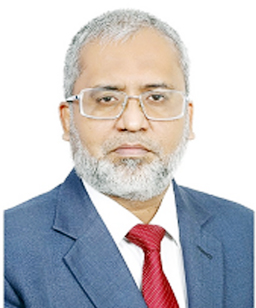
Md. Touhidul Alam Khan :
Sri Lanka has recently witnessed a significant political transformation with the emergence of Anura Kumara Dissanayake as the victor of the 2024 presidential election, signifying the beginning of a new chapter for a country historically constrained by entrenched political elites.
As the leader of the National People’s Power (NPP) alliance, Dissanayake’s campaign was deeply rooted in principles of transparency, anti-corruption, and substantial economic reform.
These ideals resonated profoundly with an electorate yearning for change after enduring prolonged crises that have affected the nation since 2022.
To truly appreciate the implications of Dissanayake’s victory, it is essential to reflect on the tumultuous events that have shaped modern Sri Lanka.
For nearly twenty years, the Rajapaksa family dominated the political landscape, leaving behind a legacy riddled with contradictions. Mahinda Rajapaksa’s rise to power in 2005 initially earned him accolades for ending a decades-long civil war in 2009.
However, as time progressed, his administration, along with that of his brother Gotabaya, became synonymous with nepotism, authoritarianism, and disastrous economic decisions.
A particularly detrimental move was the abrupt ban on chemical fertilizers in 2021, combined with reckless borrowing and tax cuts, which ultimately precipitated an unprecedented economic crisis that saw Sri Lanka default on its foreign debt for the first time in history.
By mid-2022, the severity of this crisis was painfully evident, leading to widespread civil unrest that culminated in Gotabaya Rajapaksa’s resignation and subsequent flight from the country. In his place, Ranil Wickremesinghe was tasked with steering a nation in disarray.
Although he managed to secure a $2.9 billion bailout from the International Monetary Fund (IMF), Wickremesinghe’s government was frequently depicted as an extension of elite, detached politics, further alienating large sections of the populace.
The austerity measures associated with the IMF agreement exacerbated public discontent, creating fertile ground for revolutionary change.
The 2024 election proved to be a watershed moment, featuring a diverse array of 38 candidates. However, notable was the absence of women, despite their comprising almost half of the electorate.
As the race honed in on four primary contenders, Dissanayake’s emergence as a formidable force became increasingly clear. His decisive victory – garnering over 5.7 million votes – was a powerful statement reflecting widespread dissatisfaction with the existing political order. Dissanayake’s vision for a “clean political future” deeply resonated with voters weary of years marked by neglect and corruption.
The international response to Dissanayake’s ascent was overwhelmingly positive. Leaders from both the United States and China recognized the significance of his victory, underscoring Sri Lanka’s strategic importance in the Indo-Pacific region. U.S. President Joe Biden articulated aspirations for strengthening bilateral relations, while Chinese President Xi Jinping reaffirmed intentions for enhanced cooperation under the Belt and Road Initiative. Indian Prime Minister Narendra Modi also warmly welcomed the new leadership, reiterating Sri Lanka’s integral role in India’s regional strategy.
From the onset of his presidency, Dissanayake demonstrated decisive leadership by dissolving Parliament and calling for snap elections, reaffirming his commitment to reform.
His appointment of Harini Amarasuriya as prime minister – marking the first time a woman has held this position in over two decades – exemplifies Dissanayake’s commitment to inclusivity and progressive governance.
However, the path ahead remains daunting. Dissanayake must navigate an economy struggling to support nearly a quarter of its citizens living in poverty.
His ambitious pledge to renegotiate the IMF bailout and lower tax rates indicates a willingness to embrace risk, but such actions could jeopardize the fragile recovery currently underway.
Engaging early with the IMF and key foreign creditors will be crucial as he tackles complex economic challenges.
Dissanayake’s foreign policy has raised questions, particularly given the NPP’s Marxist roots, which some interpret as a potential tilt towards China.
Nevertheless, early statements from Dissanayake reveal a pragmatic approach, calling for balanced international relations. Positioned at a vital geopolitical crossroads, Sri Lanka must adopt a foreign policy that prioritizes its sovereignty while simultaneously seeking economic advancement.
Recent economic indicators provide encouraging signs of recovery, with the country registering a 5 percent growth rate in the first quarter of 2024, primarily driven by a resurgence in industrial output and a recovery in tourism.
Despite these positive developments, pressing challenges persist, including widespread food insecurity and high poverty rates. Structural reforms are critical to ensure sustainable growth and to alleviate the hardships faced by those most negatively impacted by previous crises.
As Dissanayake embarks on this pivotal journey, the global community will closely monitor Sri Lanka’s trajectory.
His administration holds the potential to recalibrate the political landscape and restore trust in governance. Balancing domestic recovery efforts with the intricacies of international diplomacy, Dissanayake’s leadership embodies the hope for meaningful reform and revitalization.
Currently, Sri Lanka is on a promising path of recovery and development, having navigated through significant economic challenges in recent years.
The government’s proactive measures have begun to stabilize the economy, yielding encouraging signs of improvement since late 2023. Among the vital initiatives in place are comprehensive structural reforms aimed at restoring macroeconomic stability and fostering sustainable growth.
In March 2023, the International Monetary Fund (IMF) endorsed a USD 2.9 billion bailout for Sri Lanka as part of a four-year program designed to rejuvenate the nation’s economy.
This financial backing underscores the international community’s faith in the country’s pathways to recovery and commitment to reform. Additionally, the government is prioritizing infrastructure development, attracting investment, and enhancing public services – key pillars essential for sustainable national progress.
These proactive measures signal a resolute commitment to bolstering the economy, ensuring that the quality of life for all Sri Lankans improves.
The future holds significant promise as the nation embarks on this ambitious journey toward prosperity and stability. Under Dissanayake’s leadership, there is renewed hope for fostering an inclusive, transparent, and economically vibrant Sri Lanka.
(Md Touhidul Alam Khan, FCMA, CSRA, is a seasoned banking professional. He made the trip to Colombo, Sri Lanka, to engage in an interview with representatives of the SAARC Development Fund (SDF), which was scheduled to take place
from February 5 to 8, 2025).