
Dhaka and its public health risks

Mohammad Rukanuddin :
Dhaka, the energetic capital city of Bangladesh, is a city that never sleeps. While this energy is a source of dynamism and activity, it has a dark, albeit insidious, side: noise pollution. This excess and unwanted sound is now a significant public health issue, with levels of noise far over what is deemed safe by the World Health Organization (WHO). From the deafening car horns to cacophonous construction work and vociferous political protests, the city is a hubbub that is taking a severe physical and mental toll on its people, especially its most susceptible members.
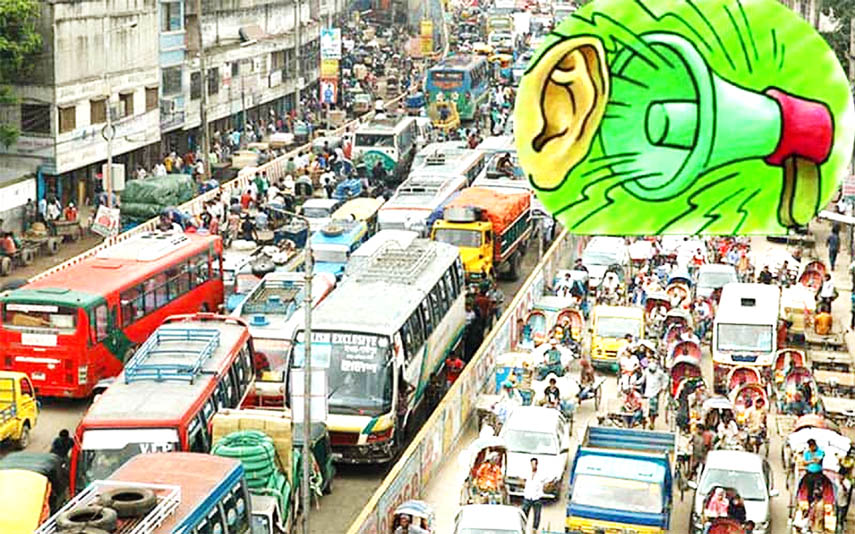
The reasons behind noise pollution in Dhaka are numerous and relentless. Traffic on the roads is the biggest contributor. With increasing numbers of cars on the roads, honking of horns, revving of engines, and in general, the din of traffic jams create a constant barrage of high-decibel noise.
Construction areas, on what seems like every corner, add to the problem with the cacophonous sounds of machinery and hammering. Industrial complexes and factories contribute to the cacophony, so do public events, religious celebrations, and social gatherings that often use high-wattage sound speakers and microphones. Even in residential areas, the cacophony created by generators during power cuts and the continuous din of markets and street vendors destroys the peace of the city.
The medical effects of this chronic exposure to noise are scary and far-reaching. The most obvious effect is on hearing. Long-term exposure to noise above 85 decibels can cause permanent hearing loss due to noise, or noise-induced hearing loss. In a study done in Dhaka, it was found that a great many people are suffering from impairment of hearing, and many patients taken into hospitals are admitted with permanent deafness caused by noise pollution.
But the dangers extend far beyond a potential hearing loss. Noise pollution is the leading known stressor, and it can cause any number of non-auditory illnesses. The constant assault on the ears elevates the levels of stress hormones, leading to high blood pressure, heart disease, and an increased risk for heart attack. Sleep disruption is also a common complaint, as sounds can awaken individuals and disrupt their sleep at night. This lack of restful sleep generates fatigue, annoyance, and an impaired immune system, making them susceptible to other illnesses. Furthermore, noise-stress can lead to headaches, indigestion, and ulcers.
For Dhaka’s school, college, and university students, the situation is actually desperate. The ever-present din of traffic and other causes makes it very hard to concentrate. In the classroom, background noise can be distracting from a teacher’s voice, hard to hear and decipher lessons for students. This constant distraction and lack of tranquility that a quiet classroom brings can have a debilitating impact on a student’s grades. It has been shown by research that prolonged exposure to noise can lead to hindered reading ability, diminished memory, and overall inhibition of cognitive capability.
Beyond academics, the mental health of students can also be impacted. Noise pollution may lead to stress and anxiety, which leads to mental issues. Students who are staying in noisy residential areas or hostels can never get a quality night’s sleep, which affects their mood, energy, and state of mind. This leads to a cycle of grumpiness, fatigue, and poor school performance, which increases their level of stress further.
The physical health risks, such as high blood pressure and headaches, also affect youths and, if not controlled, can result in long-term health problems.
There are control laws and regulations for noise pollution, but their enforcement is a serious issue. Even the public is unaware of the negative impacts of noise pollution on health, and the majority of people consider it a way of urban life. To address this looming crisis, efforts in all directions have to be taken.
Active implementation of noise regulation acts, particularly on those vehicles that use hydraulic horns and on building sites, is crucial. Secondly, city planning must be aimed at the creation of buffer zones between residential and commercial areas, and more trees and green belts may be used for the dissipation of sound naturally. Most importantly, public campaigns are required to educate people of the hazards of noise pollution and to make them shift towards quieter ways of life. It is only in collaboration that the people of Dhaka can hopefully regain their peaceful and healthy environment for themselves and future generations.
(The writer is Assistant Professor of English at Ahsanullah University of Science and Technology).