
Dengue panic runs high amid rising deaths
Noman Mosharef :
The dengue cases, a mosquito borne disease, have been hiked across the country at an alarming proportion infusing fear and panic into members of the public and demanding immediate actions from the departments concerned to rein in the menace.
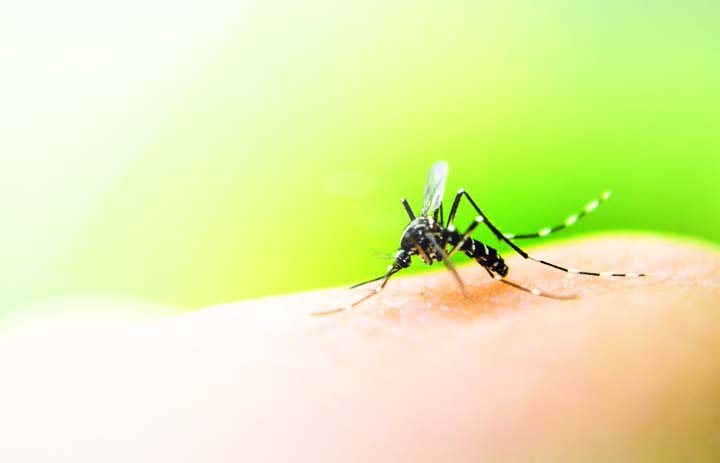
This month (July) has witnessed highest infection as monsoon season is being considered the month of Aedesaegypti’s breading.
According to Directorate General of Health Services (DGHS), one more death was reported from dengue in 24 hours till Thursday morning, raising the number of fatalities from the mosquito-borne disease in Bangladesh to 70 this year. The death has been reported in the Chattogram division.
During the period, 280 more patients were hospitalised with the viral fever, raising the number of confirmed cases to 18,625 this year.
Besides, Barishal Division alone reported 66 new cases, Chattogram Division (outside city corporations) recorded 45 cases, Dhaka Division (outside city corporations) 44, while 30 cases were detected in Dhaka South City Corporation, 24 in Dhaka North City Corporation, 39 in Rajshahi Division, 25 in Khulna Division, 4 in Rangpur division and three in Mymensingh Division.
Currently, 1308 dengue patients are receiving treatment in hospitals across the country.
Last year, dengue claimed the lives of 575 people. According to the DGHS, there were 101,214 dengue cases and 100,040 recoveries in the same year.
Public health experts have warned that the situation may become severe in the August-September period due to the ongoing rainfall patterns, which are creating ideal conditions for Aedes mosquitoes’ breeding.
Although the two city authorities of Dhaka claim that they have undertaken year-round mosquito eradication efforts as well as several other initiatives, experts have criticised them as being inadequate.
Entomologists have repeatedly said that our approach is flawed as combining mosquito control with dengue control is not the way to go. If we try to control dengue by targeting Culex mosquitoes, it will never work.
Culex mosquitoes breed in drains, sewers, ditches, and stagnant dirty water, and those who spray insecticides focus on these areas. But the breeding rate of Aedes mosquitoes in such places is extremely low.
Aedes mosquitoes tend to breed in residential areas, office premises, and spots where water collects, such as construction sites and building basements.
Unfortunately, mosquito control teams often struggle to access these locations, leaving many breeding zones untouched.
To tackle this, health and city authorities must make more targeted interventions.
Experts have also suggested prioritizing larviciding and elimination of breeding sources over widespread fogging, since fogging has largely proven ineffective.
They have also suggested that the two city corporations should undertake door-to-door operations in areas with high dengue incidence.
We also need a comprehensive, year-round strategy including eliminating breeding sources, destroying larvae, managing hotspot areas, and ensuring community involvement at every stage of the effort.
As dengue has spread to all the districts this year, special attention must be given to regions outside Dhaka, not only to contain the outbreak but also to ensure that health complexes and hospitals are adequately equipped to treat patients.
Amid the rising numbers, Prof Dr Sayedur Rahman, special assistant to the chief adviser for health ministry, warned that the situation could become more difficult if cases continue to rise.
He said the situation is still under control and the government is prepared to respond.
Dr Rahman made the remarks recently after a ceremony at the Directorate General of Health Services in Mohakhali, where China handed over a batch of “Dengue Combined Kits”.
“In identified hotspots, we are providing all kinds of support. We are ready, but if dengue spreads further, it may become more challenging. If people follow our advice, the situation will remain manageable,” he said.
Experts have stressed the need for immediate action nationwide, especially outside Dhaka, to curb the spread of Aedes mosquitoes, the dengue vector.
Entomologist Prof Kabirul Bashar said the government must prioritise larviciding and eliminating breeding grounds over general fogging, which he termed largely ineffective.
“Fogging should only be done in confirmed hotspot areas. The continued reliance on it is misguided,” he said.
He recommended using Insect Growth Regulators (IGRs), which are effective for up to three months, alongside larvicides. He also urged people to clean and overturn water containers to prevent breeding.
Bashar emphasised the importance of public awareness. “Without community-level efforts to destroy breeding sites, dengue cannot be controlled,” he said.
Warning that all 64 districts could face worse outbreaks than in previous years, Bashar said Aedes mosquitoes are now present across the country.
He called on the local government ministry to direct deputy commissioners, municipalities, and city corporations to urgently destroy mosquito larvae and breeding sites.
He also urged the ministry to supply IGRs or allow local bodies to procure and use them with proper guidance.
Entomologist GM Saifur Rahman echoed these concerns, saying the rapid growth of the Aedes population is driving a sharp rise in cases. “Once infected, mosquitoes can lay infected eggs, further worsening the outbreak,” he said.
He called for a dedicated vector control department to scientifically manage mosquito-borne diseases. “Such a department should handle cluster identification, surveillance, and targeted interventions. Without a structured approach, current efforts will fall short,” he warned.