Delhi puts Hasina’s return on her will as Dhaka seeks extradition

Diplomatic Correspondent :
Country’s call for the return of former prime minister Sheikh Hasina has entered a tense stage as New Delhi signals that her stay in India is ultimately her own decision, despite an existing extradition treaty signed during her time in office.
Public expectations inside Bangladesh have risen since Hasina’s conviction by the International Crimes Tribunal for crimes against humanity committed during the July uprising last year.
The government has formally requested India to return her under the treaty, a move the Foreign Ministry conveyed through an official letter. Delhi confirmed on 11 November that it had received the request.
Indian spokesperson Randhir Jaiswal told reporters that the matter was under examination and added that India remains committed to the people of Bangladesh and will continue to engage constructively with all stakeholders.
The statement prompted a sharp reaction from Chief Adviser’s Press Minister Shafiqul Alam.
In a recent social media post he said he was confident that Sheikh Hasina and former home minister Asaduzzaman Khan Kamal would be brought back to face the justice system in Bangladesh.
He argued that despite their influence and powerful supporters, their alleged roles during the crackdown would continue to draw international attention and that accountability would eventually reach them.
Foreign Adviser Md Touhid Hossain, during a visit to the northern region on Friday, told journalists that Dhaka had not yet received a “positive response” from India.
He stressed that Hasina is now a convicted fugitive under the judgment of ICT and that Bangladesh expects India, as a close neighbour, to honour the request.
He noted that India appears to be scrutinising the matter but has offered no clear signal of cooperation.
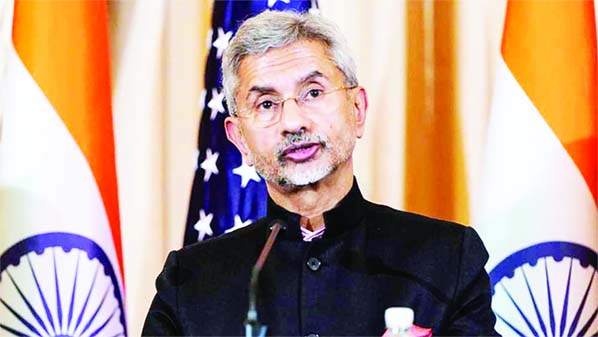
A day later, India appeared to shift the focus away from the extradition treaty. Instead of addressing the request directly, External Affairs Minister S Jaishankar said Hasina’s stay in India was shaped by her personal choice.
In reply to a question at the HT Leadership Summit whether Hasina was welcome to stay in India for ‘as long as she wants’, he said, “Well, that’s a different issue, isn’t it? She came here in a certain circumstance, and I think that circumstance clearly sort of is a factor in what happens to her.
But again, that is something in which she has to make up her mind.”
Referring to past political issues in Bangladesh, Jaishankar said, “What we heard was that people in Bangladesh, particularly those who are now in power, had an issue with how the elections were conducted earlier.
Now, if the issue was the election, the first order of business would be to do a fair election.”
Earlier verdicts from the International Crimes Tribunal on 17 November found Hasina and Kamal guilty on multiple counts, including incitement and the use of lethal force against protesters during the student led uprising of 2024.
Former inspector general of police Chowdhury Abdullah Al Mamun, who testified for the state, received a five year sentence.
Hasina fled to India in August last year as her 15-year rule collapsed amid violence that killed hundreds. The tribunal later sentenced her to death in absentia for crimes against humanity.
Kamal was also convicted in his own set of cases linked to state violence and the alleged misuse of authority during the same period. Both remain in India.
Dhaka has asked for their return under the extradition treaty, arguing that justice and accountability are in the best interests of the Bangladeshi people.
What happens next depends entirely on how India chooses to handle a request that carries political, diplomatic and regional implications.
India’s Ministry of External Affairs had earlier said it remains committed to peace, democracy, inclusion and stability in Bangladesh.
Dhaka now expects that New Delhi will honour the treaty and respond in line with the expectations of victims and their families.
Meanwhile, the diplomatic chill between the two neighbours is already carrying an economic cost. Visa delays have disrupted business travel and medical tourism.
Hotels in West Bengal and other regions that depended heavily on Bangladeshi visitors are now reporting empty rooms and daily financial losses.
Trade and people to people contact, once the backbone of the relationship, have visibly slowed as the political uncertainty deepens.
Dhaka continues to insist that its relationship with India should be based on the will of its people, not on the preferences of any individual.
Whether India adjusts its stance will determine how soon the long standing ties between the two countries return to normal.