Corruption plagues medicine market

Staff Reporter :
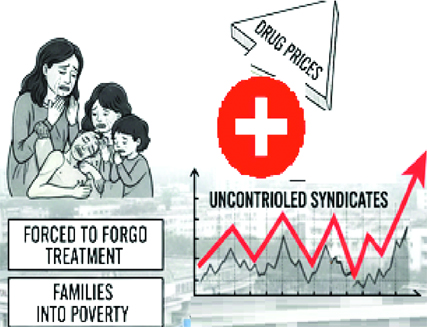
Rising drug prices amid the uncontrolled syndicates are crippling Bangladesh’s healthcare sector, forcing countless patients to forgo treatment and pushing families into poverty.
Over 116,000 people die from cancer annually in Bangladesh, with most succumbing due to lack of regular basic treatment and abandoning it midway, according to research.
While local firms now meet 95per cent of cancer drug demand up from near-total import reliance 15 years ago, prices remain exorbitantly high despite government tax exemptions on production and raw materials. Pegfilgrastim, vital for cancer supportive care, sells for Tk10,000-20,000 per dose locally, compared to Tk5,000-9,000 internationally, just over Tk1,500-2,000 in different countries’ currency.
Government failure to regulate pricing, eliminate pharmaceutical syndicates, drives this disparity.
The Drug Administration under the health ministry should set prices and ensure quality, but substandard and fake drugs flood markets unchecked. A syndicate dictated prices, bypassing authorities over various drugs for gastric, antibiotic, diabetes, and other ailments.
Shamim, earning Tk75,000 monthly in Dhaka, exemplifies the crisis. His cancer-stricken mother needs monthly pegfilgrastim, up from Tk8,000 to Tk15,000 in a year. “One can skip meals, but how can a dying patient be saved without medicine?” he laments; now surviving on loans.
WHO data shows 167,256 new cancer cases yearly in Bangladesh. Pharmacies flout listed prices too: Milkcal tablets (60 caps, MRP Tk600) sell for Tk605-610 in Dhaka areas like Mirpur and Mohammadpur, cheaper at Tk550 online.
IMS Health data reveals gastric drugs dominate sales, with Square’s Surgel (20mg) topping 2024’s first nine months at Tk918 crore revenue-yet rivals like Sekalo (Tk6/cap), G-Omeprazole (Tk3.5/cap), and Progut Maps (Tk8/cap) vary wildly for the same ailment.
Producers blame rising dollar rates, raw material costs, and overheads, but experts counter that Bangladesh enjoys WTO waivers on patents and low production costs compared to developed nations.
IQVIA reports drugs eat 44per cent of Bangladesh’s health spending per Tk100 triple the global 15per cent average.
The 2022 Household Income-Expenditure Survey links high prices to 6.1 million slipping below poverty. In August, the government fixed prices for 260 essential drugs to curb hikes, but enforcement lags.
Public health experts urge stricter oversight to rationalise costs and dismantle lingering syndicates.