
Competing in the global health tourism market

Dr. Nasim Ahmed :
Health tourism involves traveling abroad to access health-related services such as advanced medical treatments, wellness programs, preventive care, and rehabilitation.
It combines healthcare with travel, motivated by factors such as cost, quality, availability, or specialized expertise that may be unavailable or more expensive locally. It has become a significant global industry.
For countries like Bangladesh, which currently experience high outbound medical travel and limited inbound flows, the question is whether health tourism can function as a targeted economic and public health strategy instead of just an individual coping mechanism. Global leaders in medical tourism implement a combination of policies, both hard and soft, that work together.
1. Hospitals in destinations seek international certification (e.g., Joint Commission International) to demonstrate safety and uphold consistent clinical governance. Accreditation serves as both a quality assurance measure and a marketing credential to attract international patients.
2. Singapore and Thailand combine active government efforts, policy incentives, promotional diplomacy, and streamlined medical visa systems, along with private hospital capacity to create reliable patient pathways. Thailand’s visa categories and Singapore’s strategic public investments demonstrate how travel facilitation and clinical excellence together build trust and increase patient volumes.
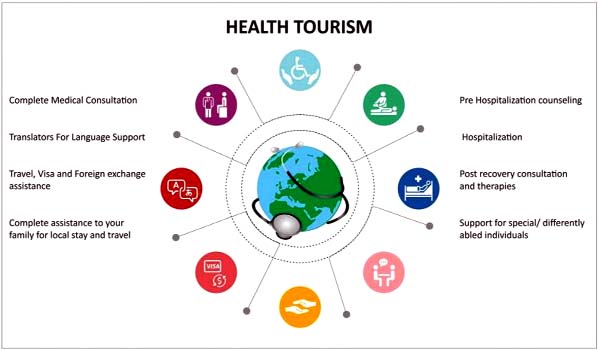
3. Successful hubs focus on specialties where they have a competitive advantage, such as cosmetic surgery, dental care, fertility, and cardiac procedures. They combine clinical services with hospitality, including accommodations, interpreters, travel arrangements, and local recovery support. Transparent pricing and partnerships with insurers or employers help reduce barriers for international patients.
Against this backdrop, Bangladesh has several clear advantages. First, a large and growing domestic demand for affordable, timely, and higher-quality care creates a captive market that can be retained within the country if quality improves; meanwhile, large diaspora communities and regional proximity to South and Southeast Asia give Bangladesh the potential to attract inbound patients.
Second, Bangladesh’s lower wages and medical costs compared to many developed markets, along with improving tertiary facilities, create a price-competitiveness platform when paired with proven quality.
Third, regional medical value chains, especially well-established medical travel links between Bangladesh, India, Thailand, and Singapore, already support patient flows and referral networks. These can be redirected or expanded through bilateral agreements, digital referral platforms, and targeted marketing.
However, several structural and policy gaps currently limit Bangladesh’s competitiveness in health tourism:
1. Without a credible, enforceable pathway to internationally or nationally recognized accreditation, hospitals face trust issues: foreign patients and local elites prefer destinations that display proven quality signals. Bangladesh’s healthcare institutions have areas of excellence, but they lack a systematic accreditation process that foreign patients rely on.
2. Medical tourism needs coordination among health, immigration, tourism, transportation, and foreign affairs agencies. Without a dedicated medical-value-travel team or plan, efforts stay disorganized and underfunded.
3. Patient flows are highly affected by visa regulations and diplomatic relations; recent changes in regional visa policies and diplomatic tensions have already disrupted predictable cross-border patient movement in South Asia. Political instability or strained diplomatic ties, therefore, pose significant commercial risks for this expanding industry.
4. Beyond clinical quality, the international patient experience depends on coordinated logistics (medical visas, airport transfers, accommodation, interpreters) and reliable post-operative care pathways, areas where current capacity varies.
5. Neighboring markets like India, Thailand, Singapore, Malaysia, Turkey, and others actively promote medical tourism through significant investments, branding, and specialized centers; Bangladesh should focus on niche areas instead of engaging in broad, unfocused competition.
To turn promises into action, Bangladesh should adopt a realistic, step-by-step approach that minimizes risks, boosts credibility, and maximizes its comparative advantage.
1. Create a cross-ministerial medical tourism coordination cell that includes health, tourism, immigration, and commerce, with a clear plan and dedicated funding. The cell should certify hospitals for international patient readiness, covering administrative, clinical, and hospitality aspects, and establish bilateral referral agreements.
2. Subsidize and support hospitals pursuing internationally recognized certification and enhance national accreditation to provide a more affordable pathway. Accreditation should be combined with public reporting of outcomes and a mandatory complaints and grievance process for international patients.
3. Focus investment incentives on 2-3 main clusters where Bangladesh has clear advantages, such as low-cost dental chains, fertility treatments, specific elective surgeries, or wellness packages, and promote these as all-inclusive packages with transparent pricing and follow-up care.
4. Simplify medical visa categories and speed up consular processing for documented medical cases; develop comprehensive online portals for booking appointments, visa letters, and accommodations. Lessons from Thailand and Singapore show that easing visa procedures significantly increases inbound travel.
5. Use Public-Private Partnerships to develop integrated care and stay hubs, including hospitals, hotels, rehab centers, and labs. Fund training for both clinical and non-clinical staff in language, cultural competence, and hospitality.
6. Enhance patient-flow resilience by diversifying markets like diaspora and ASEAN, and keep diplomatic channels open to handle visa and cross-border policy shocks. Having a contingency plan for political or travel disruptions will make the sector more appealing to investors.
With thoughtful policy design, health tourism can enhance domestic care capacity, create jobs, and improve clinical standards for everyone’s benefit. Bangladesh’s potential depends not on rapidly increasing numbers but on building trust through accreditation, targeted specialization, government support, and strong cross-border agreements. If policymakers combine global best practices with practical sequencing, health tourism can become a sustainable part of national health goals instead of a costly distraction for domestic patients.
(The author is currently working as Associate Professor of Public Policy at the Bangladesh Institute of Governance and Management, affiliated with the University of Dhaka. Email: [email protected])