Climate Risk Assessment Workshop Wraps Up in Historic Mosque City of Bagerhat

Khulna, Bangladesh:
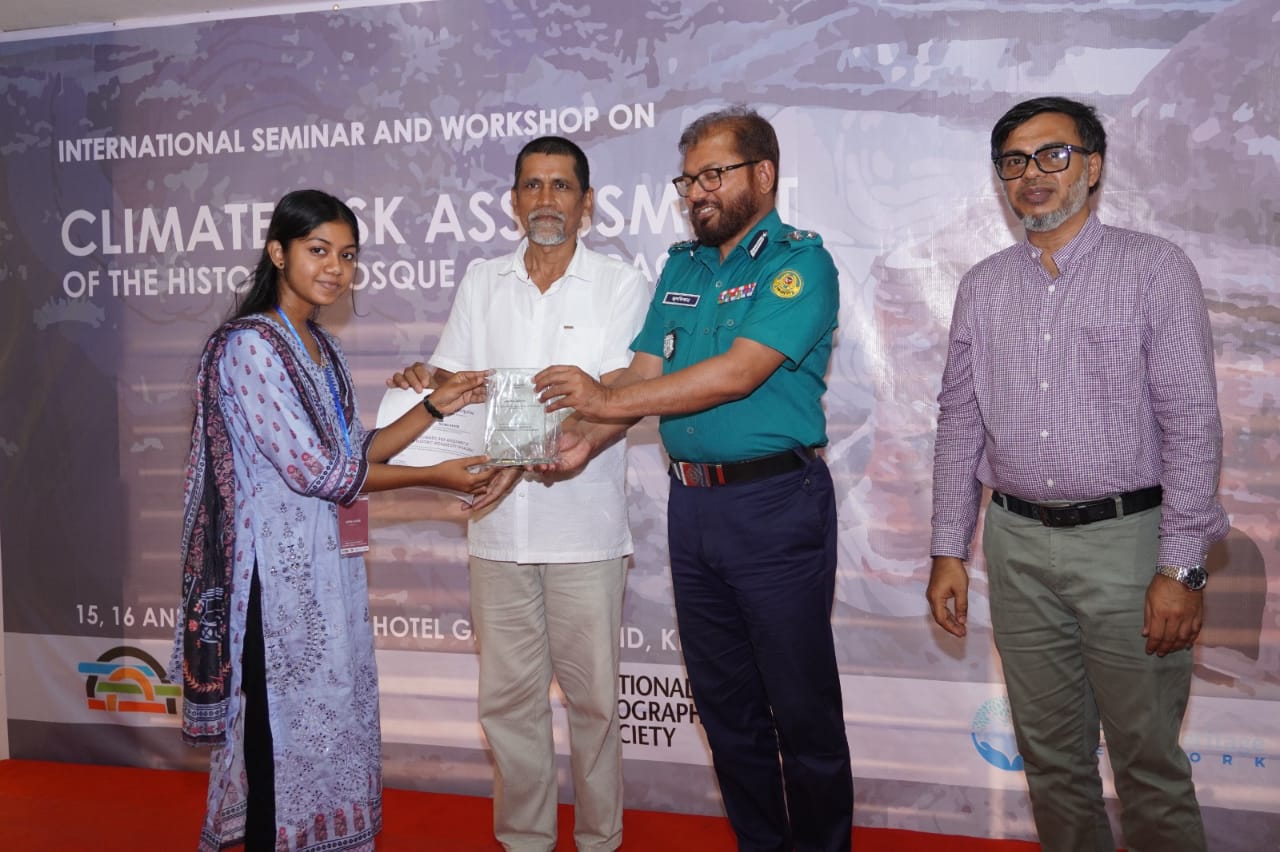
A three-day climate risk assessment workshop under the globally collaborative Preserving Legacies project has concluded in the Historic Mosque City of Bagerhat, a UNESCO World Heritage Site renowned for its cultural and architectural heritage. The closing ceremony marked a significant milestone as the first community-led initiative in Bangladesh to evaluate the climate vulnerability of heritage sites.
The event was graced by Mr. Md. Zulfikar Ali Haidar, Police Commissioner of Khulna Metropolitan Area, who served as the chief guest. He praised the initiative, highlighting the importance of integrating research with local knowledge to safeguard national treasures from the threats of climate change.
The workshop brought together a diverse group of participants, including local residents, heritage professionals, and climate researchers, aiming to assess key climate risk dimensions—hazard, vulnerability, exposure, and adaptive capacity. The assessment focused on six major heritage landmarks: Shait Gambuj Mosque, Chuna Khola Mosque, Bibi Begni Mosque, Nine Dome Mosque, the Tomb of Khan Jahan Ali, and Rana Bijoypur Mosque.
“These sites are not only architectural masterpieces but also custodians of Bangladesh’s collective memory and identity,” said Professor Darain, site coordinator of the Preserving Legacies team. “Our goal is to harness local insights alongside scientific understanding to ensure that these invaluable legacies are protected for future generations.”
Victoria Herrmann, Executive Director of Preserving Legacies, presided over the session and commended the inclusive and participatory nature of the workshop. “This workshop has been remarkable in bringing people together to co-understand risks from a local perspective. It exemplifies how heritage and climate action can intersect meaningfully,” she said.
Participants shared growing concerns over intensifying climate impacts. Mr. Mahbub, a local resident, noted how traditional adaptation strategies are increasingly failing in the face of unpredictable weather. “We have lived in harmony with the river and the weather for generations, but the patterns are now unpredictable and destructive,” he said.
Architect Polin, a conservationist and local activist, urged for stronger policy inclusion. “The cultural heritage sector is conspicuously absent from our national climate adaptation plans. We must act now—before irreversible damage occurs,” he warned.
The findings and community-driven recommendations from the workshop are expected to serve as a model for climate-resilient heritage preservation across similarly vulnerable regions in the Global South. These insights will be shared with national policymakers, heritage institutions, and international partners to build a more inclusive climate strategy—one that recognizes the essential role of cultural heritage in community resilience.