
Coastal Bangladesh on the Brink: Climate change, takes toll on Khulna, Bagerhat, Satkhira
Khulna Bureau :
Bangladesh stands among the nations most vulnerable to climate change-and nowhere is this more evident than in its southwest coastal belt. Khulna, Bagerhat, and Satkhira are facing a relentless convergence of climate-driven disasters: salinity intrusion, tidal surges, collapsing embankments, and growing public health and livelihood crises.
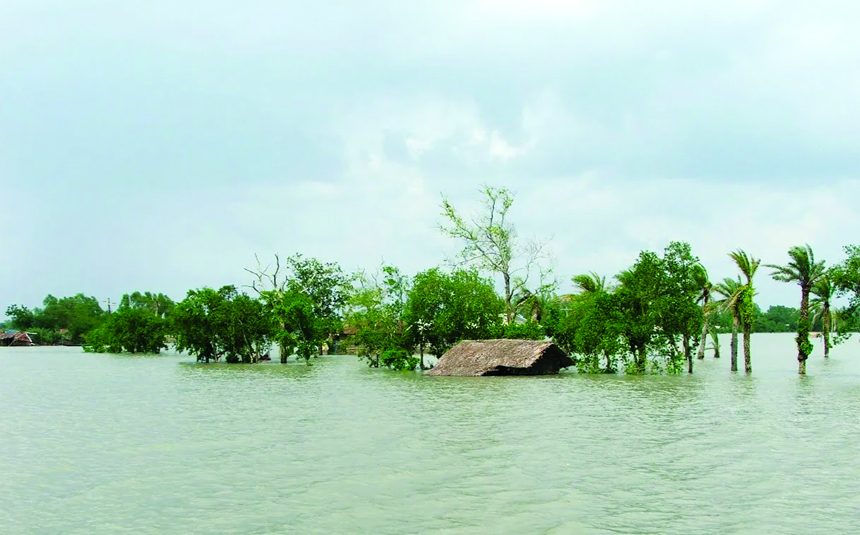
Cyclones & Collapsing Infrastructure: Cyclones like Sidr (2007), Aila (2009), Fani (2019), and Amphan (2020) have repeatedly ravaged these regions. According to the Bangladesh Water Development Board, over 60% of coastal sluice gates are now non-functional. As protective polders, built in the 1960s under the Coastal Embankment Project, decay, saline water inundated farmlands and homesteads. Areas like Koyra, Shyamnagar, Dacope, and Ashashuni face annual flooding and displacement due to breached embankments and failing drainage systems.
Economic Fallout: Agriculture & Fisheries in Decline: The region’s backbone arming and fishing is crumbling. Once a hub of shrimp and freshwater fish production, the coastal economy has taken a hit. The Bangladesh Fisheries Research Institute reports a 20% drop in shrimp yields between 2020 and 2023, driven by rising salinity and diseases like White Spot Syndrome. Fishers now farm on unsuitable lands, damaging breeding grounds. Agriculture suffers too, staple crops like rice, jute, and vegetables are declining. Salt-tolerant varieties like BRRI dhan-67, 89 and Bina Dhan-10 show promise, but have yet to scale.
Water, Health & Gendered Impacts: Salinity has reached tube wells in many areas, making safe drinking water scarce. Waterborne diseases like diarrhea and jaundice are on the rise, compounded by inadequate health budgets. Women and adolescent girls bear the brunt-fetching water over long distances, managing poor sanitation, and suffering from lack of nutrition and reproductive healthcare. Mental health stressors are mounting across the region.
Climate Migration & Rising Poverty:With poverty rates exceeding 40% in some upazilas, climate stress is deepening inequality. As livelihoods vanish, internal migration is rising-fueling a growing phenomenon of “climate refugees” within national borders.
Budget Demands for 2025-26: To address this mounting crisis, the upcoming national budget must prioritize:
Reconstruction of embankments and sluice gates with community-led water governance.
Research investment in salt-tolerant crop and aquaculture species.
Incentives and low-interest loans for affected farmers and fishers.
Emergency disaster funds and water purification infrastructure at the union level.
Dedicated funding for women’s health and nutrition, including menstrual hygiene and child nutrition programs.
Khulna, Bagerhat, and Satkhira are on the frontlines of the climate emergency. The time for abstract debates is over-what’s needed now is decisive policy, scientific investment, and grassroots inclusion. The coast is not just eroding-so is the future of millions.