
Children lead campaign to rethink public sanitation
NN Report :
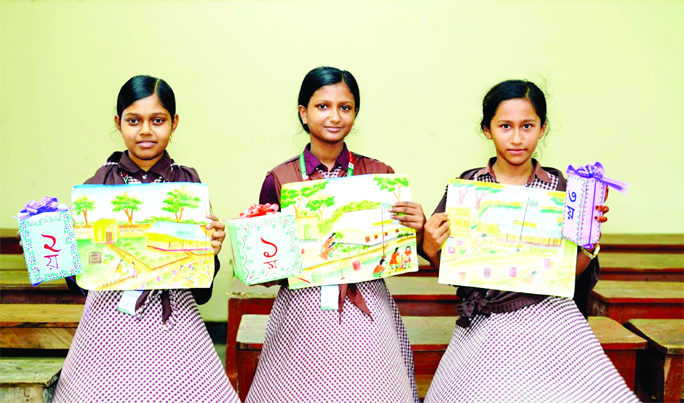
On a warm, dusty morning in the heart of Dhaka, the sound of crayons scratching paper fills a small classroom. A group of children sits at their desks, sketchbooks open, drawing something that most adults in the city barely speak about-public toilets.
Some children giggle at first, others fidget uncomfortably, unsure how to begin. But curiosity soon replaces hesitation. A little girl draws a toilet with a ramp for wheelchairs and flower pots outside. Another child adds a handwashing station with soap and a smiling cleaner. One boy draws a simple door with a lock, painted in bright colours, and a sign that reads: “Welcome.”
These are more than just childlike doodles. They are pieces of a growing, citywide conversation-one that confronts a basic but often overlooked question: Where do we go when we need to go?
The conversation is being shaped by an innovative campaign called “Pothe Holo Dekha” (An Encounter on the Go), led by WaterAid. But this isn’t a construction drive-it’s a cultural movement. Its goal? Not just to build toilets, but to build empathy. Through drawing, storytelling, and digital sharing, the campaign invites people to rethink how they feel, talk, and act about public sanitation.
Because in truth, public toilets are not just about pipes, tiles, and cement. They are about dignity, access, and belonging-about whether a city sees its people as worthy of safe, clean, and accessible spaces.
It began with the youngest voices. Children between five and ten years old were asked to draw what a safe, clean public toilet should look like. Some drawings showed thoughtful features-braille signs, ramps, soap dispensers. Others revealed deeper social realities: a mother waiting outside while her daughter entered alone; a blind man navigating a tactile path to find his way.
These sketches weren’t architectural blueprints. They were emotional maps-imaginings of safety, privacy, and respect from those who often experience the city with the least control over their environment.
Next, the campaign invited young adults-aged 18 to 35-to share real-life stories where the absence or presence of a public toilet changed their day. One woman told of enduring an entire day without drinking water while travelling across Dhaka, just to avoid needing a toilet. Others shared how locked or poorly maintained facilities made simple routines feel dangerous or shameful.
On social media, the conversation took on a life of its own. People began posting photos, reels, and short clips about public toilets-some praising well-kept spaces, others questioning why their neighbourhoods still had none. What was once taboo, uncomfortable, or ignored suddenly became a topic of community dialogue.
In cities across Bangladesh, public toilets are too few, often poorly maintained, and sometimes simply inaccessible-especially for women, children, people with disabilities, and the elderly. In a country investing in metro rails, malls, and mega infrastructure, the lack of attention to basic sanitation isn’t just an oversight-it’s a systemic inequality.
“Most people don’t think about it until they need one,” says a local activist. “And when they do, it’s often too late. Especially for women, the lack of access can mean choosing between dignity and discomfort.”
No, this campaign won’t solve the sanitation crisis overnight. But it’s doing something perhaps just as important: changing how people feel.
A child who draws a toilet with pride is learning to respect and value the space. A young woman who shares her story becomes part of a civic voice. A man who posts a photo of a clean public toilet.