
CA reaffirms pledge for free, fair poll
Staff Reporter :
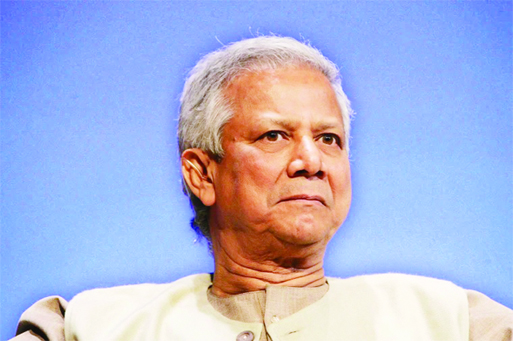
Chief Adviser Professor Dr Muhammad Yunus has reiterated his government’s commitment to delivering a credible national election, stressing that an illegitimate vote would serve no purpose.
“My role is to ensure the election is acceptable, clean, and even enjoyable,” he told CNA during an official visit to Malaysia.
The interim government is advancing a series of reforms seen as critical to ensuring a free and fair poll, scheduled for February next year. This will be the first national election since widespread unrest plunged Bangladesh into political turmoil more than a year ago.
Professor Yunus, who is leading the reform programme, pledged to restore democracy and meet both domestic and international expectations for electoral integrity. “We are getting close to fulfilling the goals we set. The previous political system was riddled with corruption, manipulation, and abuse,” he said.
Dr. Muhammad Yunus has reiterated that he has no intention of joining active politics or contesting in the upcoming general election scheduled for February next year. He made the remarks during a separate interview with Malaysia’s national news agency, Bernama, during his recent visit to the country.
The current political transition follows student-led protests demanding the resignation of former Prime Minister Sheikh Hasina, who had governed for 15 years. The demonstrations escalated into violent clashes between protesters, security forces, and Awami League supporters.
Hasina’s tenure was marred by allegations of authoritarian rule, systemic corruption, human rights violations, and suppression of dissent. Now living in India, she is facing trial in absentia in Bangladesh, accused of ordering a violent crackdown that left more than 1,000 people dead during the uprising.
Relations between Dhaka and New Delhi have since become strained. The interim government has requested Hasina’s extradition and urged India to stop her from making what it described as “false and fabricated” online statements that could destabilise the country. India has yet to respond.
Professor Yunus said Indian Prime Minister Narendra Modi had told him that the government could not control social media content. “We don’t intend to fight over her extradition. We told India: keep her.
The trial will continue here,” he said. “But she must not be allowed to disrupt our country. She still has loyalists in Bangladesh who could repeat the chaos of the past.”
Under Hasina, Bangladesh maintained close strategic and economic ties with India. However, observers note that the interim government has since shifted its focus, moving closer to China.
In March, Professor Yunus visited Beijing to meet President Xi Jinping, positioning Bangladesh as a strategic gateway to South Asia.
He defended the move as part of an economic strategy rather than geopolitical alignment. “We are open to working with any country willing to invest here,” he said. “We welcome partnerships with Pakistan, China – and India too. This is about equal opportunities, not favouritism.”
The Nobel Peace Prize laureate admitted he was initially reluctant to take on a political role after the revolution. “The student leaders urged me to take responsibility, reminding me of the bloodshed and sacrifices made. That deeply moved me, and I realised I had to contribute in my own way,” he recalled.
At 85, Professor Yunus has stated he will step down after the election and has no intention of remaining in politics. Looking ahead, he expressed hope for lasting stability. “My hope is that Bangladesh stays on course and never veers off track again,” he said.
Speaking to Bernama’s Editor-in-Chief Arul Raju Durairaju, International News Editor Voon Miaw Ping, and Assistant Economics Editor Kisho Kumari Suchedaram, Dr. Yunus outlined his current priorities in steering Bangladesh’s interim administration.
“Our focus remains on implementing the reform agenda of the interim government,” he said. “Over the past year, we have achieved significant progress. This August marks the completion of our first year in office.”
Dr. Yunus highlighted the formation of the Consensus Commission, built upon 11 reform commissions, as a major achievement.
The commission is expected to submit its election-related reform report by the end of this month, paving the way for an electoral system acceptable to all political parties.
He emphasised the importance of consensus on politically sensitive issues. “There has been much debate over whether the parliament should be unicameral or bicameral. On such matters, agreement among parties is essential,” he said.
Dr. Yunus was appointed Chief Adviser by President Mohammad Shahabuddin on 8 August 2024, following a mass student and public uprising that led to the removal of former Prime Minister Sheikh Hasina from office.