
BUET remembers Abrar, unveils memorial
Staff Reporter :
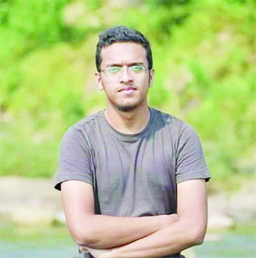
Tuesday marks six years since the murder of Bangladesh University of Engineering and Technology (Buet) student Abrar Fahad — a killing that shocked the nation and laid bare the violent culture of political dominance inside public university dormitories.
On 6 October 2019, Abrar’s mother fed him and saw him off on a bus from Kushtia to Dhaka. That was the last time she saw her son alive. That evening, the 21-year-old electrical and electronic engineering student was summoned to a room in Buet’s Sher-e-Bangla Hall by members of the then–Awami League–affiliated Bangladesh Chhatra League (BCL).
There, he was beaten for hours and later died from his injuries. According to BBC reports from that time, witnesses said Abrar was taken from his dorm room around 8pm and tortured for at least four hours. The autopsy confirmed extensive blunt-force trauma. “We think he died of attack with blunt objects,” Dr Sohel Mahmud, head of the forensic department at Dhaka Medical College Hospital, said then.
CCTV footage later showed several men carrying Abrar’s lifeless body through the hall corridors. Police subsequently arrested 13 Buet students, all belonging to BCL. The organisation expelled 11 members of its Buet unit following the murder.
In March 2025, the High Court upheld a lower court verdict sentencing 20 Buet students to death and five others to life imprisonment. Of the 25 accused, five remain on the run.
Silenced for speaking his mind
Abrar’s killing came just a day after he posted a Facebook status critical of Bangladesh’s water and energy agreements with India, accusing the government of compromising national interests. He wrote, “When India’s own states fight over sharing the Kaveri River water, we are offering 150,000 cubic metres daily without any exchange.”
He also criticised gas exports and concluded his post with a patriotic verse: “For others’ sake, give up your own gain; offer your life and soul, for there is no greater joy than forgetting oneself for others.”
Media reports later revealed that several BCL activists accused him of having links with Islami Chhatra Shibir after the post went viral. They called him to Room 2011, notorious among students as a “torture cell.” Abrar never came out alive.
One Buet student who witnessed the incident told the BBC he had seen Abrar alive around 2am. “He was saying, ‘Please take me to the hospital quickly,’” the student recalled. But by 3am, police recovered Abrar’s motionless body from the dormitory’s ground floor.
The killing triggered nationwide outrage, student protests, and demands for political neutrality across campuses.
Remembering Abrar
On Monday afternoon, the Buet community observed Abrar’s sixth death anniversary by unveiling a memorial plaque at the Sher-e-Bangla Hall courtyard. The Abrar Fahad Memorial, built by the Sher-e-Bangla Hall Alumni Association, was inaugurated by Buet Vice-Chancellor Professor Dr Abu Borhan Mohammad Badruzzaman.
The event was attended by Buet alumni, teachers, and cultural personality Engineer Abul Hayat. Alumni Association President Engineer Rezaul Karim presided over the ceremony.
In his speech, the vice-chancellor paid tribute to Abrar’s courage and convictions. “We must pledge today that such a tragic incident will never happen again. This is not only a vow from the administration but also from the entire student community,” he said.
He added, “Abrar Fahad spoke the truth with courage. He expressed his position on the water-sharing issue without fear, and for that, he was brutally killed. This memorial is not merely a symbol—it embodies the spirit of truth, protest, and patriotism.”
A family’s unending grief
At their home in Kushtia, Abrar’s parents, Rokeya Khatun and Barkat Ullah, say their son’s absence remains unbearable. His room, desk, and belongings have been preserved just as he left them.
Still waiting for justice, Abrar’s father said, “My son was martyred for his dream of a just and discrimination-free nation. We demand the immediate arrest of the fugitives and execution of the verdict.”
Six years later, the memory of Abrar Fahad continues to haunt Bangladesh’s conscience — a reminder of the price a young man paid for speaking his mind.