
Broad political consensus forms over ban on AL
Abu Jakir :
In a significant development in Bangladesh’s political landscape, the interim government’s decision to ban all organisational activities of the Awami League under the Anti-Terrorism Act has been widely welcomed by major political parties and grassroots activists across the country.
The Bangladesh Nationalist Party (BNP), Bangladesh Jamaat-e-Islami, National Citizen Party (NCP), Hefazat-e-Islam, and Islami Andolan Bangladesh have all expressed support for the move, viewing it as a crucial step towards justice, accountability, and political reform following the collapse of the Awami League government last year.
In a statement released on Saturday, BNP Secretary General Mirza Fakhrul Islam Alamgir expressed his party’s approval of the decision, calling it “long overdue.”
Fakhrul described the ban on the Awami League and its affiliates as “a welcome step” that would expedite the trials of those responsible for crimes against humanity. He reiterated the BNP’s long-standing position that the Awami League should have been banned through legal means.
“We have made this demand in numerous meetings, rallies, and discussions over the years,” Fakhrul said, while cautioning against the potential misuse of administrative orders for political bans. He also reminded the public that the BNP had previously opposed similar actions against Jamaat-e-Islami, even when political circumstances were not in their favour.
Fakhrul further emphasised the need for immediate national elections, stressing that the will of the people must be respected. “For 16 years, citizens have endured disappearances, killings, and arrests. Their struggle for democracy and voting rights must not go in vain,” he said, urging the interim authorities to present a transparent electoral roadmap.
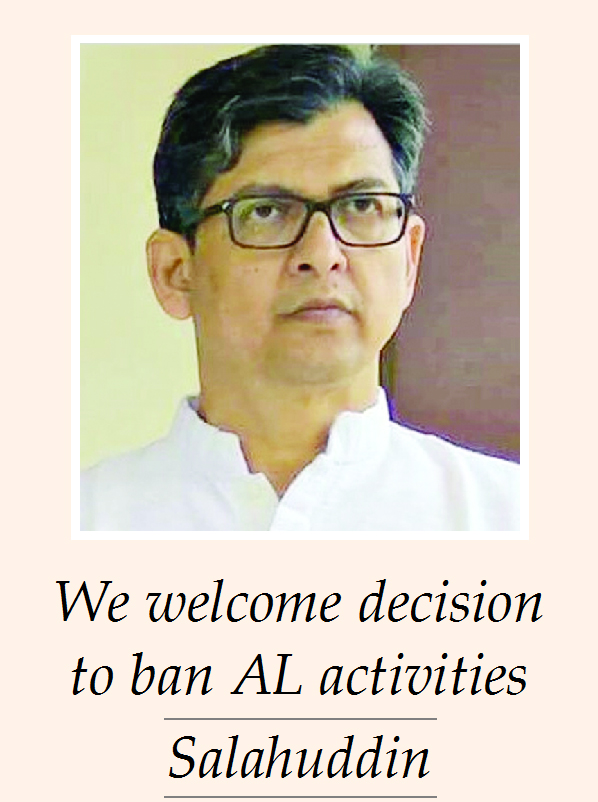
BNP Standing Committee Member Salahuddin Ahmed also welcomed the government’s decision, describing it as a “historic moment” for Bangladesh. “There are precedents around the world where fascist parties responsible for genocide have been prosecuted and banned.
We commend the government for amending the International Crimes Tribunal Act to initiate legal proceedings against the Awami League as a party,” he stated. Ahmed made the remarks while speaking at a discussion held at the International Mother Language Institute in Dhaka.
Bangladesh Jamaat-e-Islami also expressed support for the ban, albeit with some reservations. Party Ameer Dr Shafiqur Rahman stated that while it would have been more appropriate if the decision had followed broader political consultations, the move aligns with the spirit of the July Revolution. “Nonetheless, this action is in line with the demands of the people,” Rahman told reporters at an urban planning conference in Dhaka.
In a rally at Moghbazar late on Saturday, Rahman invoked the sacrifices of protesters and martyrs from last year’s uprising.
“Our demand has been partially fulfilled. But the July Proclamation remains unannounced. We must move forward patiently. We will not let the July upsurge fade into history,” he declared, vowing to channel the momentum towards ensuring sovereignty and justice.
Rahman called on all political parties, regardless of ideology, to unite in fulfilling the people’s aspirations. “We have met with the families of the martyrs.
They don’t want compensation-they want justice,” he said, urging the interim government to ensure exemplary punishment for those accused of authoritarian abuses.
Celebrations erupted near Hotel Intercontinental in Dhaka on Saturday night as news of the ban spread. Hundreds of protesters, who had been camping in defiance of police restrictions, greeted the announcement with cheers, slogans, and waving of national flags.
The Advisory Council of the interim government confirmed late Friday that the Awami League’s organisational and digital activities will be prohibited until the conclusion of trials against the party and its leadership. The move follows months of growing public pressure to hold the former ruling party accountable for alleged systemic abuses during its 16-year rule.
While the ban has ignited hope among opposition groups and protest movements, legal experts and human rights activists have raised concerns about due process and the broader implications for democratic norms.
As the country approaches a potentially transformative election cycle, all eyes are on the interim administration’s next steps, with the nation eager to see whether it can deliver the justice, transparency, and national unity that the moment demands.