
Brick kilns top air polluter in Dhaka
Staff Reporter :
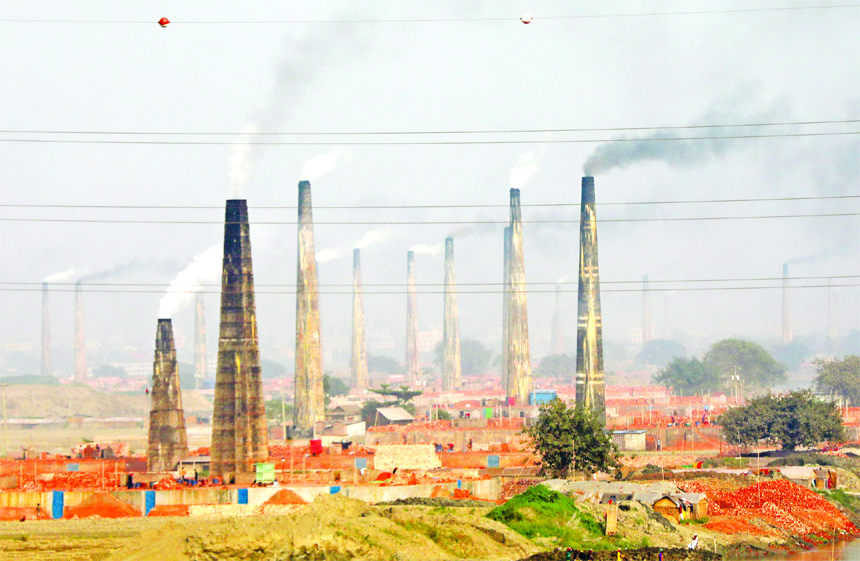
Brick kilns have emerged as one of the leading contributors to the worsening air quality in Dhaka, already ranked among the most polluted cities in the world.
The unchecked operations of these kilns, which use outdated technology and burn low-grade fuel, emit a significant amount of harmful pollutants into the atmosphere.
The primary pollutants released include particulate matter (PM2.5 and PM10), carbon monoxide, sulfur dioxide, and nitrogen oxides.
These emissions not only contribute to smog and poor visibility but also pose severe health risks, including respiratory and cardiovascular diseases.
According to environmental experts, the peak brick production season coincides with the dry winter months, further exacerbating the pollution problem.
During this time, the lack of rain and reduced greenery allow the airborne particles to linger, significantly degrading air quality.
The government has introduced regulations to curb emissions, such as transitioning to cleaner brick kiln technologies like zigzag kilns and encouraging the use of eco-friendly construction materials.
However, enforcement remains a significant challenge due to insufficient monitoring and a lack of compliance among kiln owners.
Urgent action is needed to address the issue, including stricter implementation of environmental laws, incentives for adopting greener technologies, and increased awareness of sustainable alternatives.
Without decisive intervention, the unchecked operation of brick kilns will continue to jeopardize public health and the environment in Dhaka.