
BNP to create 1cr jobs if voted to power: Tarique
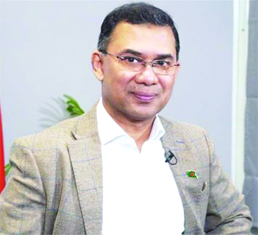
Staff Reporter :
The BNP has unveiled an ambitious vision to create 1crore jobs within the first 18 months of assuming office if voted to power.
The party revealed it while detailing its economic roadmap at the Bangladesh Investment Summit in Dhaka on Thursday.
The BNP also announced that it would transform Bangladesh into a $1 trillion economy by 2034. The party also aims to raise the foreign direct investment-to-GDP (FDI/GDP) ratio from the current 0.45% to 2.5%.
According to the Bangladesh Bureau of Statistics, the country’s GDP stood at $450 billion in the fiscal year 2023-24. The Finance Division projects that Bangladesh’s economy will surpass the $500 billion milestone in FY26, reaching an estimated $517.7 billion (Tk6,31,5923 crore).
The BNP’s economic plan includes sweeping tax reforms, focusing on reducing the tax burden for citizens while increasing overall tax revenue by fostering a climate of trust and compliance.
To expand overseas employment opportunities, the party plans to upgrade the skills of Bangladesh’s workforce through structured training programs and targeted incentives, promising more effective outcomes than previous efforts.
The roadmap highlights 11 key regulatory reforms designed to enhance Bangladesh’s appeal to foreign investors. These reforms include making BIDA more efficient, streamlining visa and work permit procedures, introducing 24/7 investor services, automating profit repatriation processes, ensuring a skilled local labor force, enacting an investor protection law, and improving overall infrastructure.
In a message at the summit, BNP Acting Chairman Tarique Rahman emphasized the importance of unity in driving national development. Reflecting on the contributions of former President Ziaur Rahman and former Prime Minister Khaleda Zia in attracting foreign investment, he underscored the untapped potential of Bangladesh’s economy.
“I am confident that Bangladesh stands at a turning point – one where a clear vision and strong determination can lead us to a brighter economic future. Despite our capacity to thrive on foreign investments, we’ve yet to fully realize our potential,” he said.
“True investment growth begins by actively engaging both current and future investors, and by addressing the core obstacles that have historically hindered capital inflows,” he said.
Speaking on the recent U.S. tariff measures, Rahman said, “While these new global trade dynamics present short-term challenges, they are not insurmountable. With annual imports exceeding $75 billion, Bangladesh has the leverage to strategically restructure even a small portion-$2 to $4 billion-of its import basket to negotiate favorable reciprocal tariff arrangements and minimize adverse impacts.”
“This recalibration could help preserve our access to vital export markets while enhancing our competitive position compared to regional players,” he explained.
“As major East Asian economies grapple with deeper trade imbalances, Bangladesh could emerge as a more favorable manufacturing destination, backed by its competitive labor force and relatively low tariffs. With the right policy choices, we can not only overcome these challenges but emerge stronger and more resilient,” Tarique said.
The roadmap also outlines the economic setbacks experienced under what the BNP refers to as 18 years of authoritarian governance. It details how a future BNP administration would work to restore economic stability and drive sustainable growth of the national economy.