
BNP slams telecom policy ahead of polls
Staff Reporter :
The Bangladesh Nationalist Party (BNP) has raised serious concerns regarding the government’s proposed telecom policy, warning that its introduction ahead of the upcoming national election is both premature and potentially damaging.
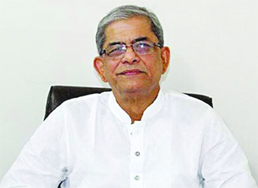
Speaking at an emergency press conference held at the party chairperson’s office in Gulshan on Thursday, BNP Secretary General Mirza Fakhrul Islam Alamgir said the party is carefully observing the Bangladesh Telecommunication Regulatory Commission’s (BTRC) latest initiative – the “Draft Telecommunication Network and Licensing Regime Reform Policy 2025.”
While acknowledging the policy’s stated objectives – including streamlining licensing procedures, encouraging technological innovation, and expanding digital connectivity in rural areas – Fakhrul cautioned that the government appears to be rushing through reforms of significant national consequence.
“Although the draft appears well-intentioned, a deeper review reveals a number of critical flaws that may hinder fair and sustainable growth in the telecommunications sector,” he stated.
The BNP warned that the proposed changes could place an undue burden on small and medium-sized enterprises (SMEs) and local entrepreneurs. Fakhrul urged the government to conduct a thorough financial and social impact assessment and to ensure meaningful consultations with all stakeholders – including SMEs, industry professionals, and consumer advocacy groups – prior to the policy’s finalisation.
“In the context of an impending national election, it is inappropriate to unilaterally introduce such a far-reaching policy without inclusive dialogue,” Fakhrul added.
BNP Standing Committee member Dr Abdul Moyeen Khan, along with media representatives Shamsuddin Didar and Shairul Kabir Khan, were also present at the press conference.
Mirza Fakhrul expressed particular concern over proposed provisions to lift existing restrictions on cross-ownership within the telecom sector, warning that such changes could pave the way for monopolistic practices. “Allowing dominant players to control multiple segments of the industry will stifle competition and further marginalise smaller operators,” he said.
The draft policy, unveiled by BTRC on 22 April, proposes a sweeping overhaul of a telecom licensing regime that has been in place for over 15 years. It aims to reduce the current complex licensing structure to just three main categories: international connectivity service providers, national infrastructure and connectivity service providers, and access network service providers.
Fakhrul also highlighted potential financial strain on smaller telecom operators and local Internet Service Providers (ISPs), citing vague language around asset management and accountability in the context of deregulation.
He further pointed to ambiguities regarding the duration and scope of foreign ownership rights under the proposed framework, cautioning that such uncertainties may deter much-needed investment and introduce instability into the sector.
“The risk is that major corporations may tighten their grip on the market under this new policy, to the detriment of fair competition and inclusive growth,” Fakhrul concluded.